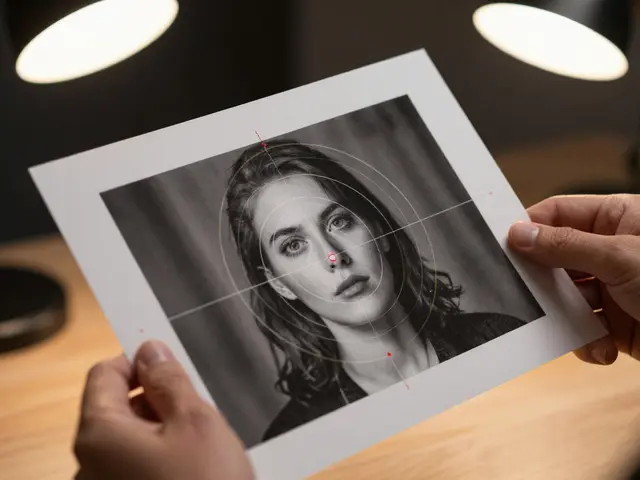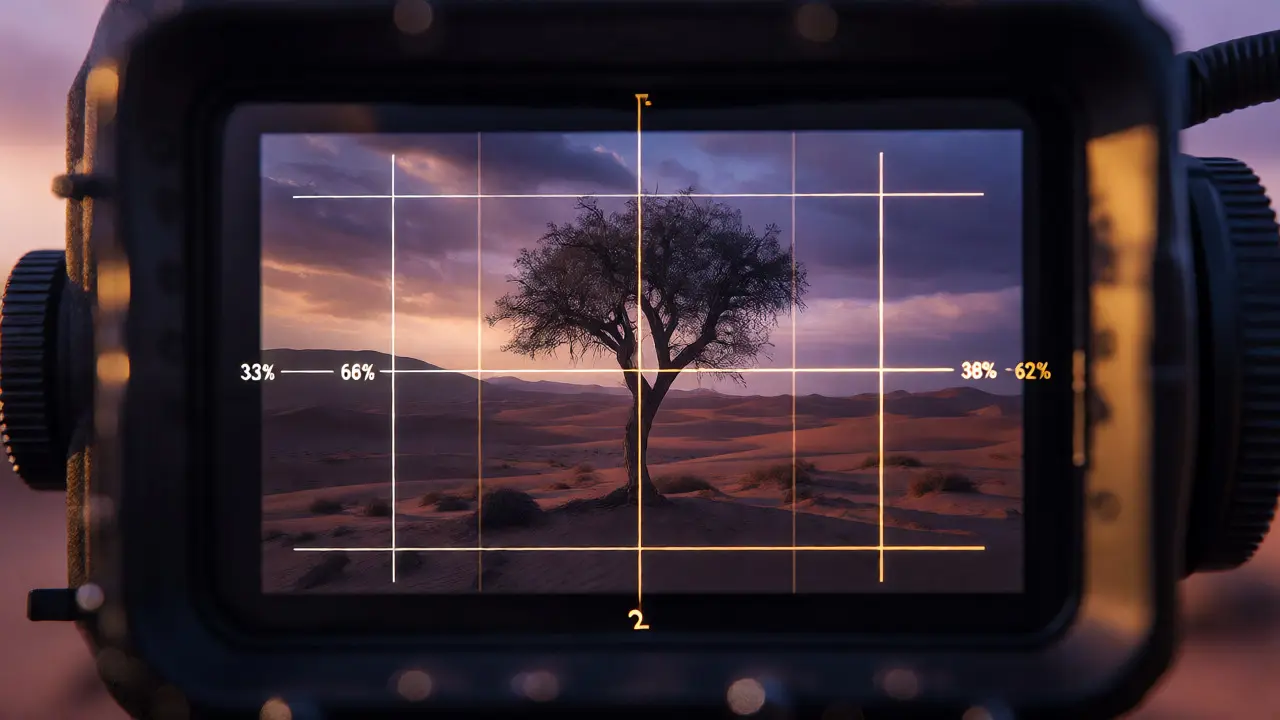
You’ve probably heard it a thousand times: "Just use the Rule of Thirds." It’s the first thing they teach you in photography class. Put your subject on one of those four intersection points, and boom-balanced photo. But if you look closely at some of the most striking images ever taken, from Ansel Adams’ landscapes to modern street photography, you’ll notice something off about that rigid grid. The subjects aren’t always neatly parked at the 1/3 mark. They’re slightly closer to the center, or perhaps just a hair further out. Why? Because the human eye doesn’t actually prefer perfect thirds. We are wired for a different kind of harmony.
Enter the Phi Grid, a compositional tool based on the Golden Ratio (approximately 1.618), which places grid lines closer to the center than the standard Rule of Thirds. If the Rule of Thirds is a blunt instrument, the Phi Grid is a scalpel. It offers a more natural, organic balance that often feels less "constructed" and more intuitive. This isn’t just theory; it’s a practical shift that can instantly elevate your work from "correct" to "compelling." Let’s break down how this works, why it matters, and when you should ditch the thirds for good.
Why the Rule of Thirds Isn’t Always Right
The Rule of Thirds divides an image into nine equal parts using two horizontal and two vertical lines. It’s easy to remember and easy to apply. But here’s the catch: it creates static tension. When you place a subject exactly at the top-left intersection, the eye knows exactly where to go next-it jumps to the opposite corner. It’s predictable. And in art, predictability can be boring.
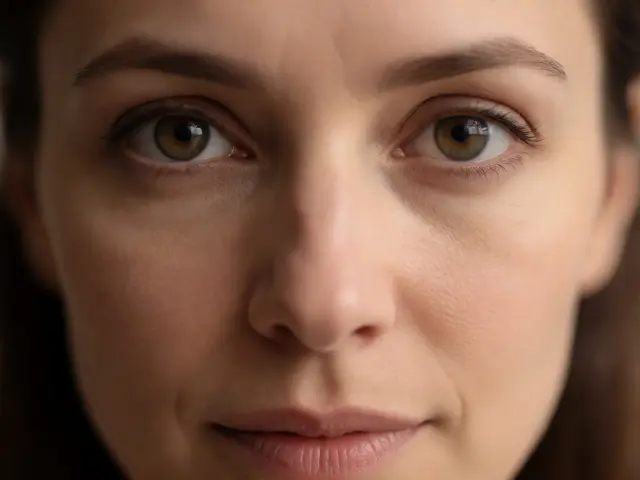
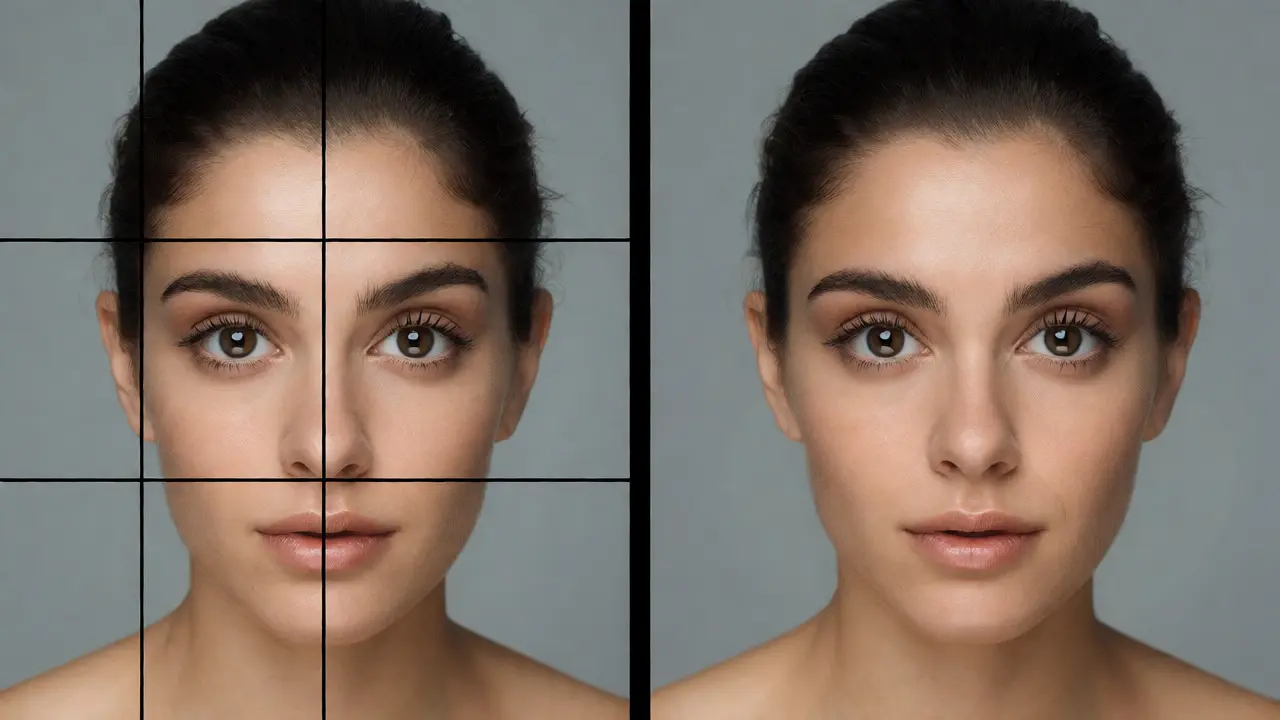
Consider a portrait where the subject’s eyes are placed strictly on the upper third line. It looks fine. But move those eyes slightly inward, toward the center, and suddenly the connection feels more intimate. The viewer isn’t looking *at* the subject from a distance; they’re engaging with them. That slight shift mimics how we naturally perceive faces and focal points in real life. The Rule of Thirds forces a geometric constraint that nature rarely follows. Nature loves spirals, curves, and asymmetrical balance-not rigid boxes.
Understanding the Golden Ratio and Phi
To get the Phi Grid, you first need to understand its parent concept: the Golden Ratio, a mathematical ratio approximately equal to 1.618, often denoted by the Greek letter Phi (φ). You might have seen it represented as a spiral shell or a rectangle divided into smaller rectangles that maintain the same proportion. This ratio appears everywhere-in sunflower seeds, hurricane formations, and even in the proportions of the Parthenon.
In photography, we translate this ratio into a grid. Instead of dividing the frame into three equal parts (0.333), the Phi Grid divides it using the reciprocal of the Golden Ratio. Mathematically, $1 / 1.618 \approx 0.618$. So, instead of lines at 33% and 66%, the Phi Grid lines sit at roughly 38% and 62%. That small difference-about 5% from the center-is crucial. It pulls the focal points inward, creating a composition that feels tighter and more cohesive without being dead-center.
| Feature | Rule of Thirds | Phi Grid | Center Weighted |
|---|---|---|---|
| Line Position | 33.3% and 66.6% | 38.2% and 61.8% | 50% and 50% |
| Focal Points | 4 intersections | 4 intersections (closer to center) | 1 central point |
| Visual Feel | Balanced but static | Dynamic and organic | Symmetrical and direct |
| Best For | General landscapes, simple scenes | Portraits, complex narratives, abstracts | Strong symmetrical subjects |

How to Apply the Phi Grid in Your Work
So, how do you actually use this? Most cameras don’t have a built-in Phi Grid overlay, though some high-end models and apps like Lightroom or Snapseed allow you to customize grid settings. If you’re shooting in-camera, you’ll need to train your eye. Imagine the Rule of Thirds, then mentally pull those lines about 5% toward the middle. That’s your Phi Grid.
Here’s a quick workflow to integrate it:
- Identify the dominant element: Is it a person, a tree, or a building? Find its most important feature (e.g., eyes for people).
- Align with Phi intersections: Place that key feature near one of the four inner intersection points of the imaginary Phi Grid.
- Check the flow: Does your eye travel naturally through the rest of the frame? If it gets stuck in a corner, adjust the framing slightly.
- Use negative space wisely: Since the focal point is closer to the center, ensure the surrounding space supports the subject rather than competing with it.
Don’t worry about pixel-perfect accuracy. Photography is messy. The goal is to break the habit of snapping things onto the outer thirds. Try shifting your subject just a tiny bit inward and see if the image feels more "right." Often, it does.
When to Use the Phi Spiral Instead
While the Phi Grid helps with placement, the Phi Spiral, a logarithmic spiral derived from the Golden Ratio that guides the viewer's eye through the image helps with movement. Not every photo needs a static focal point. Some need a journey.
Imagine a winding road disappearing into a mountain range. Or a staircase curving upward. Or a river snaking through a valley. In these cases, placing the start of the curve at the large end of the spiral and letting it lead to the smallest part (the focus) creates incredible depth. The eye follows the curve naturally because our brains recognize this pattern from nature.
A classic example is photographing a flower. Don’t just put the bloom on a grid line. Frame it so the stem enters the frame at the bottom left, curves up along the spiral path, and ends at the flower head located near the tightest part of the spiral. This guides the viewer’s gaze exactly where you want it, creating a sense of motion and growth.
Common Pitfalls and How to Avoid Them
Switching to the Phi Grid isn’t a magic fix. If you force it, your photos will look weird. Here are the mistakes I see most often:
- Overthinking the math: Stop counting pixels. If it looks balanced, it is balanced. The ratio is a guide, not a law.
- Ignoring symmetry: If your subject is perfectly symmetrical (like a reflection in a lake), putting it off-center-even by Phi standards-can feel awkward. Sometimes, dead center is better.
- Cropping too aggressively: Trying to fit a scene into the Phi Grid during post-processing can ruin the context. Shoot wider than you think you need to give yourself room to adjust later.
- Using it for everything: Street photography often relies on chaos and randomness. Forcing a Phi structure on a candid moment can kill the spontaneity.
The best photographers know when to ignore rules entirely. The Phi Grid is just another tool in the kit. Use it when you want elegance and subtlety. Ignore it when you want impact and shock.
Practical Exercises to Train Your Eye
You won’t master the Phi Grid by reading about it. You have to shoot. Here are three exercises to try this weekend:
- The Portrait Shift: Take ten portraits. Five using the Rule of Thirds, five using the Phi Grid. Compare them side-by-side. Which ones feel more engaging? You’ll likely find the Phi versions create a stronger connection with the subject.
- The Leading Line Hunt: Find a scene with strong leading lines (roads, fences, shadows). Frame it so the lines follow the path of a Phi Spiral. Notice how your eye travels deeper into the image.
- The Negative Space Test: Photograph a small object against a plain background. Place it on a Rule of Thirds intersection. Then, move it slightly inward to a Phi intersection. Observe how the amount of "breathing room" changes the mood of the shot.
These drills help internalize the spacing. Eventually, you won’t need to visualize the grid. You’ll just feel when the composition clicks.
Is the Phi Grid really better than the Rule of Thirds?
It depends on the effect you want. The Rule of Thirds is great for clear, straightforward compositions and is easier for beginners to grasp. The Phi Grid offers a more subtle, organic balance that often feels more aesthetically pleasing to the trained eye. Neither is objectively "better," but Phi provides more nuance for advanced compositions.
Can I enable the Phi Grid on my camera?
Most standard DSLRs and mirrorless cameras only offer the Rule of Thirds grid. However, many smartphone apps and professional editing software like Adobe Lightroom allow you to customize grid overlays. You can also print a transparent Phi Grid sheet to hold over your screen or viewfinder while learning.
What is the exact number for the Golden Ratio?
The Golden Ratio is approximately 1.618. In terms of grid positioning, this translates to dividing the frame at roughly 38.2% and 61.8% of the width and height, rather than the 33.3% and 66.6% used in the Rule of Thirds.
Does the Phi Grid work for video as well?
Absolutely. Cinematographers frequently use the Golden Ratio and Phi Grid to frame shots. It creates a dynamic yet balanced visual flow that keeps viewers engaged over time, especially in interviews or tracking shots where the subject moves within the frame.
Should I crop my photos to the Golden Ratio aspect ratio?
Not necessarily. The Phi Grid applies to any aspect ratio (3:2, 4:3, 16:9). While a 1.618:1 aspect ratio is theoretically perfect, it’s rarely practical for standard printing or digital displays. Focus on the internal composition using the grid lines rather than forcing a specific external shape.