There is a persistent myth in photography that full-frame cameras are automatically better than crop sensors. It isn't true. The difference comes down to two specific variables: how much background you blur (depth of field) and how clean your images look in low light (ISO performance). If you shoot portraits or events, these two factors will dictate your workflow more than megapixels or autofocus speed ever will.
Depth of field is the range of distance within a photo that appears acceptably sharp. When people talk about "creamy" backgrounds, they are talking about shallow depth of field. Full-frame sensors are digital image sensors with dimensions approximately 36mm x 24mm, matching the size of traditional 35mm film frames. Crop sensors, often called APS-C, are smaller, typically around 23.5mm x 15.6mm. Because the full-frame sensor is larger, it can capture a wider angle of view for the same focal length lens. To get the same framing as a full-frame camera, a crop sensor camera requires a lens with a shorter focal length. This change in geometry directly impacts how much of the scene falls into focus.
The Geometry of Blur: Why Full-Frame Wins on Portraits
Let's look at a concrete example. Imagine you are shooting a portrait with a 50mm lens at f/1.8 on a full-frame camera. The subject fills the frame nicely, and the background is pleasantly blurred. Now, take that same photo with a crop sensor camera. To achieve the same framing, you need a 35mm lens (since most crop sensors have a 1.5x or 1.6x multiplier). Even if you keep the aperture at f/1.8, the depth of field will be noticeably deeper. The background will appear sharper, and the subject separation will be less dramatic.
To match the shallow depth of field of the full-frame setup, you would need to open up the aperture on the crop sensor camera to roughly f/1.2. However, many fast lenses do not go below f/1.4, making it physically difficult to replicate that extreme isolation without stepping back further from the subject or using a longer focal length. This is why wedding photographers and portrait artists often gravitate toward full-frame systems. They want that natural, soft bokeh that separates the bride from the crowd without having to push the aperture to its mechanical limits.
| Factor | Full-Frame Camera | Crop Sensor Camera |
|---|---|---|
| Sensor Size | ~36mm x 24mm | ~23.5mm x 15.6mm |
| Focal Length Multiplier | 1.0x | 1.5x - 1.6x |
| Equivalent Aperture for Same DoF | f/1.8 | f/1.2 (approx.) |
| Lens Cost for Fast Apertures | Higher | Lower |
| Background Separation | Stronger | Weaker |
High ISO Performance: The Noise Battle
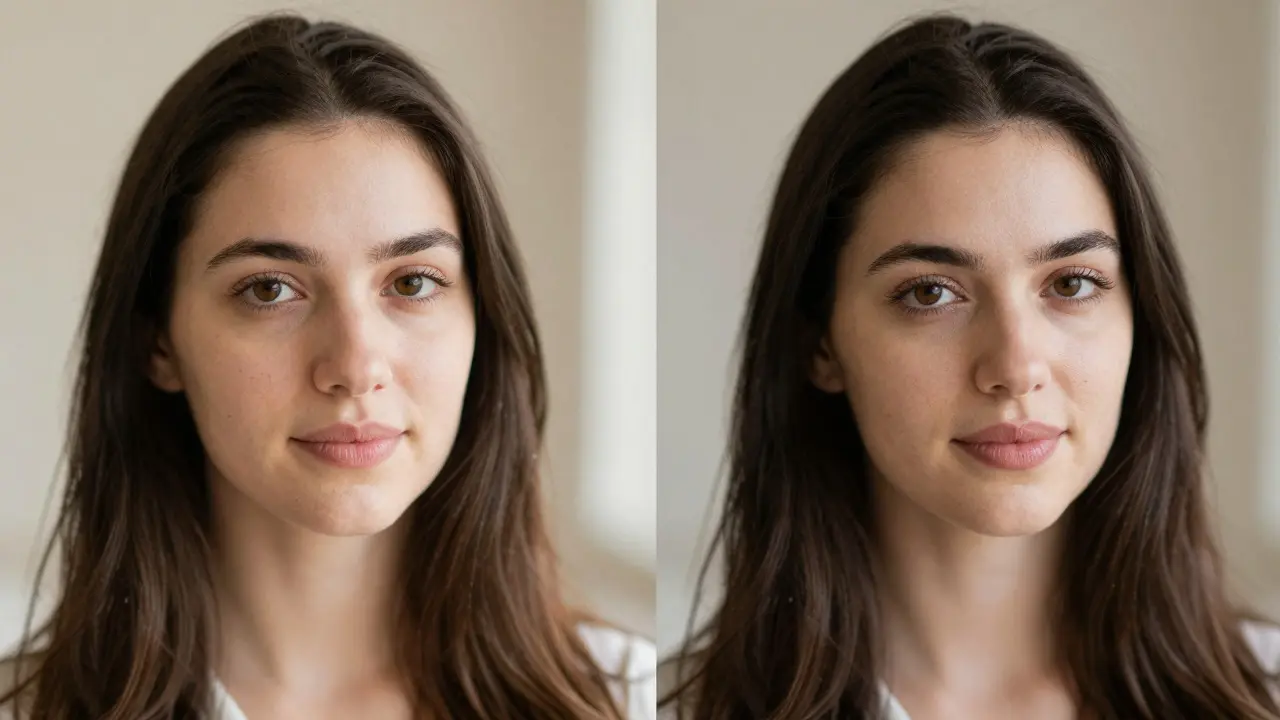
Now let's talk about ISO performance, which is the ability of a camera sensor to capture clear images in low-light conditions without excessive digital noise. For years, full-frame sensors had a massive advantage here because their individual pixels were physically larger. Larger pixels collect more photons, leading to a higher signal-to-noise ratio. In simple terms, a full-frame camera could shoot at ISO 6400 and still produce a usable image, while an older crop sensor might start looking grainy and colored at ISO 1600.
However, technology has caught up. Modern crop sensor cameras, such as those from Sony, Fujifilm, and Nikon, now feature back-illuminated sensors and advanced processing engines that rival full-frame bodies from three or four years ago. At ISO 3200, the difference between a current-generation full-frame and a current-generation crop sensor is negligible for most online sharing purposes. The gap only becomes visible when you print large or crop heavily into the image. If you are shooting indoor sports or concerts where you cannot control lighting, both systems are viable, but the full-frame still holds a slight edge in dynamic range at very high ISOs, preserving shadow detail better.
When Crop Sensors Make Sense
So, why buy a crop sensor camera in 2026? Because cost and portability matter. A full-frame body plus a set of fast lenses can easily exceed $3,000. A crop sensor system can deliver 90% of the visual quality for half the price. Furthermore, crop sensors offer a reach advantage. If you are into wildlife or bird photography, that 1.5x multiplier means a 400mm lens acts like a 600mm lens. You get more magnification without carrying a heavier, more expensive super-telephoto prime. This makes crop sensors ideal for hobbyists who want to travel light or professionals who need backup gear that doesn't break the bank.
Another benefit is lens selection. Many manufacturers release faster, lighter, and cheaper lenses for crop sensor mounts first. You can find a 16-55mm f/2.8 zoom that is compact and affordable, whereas the full-frame equivalent is bulkier and pricier. For street photographers or documentary shooters who value discretion, the smaller size of crop sensor kits is a significant practical advantage.
Choosing Your System Based on Your Work
Your choice should depend on what you photograph most. If 80% of your work involves portraits, weddings, or low-light events, invest in full-frame. The shallower depth of field and superior high-ISO handling will save you time in post-production and give you that professional look clients expect. You will spend less time dodging and burning shadows and more time capturing the moment.
If you shoot landscapes, product photography, or wildlife, a crop sensor is perfectly adequate. Landscapes require deep depth of field anyway, so the full-frame advantage disappears. Product shots are usually done in controlled studio lighting, negating the ISO concern. Wildlife benefits from the extra reach. In these scenarios, the money saved on the body and lenses can go toward better tripods, lighting equipment, or travel expenses.
Common Misconceptions About Sensor Size
One common mistake is thinking that a full-frame camera always produces better photos. That is false. A poorly composed shot on a full-frame body looks worse than a well-composed shot on a crop sensor. Another misconception is that crop sensors are "inferior." They are simply different tools. A 50mm f/1.4 lens on a crop sensor provides a field of view similar to an 85mm lens on full-frame. This changes the perspective compression, making faces look slightly flatter and backgrounds tighter. Some photographers actually prefer this look for environmental portraits because it keeps context in the frame while still blurring the background effectively.
Also, don't ignore file size. Full-frame cameras generate larger files, which means slower write speeds and more storage space required. If you shoot thousands of frames per event, this can impact your workflow. Crop sensors produce smaller files, allowing you to shoot longer bursts before the buffer fills up. For action sports, this burst capability can sometimes outweigh the slight loss in image quality.
Future-Proofing Your Investment
As we move through 2026, the line between full-frame and crop sensors continues to blur. Manufacturers are improving crop sensor technology rapidly, closing the gap in video capabilities and autofocus precision. However, full-frame remains the standard for high-end commercial and editorial work. If you plan to sell your photos to stock agencies or magazines, full-frame is still the safer bet due to client expectations regarding resolution and flexibility in cropping. But for personal use, social media content, and local business marketing, a modern crop sensor is more than capable.
Ultimately, the best camera is the one that fits in your bag and gets you to the location. Don't let sensor size anxiety stop you from creating. Test both formats if possible. Rent a full-frame body for a weekend and see if the depth of field difference excites you. Then rent a crop sensor kit and check if the weight savings make you happier shooting. Your hands and eyes will tell you more than any spec sheet ever could.
Is full-frame necessary for professional photography?
No, it is not strictly necessary. Many successful landscape, wildlife, and product photographers use crop sensors. However, for portrait and event photography, full-frame offers advantages in depth of field and low-light performance that can streamline the workflow.
How much better is the depth of field on a full-frame camera?
The difference depends on the aperture and focal length used. Generally, to achieve the same depth of field as a full-frame camera, a crop sensor camera needs an aperture roughly 1.5 stops wider. For example, f/1.8 on full-frame is similar to f/1.2 on a 1.5x crop sensor.
Which sensor handles high ISO better in 2026?
Full-frame sensors still have a slight edge in dynamic range at very high ISOs, but modern crop sensors perform nearly identically at ISO 3200 and below. For most users, the difference is invisible unless printing large or cropping significantly.
Are crop sensor lenses cheaper than full-frame lenses?
Yes, generally. Since crop sensors are smaller, lenses designed for them have smaller optical elements, making them lighter and less expensive to manufacture. You can often find fast primes and zooms for crop systems at a fraction of the cost of their full-frame equivalents.
Can I use full-frame lenses on a crop sensor camera?
Yes, in most cases. Full-frame lenses cover a larger image circle, so they work perfectly on smaller crop sensors. However, the field of view will be narrower due to the crop factor. Using a full-frame lens on a crop body does not improve image quality beyond what the sensor can resolve, but it may increase weight and cost unnecessarily.