The Reality of Urban Shooting
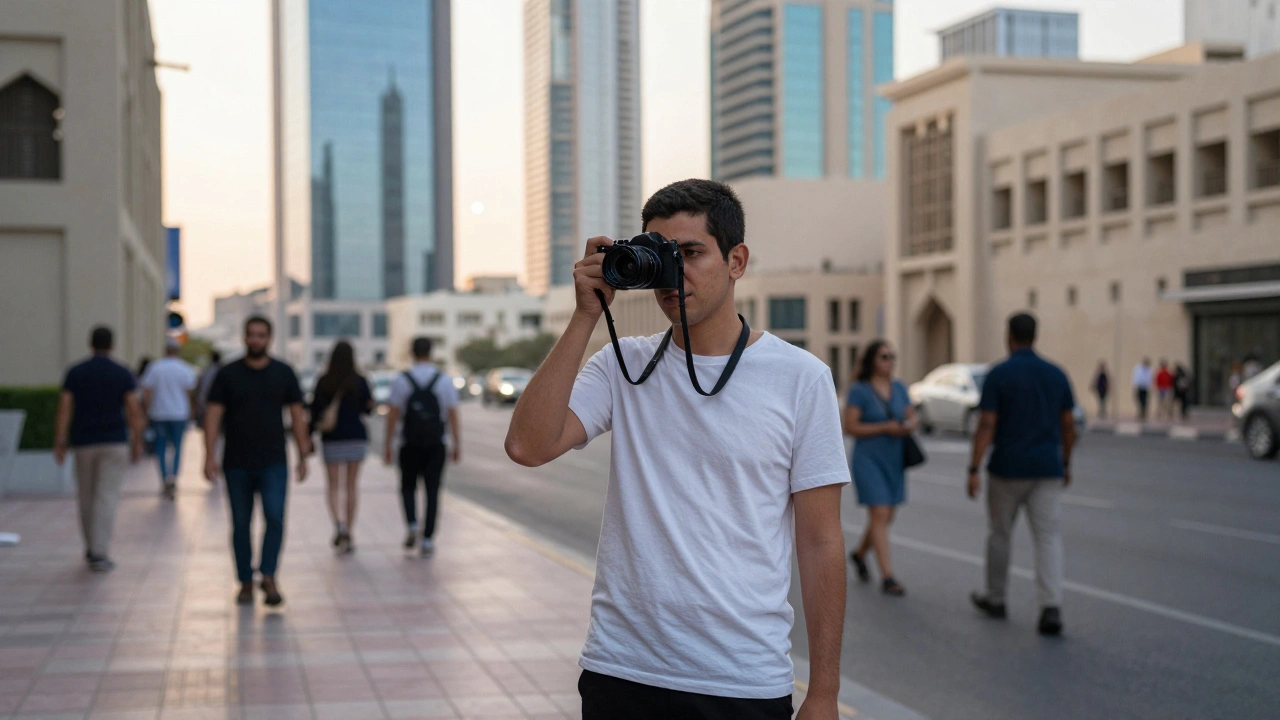
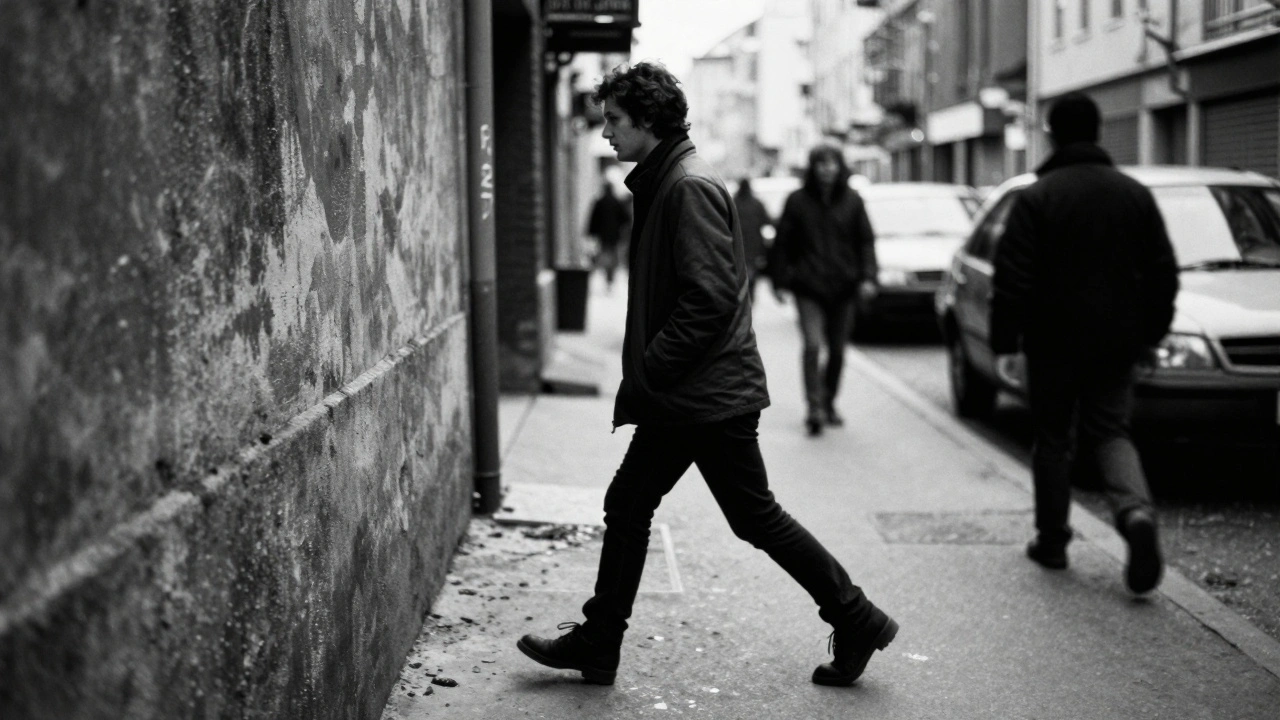
You don't need a studio to tell great stories. Some of the most powerful images ever captured were taken on busy city sidewalks, often without the subjects even knowing they were being photographed. Street Photography is a genre of photography focused on capturing candid moments in urban environments. It requires you to be alert, prepared, and sometimes invisible. While many beginners obsess over having the newest megapixels-counted machine, the truth is simpler. What matters most is your ability to see the moment and react quickly.
Gear Philosophy: Less Is Actually More
When you walk down the street, you want to blend in. Carrying a massive DSLR with a huge telephoto zoom screams "I am working," which makes people self-conscious or nervous. The goal is discretion. A minimalist setup forces you to rely on your skills rather than your equipment. Most experienced practitioners agree that there are only three essentials: a camera, a lens, and a strap. If you carry too much, you'll spend more time fiddling with bags than watching the world around you.
Choosing the Right Camera Body
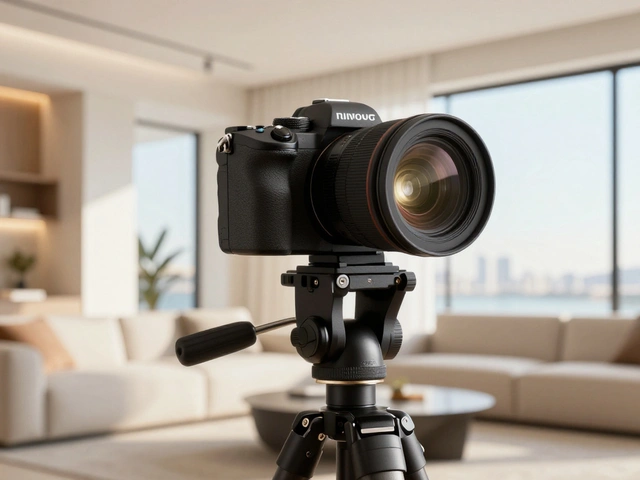
Compactness is king. You need a camera that fits easily in your pocket or hangs comfortably on your chest without feeling like an anchor. Rangefinder-style cameras are favorites among professionals because they look discreet and operate quietly. Models like the Leica M11high-end rangefinder camera known for build quality and minimal design or the Fujifilm X100Vcompact fixed-lens camera popular for street work dominate this space. These cameras prioritize speed and handling over menu complexity. For those who prefer interchangeable lenses without bulk, mirrorless options from the Fujifilm X range or Canon PowerShot G7 X series offer excellent balance between size and image quality.
| Camera Model | Key Benefit | Best For |
|---|---|---|
| Leica Q3 | Silent shooting, fixed lens | Discreet documentary style |
| Ricoh GRIII | Weather-sealed, small body | All-weather durability |
| Fujifilm X-T5 | Vintage controls, high resolution | Creative film simulation looks |
| Canon PowerShot G7 X | Built-in screen, point-and-shoot | Beginners seeking simplicity |
Lenses That Change Your Perspective
The lens you choose dictates how you see the world. In street photography, we aren't chasing distant wildlife; we are documenting human interaction within its environment. This makes focal length critical. Zoom lenses often slow you down and force you to step back. Primes encourage you to get closer to the action. Following Robert Capa's famous principle, if your photos aren't good enough, you're not close enough. You should master one or two prime lenses before considering anything else.
The Sweet Spot: 35mm and 50mm
A 35mm Lensstandard focal length offering a natural field of view similar to human vision is considered the gold standard for many pros. It captures subjects along with enough of their surroundings to provide context. If you shoot on a crop sensor body, the math changes slightly; a 23mm or 24mm lens on APS-C gives you that same 35mm equivalent angle. For full-frame shooters, a 50mm lens works beautifully for isolating individuals while keeping the background distinct. Wide-angle options like 28mm put the viewer right into the scene, creating intimacy, but they require you to get uncomfortably close to strangers, which can be intimidating for beginners.
Nailing Your Camera Settings
Having the right camera isn't enough; you need settings that keep up with your brain. Hesitation is the enemy here. If you wait to focus after seeing a moment, it's already gone. You must pre-set your exposure so you can fire instantly.
Shutter Speed First
Movement happens everywhere in a city. Pedestrians walk, cars pass, heads turn. To freeze these actions, you need a minimum shutter speed. Start at 1/200th or 1/250th of a second. Anything slower risks motion blur unless you are intentionally going for creative movement trails. In low light, you might drop to 1/100th, but anything below that is risky for sharp portraits. Always expose for the highlights. It is easier to darken a bright spot in post-processing than to recover a black shadow with no detail.
Aperture and Depth of Field
You want your subject to stand out from the busy background. Using a wide maximum aperture, such as f/2.0 or f/2.8, creates a nice separation. However, keep in mind that wide apertures reduce your depth of field. If you are moving fast, f/4.0 might be safer to ensure everything stays sharp when you aren't precise with your focus distance. Fast lenses like the Leica Summicron 35mm f/2 allow you to shoot in dim alleys or underpass lighting without cranking your ISO too high.
ISO and Light Management
Don't be afraid to push ISO. Modern sensors handle noise far better than they did a decade ago. A grainy, in-focus shot is always better than a blurry shot. Set your ISO to auto but cap it at a level where noise becomes unmanageable for your prints. For digital files viewed on screens, ISO 1600 or even 3200 is often perfectly acceptable if the trade-off allows you to maintain your shutter speed.
The Mental Game of Public Spaces
This is where most courses fail. You can have the perfect gear, but if you panic when someone sees you holding a camera, you won't take the photo. Street photography is partly technical and partly psychological. You need to develop a specific mindset.
Overcoming the Fear Factor
Many beginners feel guilty about taking pictures of strangers. Legally, in most places, you do not need permission to photograph people in public spaces for personal artistic purposes. Ethically, it gets murkier. Some photographers hide their cameras; others wear business cards in their pockets to hand over if approached. The key is confidence. Stand tall, hold your camera naturally, and smile. If you look nervous, people assume you are doing something wrong. Treat the city like a living stage where everyone is a potential actor in your film.
Patience and "Going Fishing"
Some days, nothing happens. You might walk for hours and capture nothing worth framing. That is normal. Experienced photographers talk about "going fishing." They stand in a spot with interesting light or architecture and wait for the right person to walk through the frame. This is zone photography. By focusing on a specific area (the "zone") and observing patterns, you anticipate moments rather than hunting them down. It requires patience, but the resulting composition is often stronger because you planned the foreground and background elements beforehand.
Carrying and Maintaining Your Kit
Your bag matters less than your accessibility. Messenger bags or sling bags allow you to swing the camera to your hip and shoot immediately without digging. Peak Design Capture Clips let you attach the camera to a belt loop, making it ready in seconds. Don't forget power management. Carry at least three spare batteries. Cold weather drains batteries faster, so keep spares warm in your inner pocket. Memory cards are just as vital; running out of storage stops your session entirely. Always pack a sensor cleaning kit. Dust settles inside cameras even indoors, and outdoor grit can ruin glass. A simple blower and microfiber cloth are non-negotiable tools in your arsenal.
Conclusion
Mastering street photography is a journey of observation. The gear evolves, and technology improves, but the core skill remains the same: seeing the extraordinary in ordinary life. Start with what you own. Practice in safe zones. Build your confidence before tackling crowded markets or dense urban centers. Your best tool is your eye, not the body of your camera.
Is it legal to photograph strangers on the street?
In most countries, including the United States, you are legally allowed to photograph people in public spaces without their consent as long as there is no expectation of privacy. However, laws vary by region, particularly regarding publishing the images commercially versus personally.
What is the best lens for street photography beginners?
A 35mm prime lens is widely recommended for beginners. It offers a natural field of view similar to human vision and encourages you to engage with your surroundings. On APS-C cameras, a 23mm or 24mm lens provides a similar equivalent angle.
Should I use autofocus or manual focus?
Zone focusing with manual focus is preferred by many veterans for instant reaction times. You set the focus to a specific distance (like 3 meters) and trust your timing. Autofocus is catching up and works well on modern mirrorless bodies, but it can hunt in low light, costing you the split-second moment.
How do I deal with people asking me to delete their photo?
Politely listen to their request. While you may have the legal right to keep the image, confrontation rarely helps. Having a printed card explaining your artistic intent or simply apologizing and deleting it on the spot maintains goodwill and keeps your reputation good in local areas.
Do I need a silent shutter for street work?
A mechanical shutter sound can be quite loud in quiet streets. Electronic shutters are completely silent but may cause rolling shutter distortion with fast-moving subjects. If available, hybrid modes are best. Quiet operation keeps you less conspicuous.