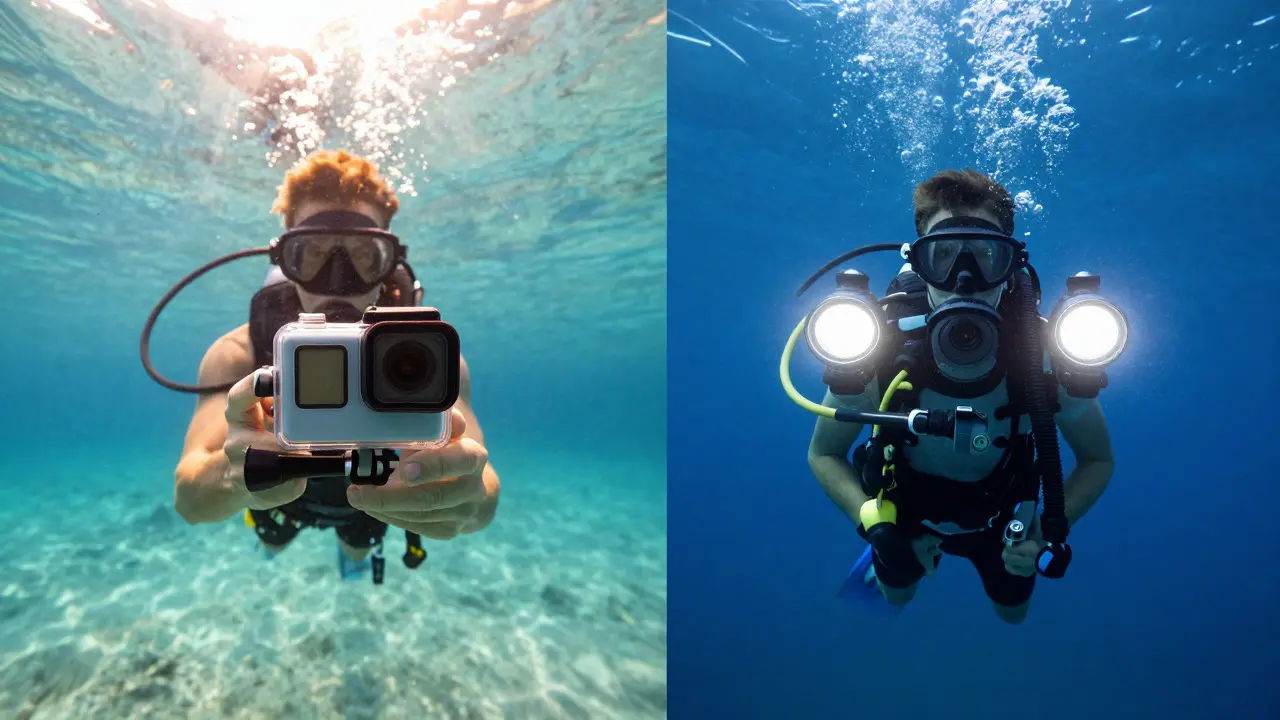
Most people assume that going deeper always means better photos. They’re wrong. The difference between snorkel and scuba photography isn't just about how far down you go; it's about stability, light management, and what kind of story you want to tell. If you're shooting shallow reefs or surface action, a simple mask and a compact camera might be all you need. But if you're chasing macro details on deep walls or wide-angle scenes in open water, your gear choices change dramatically. Let’s break down exactly where each method shines so you can pick the right tool for your next dive.
The Gear Gap: What You Actually Need
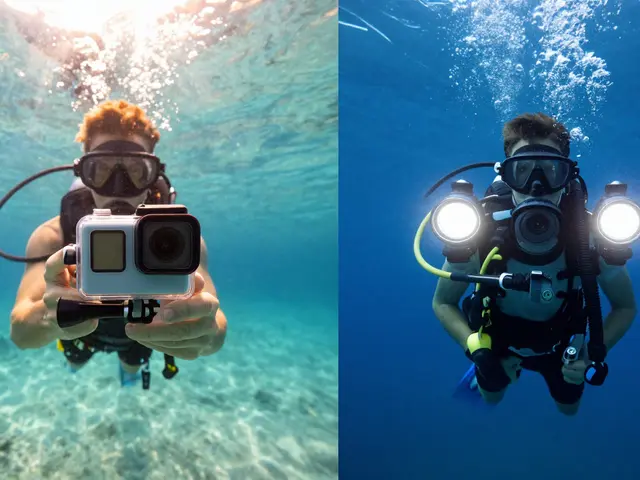
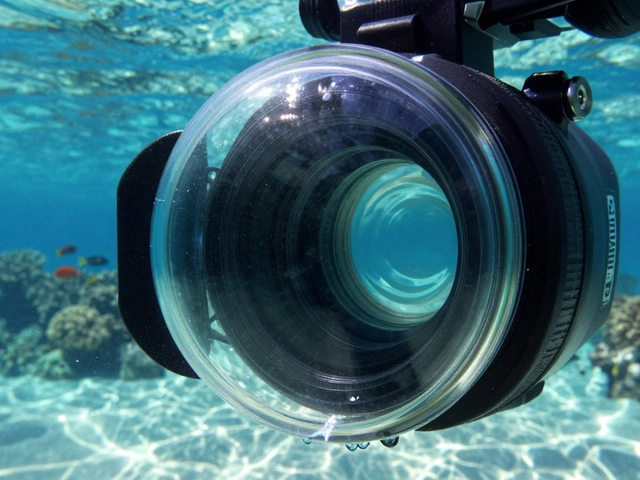
Your equipment dictates your capability. Snorkel photography relies on simplicity and speed. You typically use a point-and-shoot camera or an action camera sealed in a basic waterproof case. These housings are lightweight, easy to handle with one hand, and cheap to replace if something goes wrong. However, they rarely offer manual control over white balance or aperture, which matters when the light changes quickly underwater.
Scuba photography is a different beast. Here, you’re likely carrying a DSLR or mirrorless camera body inside a robust aluminum or polycarbonate housing. This setup allows full manual control, interchangeable lenses, and external strobes. Strobos aren't just for lighting dark spots; they recycle color lost at depth. Without them, everything below 10 meters turns blue-grey. With them, you can restore reds and oranges even at significant depths, giving your images a vibrancy that natural light alone often fails to provide.
| Feature | Snorkel Photography | Scuba Photography |
|---|---|---|
| Camera Type | Action cam / Compact | DSLR / Mirrorless |
| Housing Material | Polycarbonate (lightweight) | Aluminum / Heavy Polycarbonate |
| Lighting | Natural Light Only | External Strobos / Video Lights |
| Lens Flexibility | Fixed Wide-Angle | Interchangeable (Macro/Wide/Dome Port) |
| Cost Range | $300 - $800 | $2,500 - $10,000+ |
Depth Limits and Light Physics
Water absorbs light differently than air. Red light disappears first, usually within 5 to 10 feet. Green follows, and by 30 feet, you’re mostly seeing blue. This is why natural light photography has hard limits. For snorkelers, this means staying above 20 feet to keep colors looking decent without post-processing heroics. If you go deeper, your images will look flat and monochromatic unless you add artificial light.
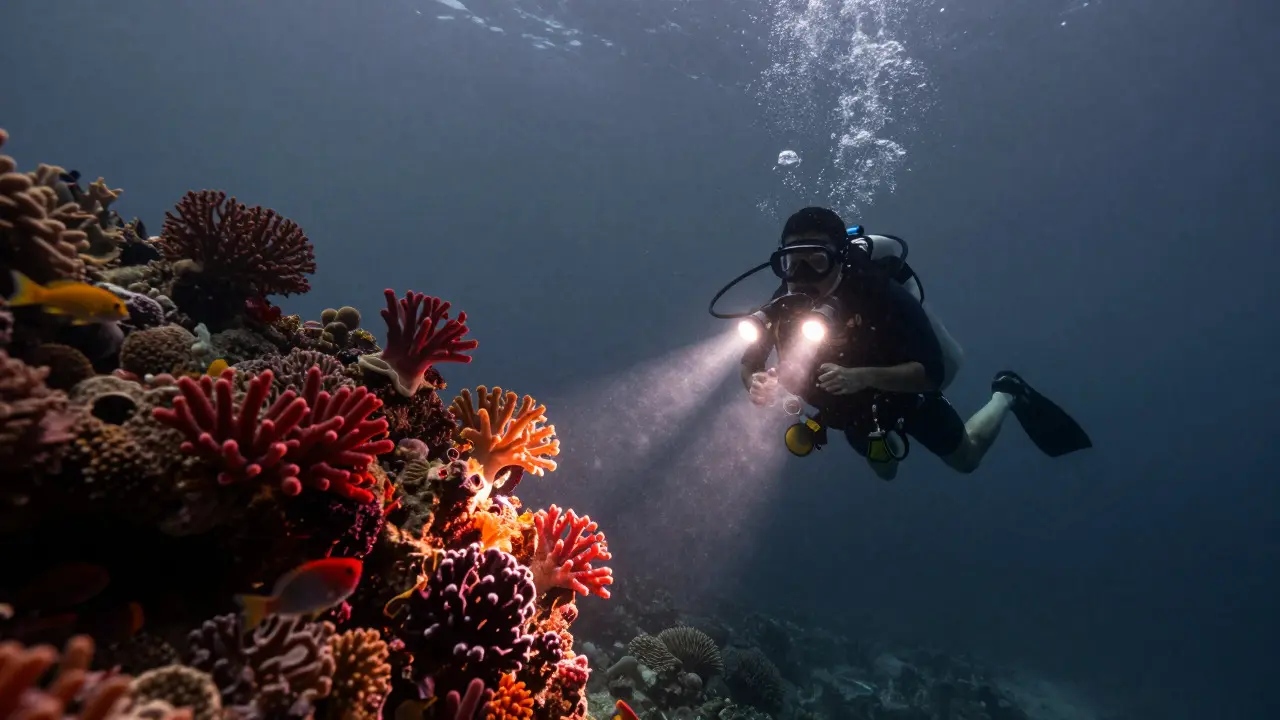
Scuba divers don’t have these same constraints because they carry their own light source. A pair of high-output strobos can illuminate subjects at 40, 60, or even 100 feet. This opens up entire ecosystems that snorkelers never see, like deep coral formations or large pelagic animals. However, managing light at depth requires skill. You have to balance power, angle, and distance to avoid backscatter (those annoying bright dots in your photo) and ensure even coverage on your subject.
Safety Considerations for Photographers
Photography adds a layer of risk to any dive. When you’re focused on framing a shot, you might forget your buoyancy control or lose track of your buddy. In snorkeling, the main risks are fatigue and current drift. Since you’re breathing from the surface, panic can set in quickly if you get tired. Always swim with a buddy and stay close to shore or a boat.
In scuba, the risks are more complex. Carrying heavy gear affects your trim and neutral buoyancy. If your tank runs low while you’re chasing a subject, you need a clear exit plan. Also, handling strobes near delicate corals requires care; a bump can cause lasting damage. Both methods demand that you prioritize safety over the perfect shot. A good photo is worth less than a safe return to the surface.
Choosing Your Niche: Macro vs. Wide-Angle
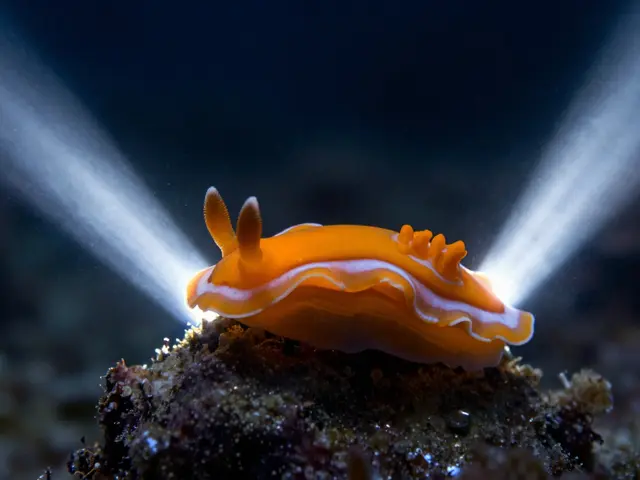
Your subject matter should drive your gear choice. If you love tiny creatures-shrimp, nudibranchs, or small fish-you need macro capabilities. While some action cameras have decent macro modes, dedicated scuba setups with dome ports and macro lenses offer superior sharpness and focus precision. Snorkelers can still do macro, but they must get extremely close, which can scare off shy subjects. Scuba divers can hover neutrally, allowing them to approach slowly and capture intimate moments without disturbing the animal.
For wide-angle scenes, like sharks swimming past or expansive reef panoramas, both methods work. However, scuba gives you more flexibility in composition. You can move horizontally, vertically, and diagonally through the water column. Snorkelers are limited to horizontal movement near the surface. This restriction can make wide shots feel static compared to the dynamic flow possible with scuba gear.
Budget and Learning Curve
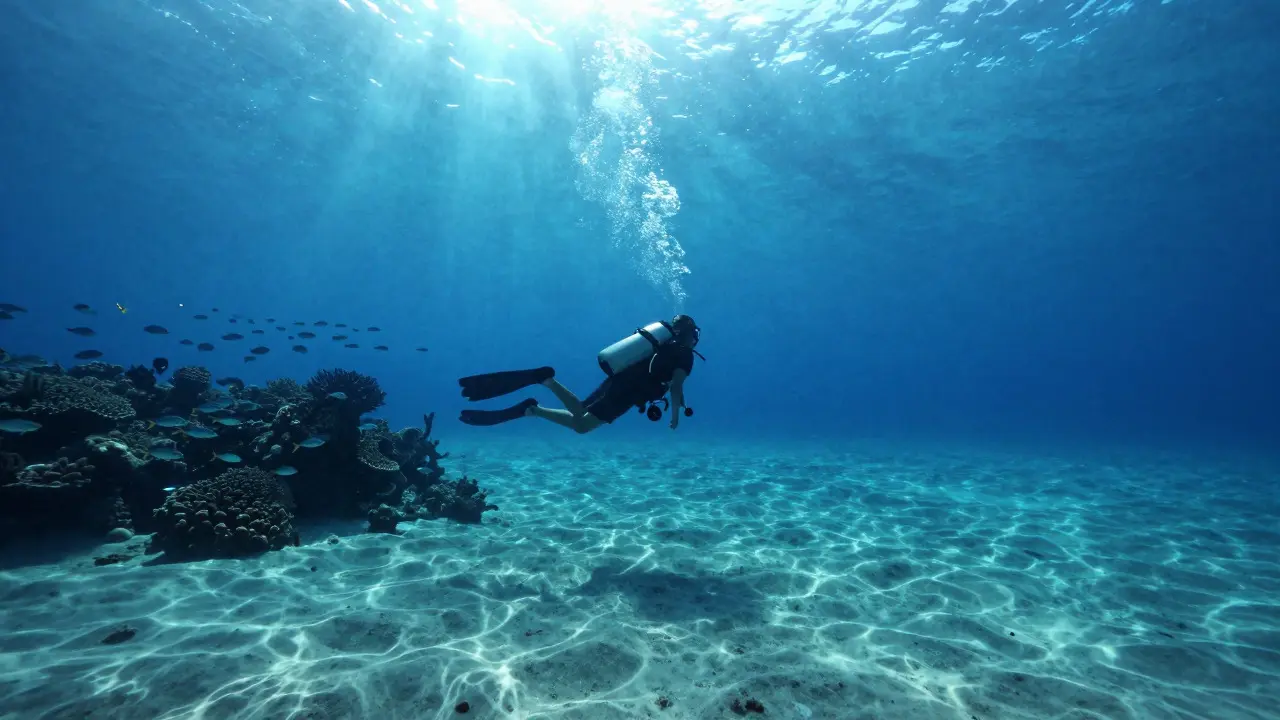
If you’re new to underwater photography, start with snorkeling. It’s cheaper, safer, and easier to learn. Buy a decent action camera, practice your settings, and learn how light behaves in clear water. Once you’re comfortable, consider investing in scuba certification. The learning curve for scuba photography is steep. You need to master diving skills, buoyancy, and camera operation simultaneously. Many beginners find it overwhelming to juggle three things at once. That’s why starting simple helps build confidence before adding complexity.
Frequently Asked Questions
Can I take professional photos with just a snorkel?
Yes, especially for surface-level action, wide-angle reef shots, and wildlife near the top. High-quality action cameras and compact systems produce excellent results in shallow, well-lit environments. The key is mastering natural light and composition without relying on artificial lighting.
How deep can I go with a standard action camera housing?
Most consumer-grade action camera housings are rated for 30 to 40 meters (roughly 100 to 130 feet). Always check the manufacturer’s rating and test the seal regularly. Going beyond the rated depth increases the risk of leaks and pressure damage to the lens port.
Do I need strobes for snorkeling photography?
Generally, no. Snorkelers usually stay within the range where natural light is sufficient. Adding strobes to a snorkel setup is bulky and impractical. If you need extra light, consider video lights designed for action cameras, which are smaller and easier to mount.
What is the biggest mistake beginners make in underwater photography?
Ignoring buoyancy control. If you’re bobbing up and down, your photos will be blurry and your energy will drain faster. Practice hovering neutrally before you worry about advanced camera settings. Stability is the foundation of good underwater images.
Is scuba photography worth the investment?
It depends on your goals. If you want to capture deep-water life, macro details, or creative compositions with controlled lighting, yes. The cost is higher, but the creative freedom is unmatched. If you only shoot shallow reefs, a high-end snorkel setup might be more cost-effective and enjoyable.