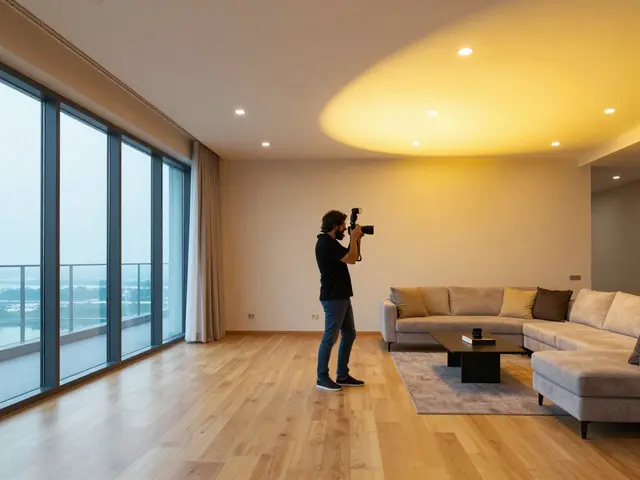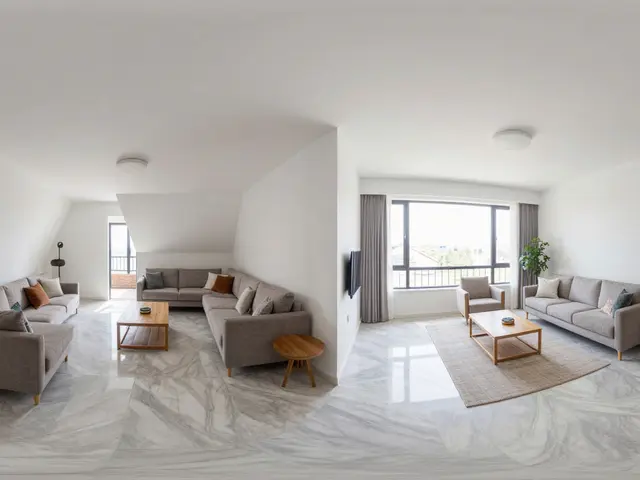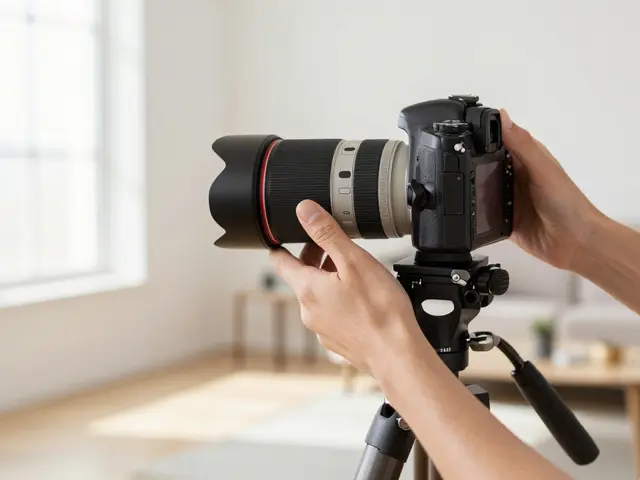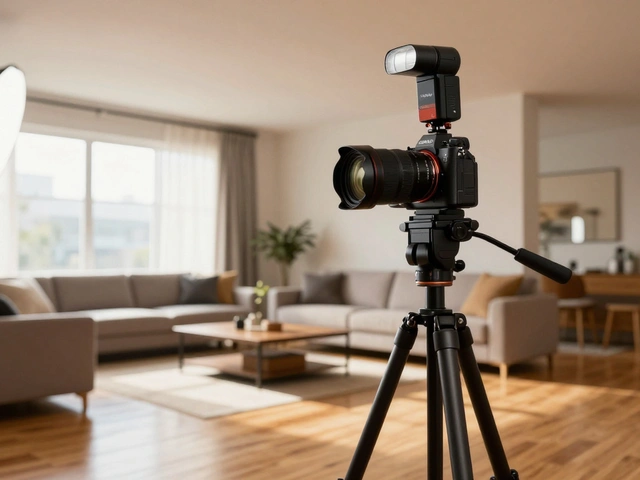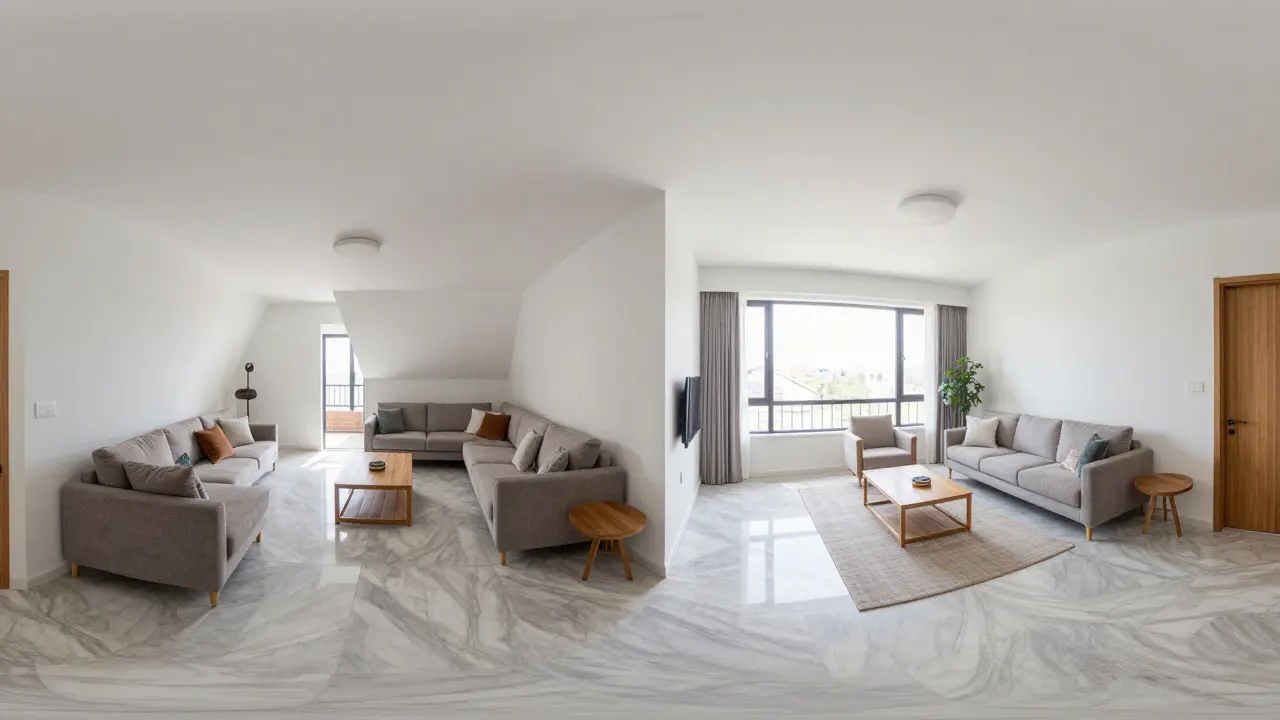
Standing in the center of a living room with your camera ready, you face a choice that defines the entire shoot: do you use an ultra-wide lens or stick to a standard wide-angle lens? This decision isn't just about technical specs; it determines whether the buyer sees a spacious, inviting home or a distorted, dizzying mess of walls and windows. In real estate photography, the goal is always accurate representation mixed with maximum appeal. Getting this wrong can lead to listings that look unappealing online, causing potential buyers to scroll past without even scheduling a viewing.
The Core Difference: Focal Lengths and Field of View
To understand why one lens might be better than the other for a specific property, you first need to grasp what focal length actually does. Focal length, measured in millimeters, dictates how much of the scene fits into your frame. A shorter focal length captures more of the room but compresses distance less, while a longer focal length zooms in but requires you to stand further back to capture the same area.
- Standard Wide-Angle (24mm - 35mm): These lenses offer a natural perspective that closely mimics human vision. They are versatile and handle both tight interiors and medium-sized rooms well.
- Ultra-Wide (16mm - 20mm): These lenses expand the field of view significantly, allowing you to capture vast spaces from a single position. However, they introduce stronger perspective distortion if not used correctly.
The key takeaway here is that "wider" doesn't automatically mean "better." An ultra-wide lens gives you more flexibility in cramped spaces, but it demands stricter discipline regarding camera positioning to avoid making ceilings look like they are falling on top of the viewer.
Why Perspective Distortion Matters in Listings
Human eyes perceive straight lines as straight. When you use a lens, especially an ultra-wide one, parallel lines that converge at infinity in reality appear to converge within the photo if the camera isn't perfectly level. This is known as keystone distortion. In a kitchen shot taken with a 16mm lens where the camera tilts up slightly, the cabinets will lean outward dramatically. To a casual viewer, this makes the room feel unstable and smaller than it actually is.
This is where the concept of shift lenses comes into play. A shift lens allows you to move the optical axis relative to the sensor plane, correcting vertical lines without tilting the camera body. While expensive, many professional real estate photographers invest in a tilt-shift lens or use post-processing software to correct these lines. If you don't have a shift lens, using a wider focal length (like 24mm or 28mm) often reduces the severity of the distortion compared to an ultra-wide 16mm, making manual correction easier and less likely to crop out important parts of the image.
Handling Small Spaces: The Case for Ultra-Wide
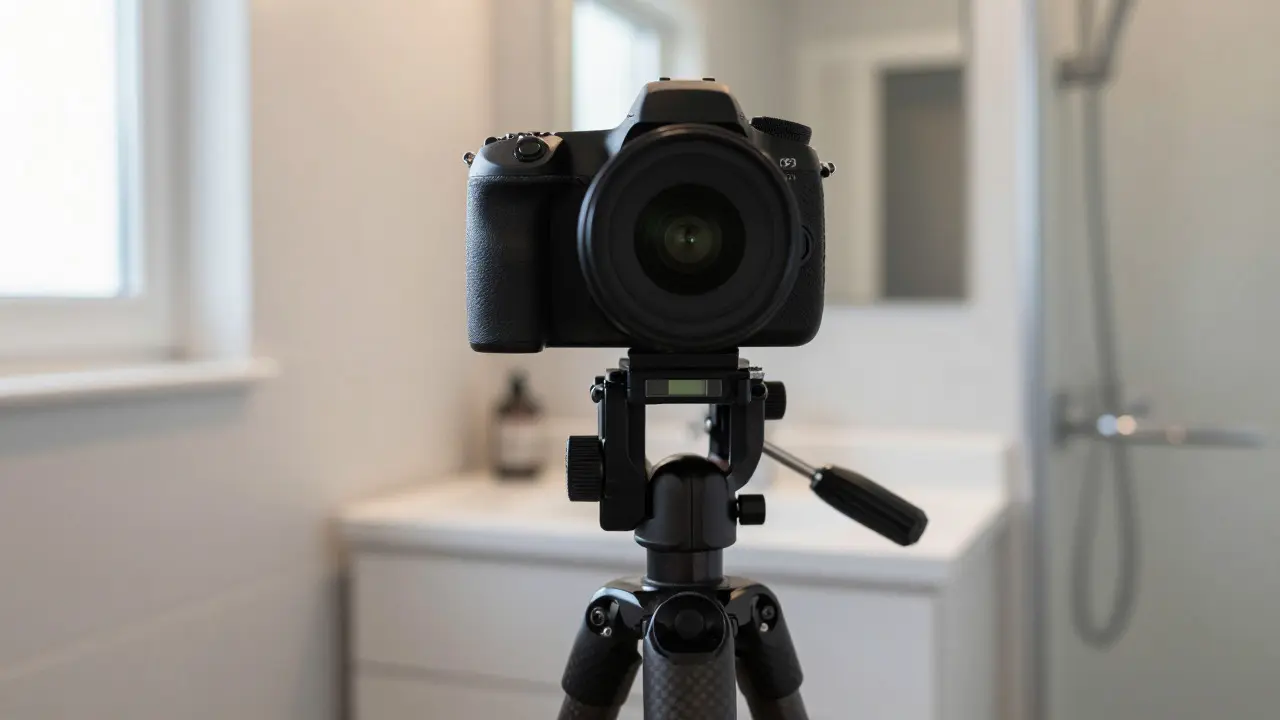
Let’s talk about the nightmare scenario: a small bathroom or a compact city apartment. You physically cannot step back far enough to fit the entire vanity and mirror into a 28mm frame without getting too close to the fixtures. This is where the ultra-wide lens shines. At 16mm or 18mm, you can stand closer to the subject and still capture the full context of the room. The extra width allows you to include the shower, the sink, and the door in a single composition that feels open rather than claustrophobic.
However, there is a trade-off. Because you are standing closer, any imperfections in the room-cluttered countertops, messy towels, or uneven flooring-become more prominent. The ultra-wide lens exaggerates depth, so if your staging isn’t pristine, the flaws will jump off the screen. Before pulling out your 16mm glass, ensure the space is immaculate. The lens will reveal everything.
Larger Rooms and Natural Flow: The Wide-Angle Advantage
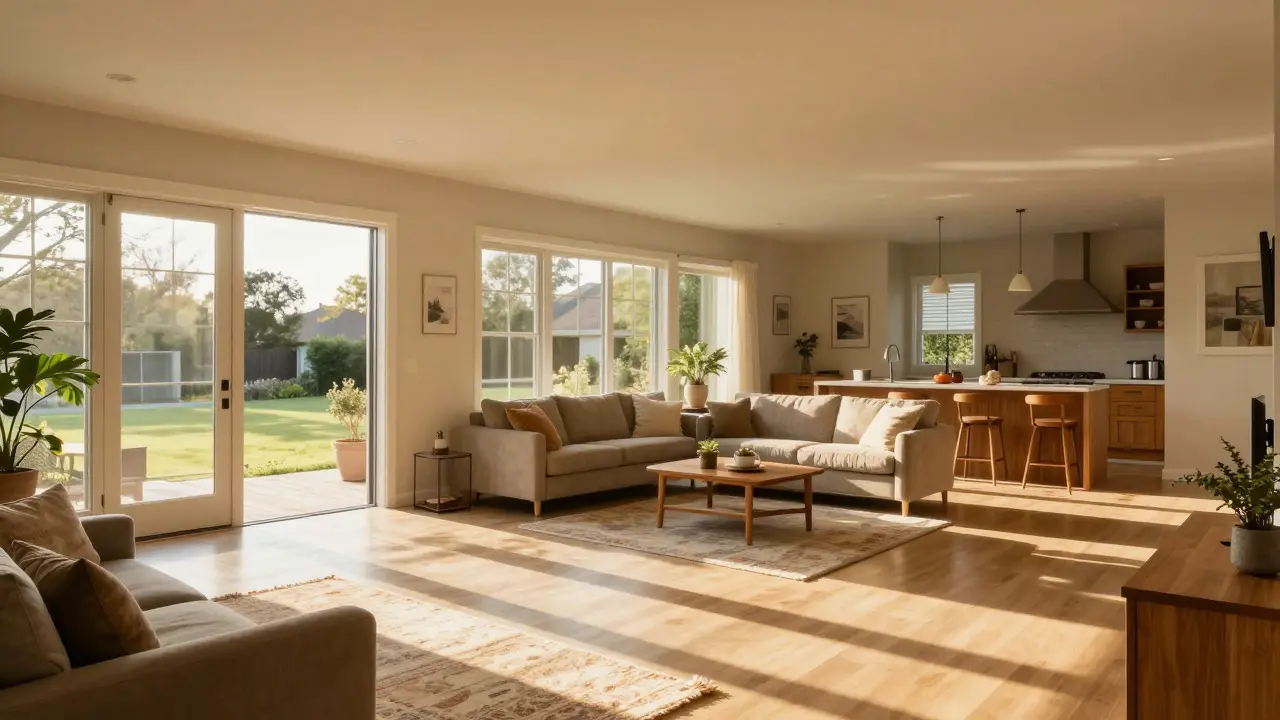
For larger properties, such as suburban homes with open-plan living areas, a standard wide-angle lens (24mm to 35mm) often produces a more pleasing result. Why? Because you can stand further away from the main focal points, creating a sense of scale and proportion that feels authentic. Buyers want to imagine themselves walking through the space. A 24mm lens allows you to position yourself near the entrance, capturing the flow of the room from entry to window. This creates a narrative in the photo that guides the eye naturally.
Using an ultra-wide lens in a large room can sometimes make the space feel cavernous and empty, which might not align with the cozy, livable vibe most buyers seek. Unless you are shooting a massive luxury estate where grandeur is the selling point, the moderate perspective of a 24mm or 28mm lens usually strikes the right balance between showing size and maintaining human-scale comfort.
Technical Considerations: Aperture and Depth of Field
Beyond focal length, you need to consider how your lens handles light and focus. Real estate photos require deep depth of field, meaning everything from the foreground rug to the background window should be sharp. This typically means shooting at apertures around f/8 or f/11.
Most modern real estate lenses are designed to perform well at their widest aperture, but stopping down to f/8 ensures edge-to-edge sharpness across the entire frame. If you are using a full-frame camera, be aware that a 16mm lens on a full-frame sensor behaves differently than it does on a crop-sensor (APS-C) camera. On an APS-C body, a 16mm lens effectively acts like a 24mm lens on full-frame due to the crop factor. This means if you are shooting on a Sony A7 series or Canon R5, your 16mm is truly ultra-wide. But if you are on a Nikon Z50 or Canon EOS R7, that same 16mm gives you a standard wide field of view. Always check your effective focal length before deciding which lens to grab.
Post-Processing and Correction Tools
No matter which lens you choose, post-processing is non-negotiable in professional real estate photography. Software like Adobe Lightroom or Capture One includes lens correction profiles that automatically fix chromatic aberration and distortion caused by the specific glass you are using. However, automatic corrections rarely fix vertical convergence completely. You will likely need to use the Transform tool to manually adjust the vertical lines until they are perfectly plumb.
This process is faster and cleaner when starting with a standard wide-angle lens because the initial distortion is less severe. With an ultra-wide lens, you may find yourself cropping significantly to hide the curved edges or stretched corners after correcting the verticals. Plan your compositions with some breathing room to allow for this necessary cropping later.
Choosing the Right Kit for Your Portfolio
Do you need both? Ideally, yes. A prime lens setup offers the best image quality and fastest apertures, but a zoom lens provides the flexibility to switch between 16mm and 35mm without changing glass in the middle of a shoot. Many professionals carry a 16-35mm zoom lens as their primary workhorse. It covers the ultra-wide end for small spaces and the standard wide end for larger rooms, all in one package. The convenience of not swapping lenses saves time and reduces the risk of dust getting onto your sensor.
If budget is a constraint, start with a high-quality 24mm or 28mm prime lens. It is versatile enough for 80% of residential properties. Add an ultra-wide only if you frequently shoot high-density urban apartments or historic homes with low ceilings and narrow corridors. The investment in specialized glass should match the type of properties you list most often.
Frequently Asked Questions
What is the best focal length for real estate photography?
The most versatile focal length is between 24mm and 35mm. This range offers a natural perspective that minimizes distortion while providing enough width to capture entire rooms. For very small spaces, dropping down to 16mm or 18mm is beneficial, but it requires more careful handling to avoid exaggerating the room's dimensions.
Should I use a zoom lens or a prime lens for real estate shoots?
A zoom lens, specifically a 16-35mm or 16-35mm equivalent, is generally preferred for efficiency. It allows you to adjust your field of view instantly as you move through different sized rooms. Prime lenses offer slightly better optical performance and lighter weight, but the inability to change focal length quickly can slow down your workflow during a busy listing day.
How do I avoid distorted walls in my photos?
Keep your camera perfectly level with the floor. Use a bubble level on your tripod head or the electronic level built into your camera. Additionally, try to keep the camera height consistent, usually around 3 to 4 feet off the ground. Correct any remaining vertical convergence in post-processing using the transform tools in editing software.
Is an ultra-wide lens bad for large living rooms?
Not necessarily, but it can make the room feel unnaturally vast if not composed carefully. In large rooms, an ultra-wide lens can emphasize the emptiness of the space. A standard wide-angle lens often creates a more balanced and inviting atmosphere by maintaining a sense of human scale and proportion.
What aperture should I use for sharp real estate photos?
Shoot at f/8 or f/11. These mid-range apertures provide the deepest depth of field, ensuring that both the foreground and background elements are in sharp focus. Avoid shooting at the widest aperture (e.g., f/2.8) as this will blur the background, and avoid going beyond f/16 as diffraction can soften the overall image quality.