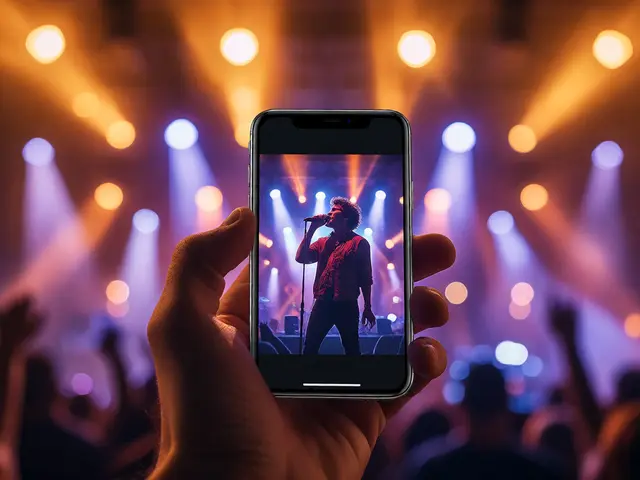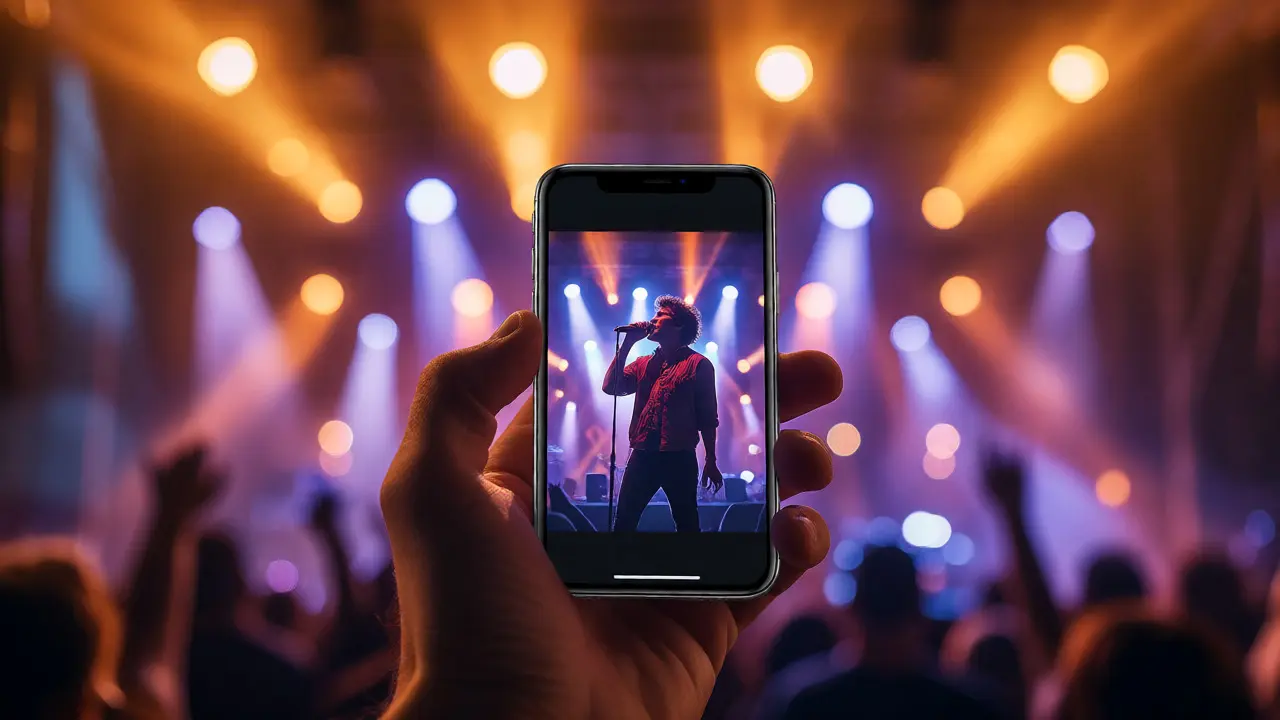
You are at a concert, the band is finally playing your favorite song, and you want to capture that moment. You pinch the screen of your phone to get closer. The photo looks great in the viewfinder, but when you look at it later, it’s blurry, pixelated, or weirdly soft. Why did this happen? It comes down to one critical distinction: optical zoom versus digital zoom. Understanding the difference isn't just technical trivia; it's the key to saving your memories from looking like low-res thumbnails.
The Core Difference: Light vs. Math
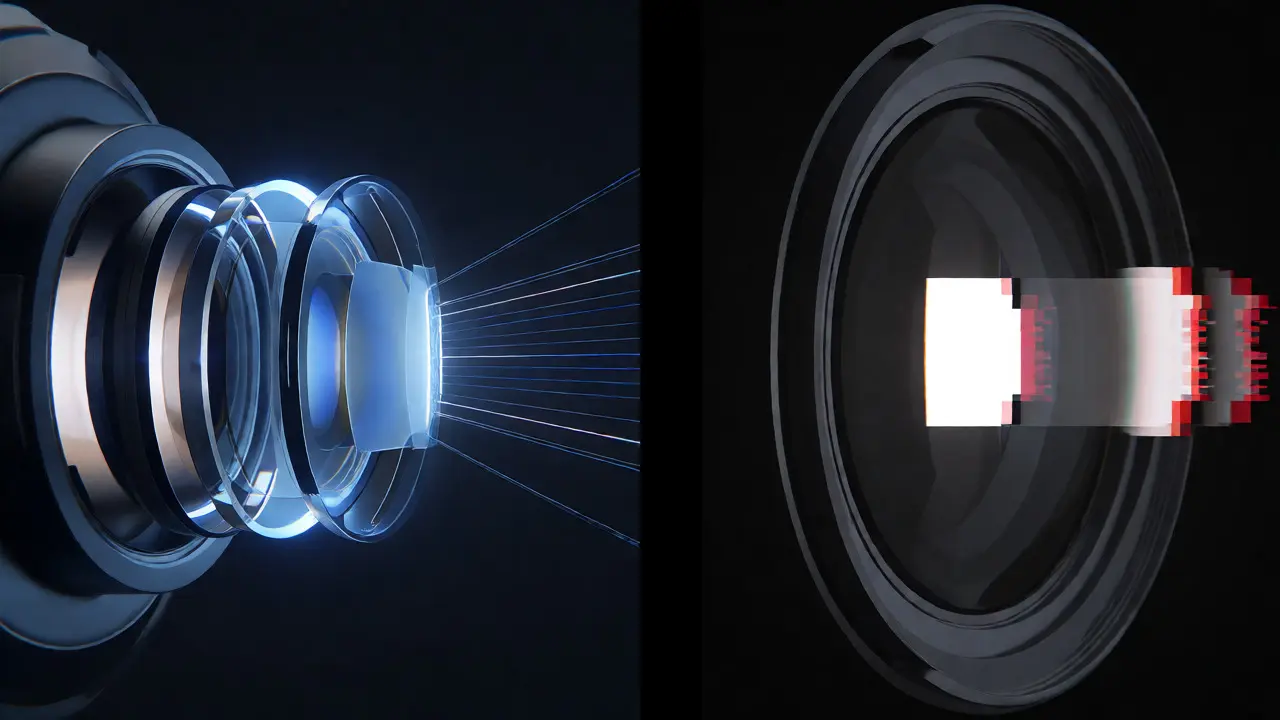
Let's cut through the jargon. When you use optical zoom, your phone physically changes how light enters the lens. It uses multiple glass elements inside the camera module to magnify the image before it even hits the sensor. Think of it like using binoculars. You aren't changing the data; you're just gathering more detail from a specific angle. This preserves every bit of sharpness, color accuracy, and dynamic range available in the scene.
Digital zoom, on the other hand, is essentially cropping. Your phone takes the full image captured by the sensor and digitally enlarges a small portion of it. If you zoom in 4x digitally, you are throwing away most of the pixels and stretching the remaining ones to fit the frame. It’s the same as taking a photo on your computer and hitting "zoom" in an image viewer. It works for viewing, but it degrades quality significantly because you are losing information rather than capturing more of it.
How Optical Zoom Works on Modern Smartphones
In the past, phones had fixed lenses with no zoom capability unless they had separate physical lenses (like old Sony Ericsson models). Today, manufacturers have gotten creative. Most flagship phones from 2024 onwards use a multi-camera system. You might see labels like "1x," "3x," or "5x." These numbers usually refer to optical zoom levels provided by different physical lenses.
A standard wide-angle lens is typically considered 1x. A telephoto lens attached to the same phone might be 3x or 5x. When you switch from the main camera to the telephoto lens, you are engaging true optical zoom. The light path changes, but the resolution remains high because the sensor dedicated to that lens captures the image natively. Some phones, like certain Samsung Galaxy Ultra models or iPhone Pro Max variants, use periscope lenses. These fold the light path horizontally inside the phone body, allowing for much longer focal lengths-up to 10x optical zoom-without making the phone absurdly thick.
The Rise of Hybrid and Lossless Zoom
Here is where it gets tricky. Manufacturers know users love big zoom numbers. So, they developed hybrid zoom. This combines optical zoom with computational photography. For example, if you have a 3x optical lens but select 6x zoom, the phone uses the 3x optical image and then applies AI upscaling and cropping to reach 6x. Is it perfect? No. But it is often far superior to pure digital zoom because it starts with more data.
Sony’s Exmor sensors and Apple’s Photonic Engine use sophisticated algorithms to merge data from multiple lenses. They analyze the scene, detect edges, and sharpen details intelligently. This is sometimes called "lossless zoom" in marketing materials. While technically not purely optical, the result is often indistinguishable from optical zoom to the naked eye, especially on smaller screens. However, if you print that photo large or crop heavily in editing, you will still see artifacts that wouldn't exist with pure optical capture.
| Feature | Optical Zoom | Hybrid/Lossless Zoom | Digital Zoom |
|---|---|---|---|
| Mechanism | Physical lens movement/switching | Optical + AI Upscaling | Cropping & Interpolation |
| Image Quality | High (Native Resolution) | Medium-High (Algorithm Dependent) | Low (Pixelation/Softness) |
| Best Use Case | Portraits, Wildlife, Details | General Distance Shooting | Emergency Framing Only |
| Data Loss | Minimal | Moderate | Significant |
Why Digital Zoom Fails (And When It Doesn’t)
Pure digital zoom is generally bad news for serious photographers. It reduces effective megapixels drastically. If you shoot a 12MP image and apply 4x digital zoom, you are effectively left with a 0.75MP image. That is lower than many webcams from ten years ago. Text becomes unreadable, faces lose texture, and noise increases because the software tries to guess missing pixel values.
However, digital zoom has its place. If you are shooting in RAW format, you can always crop later without losing quality relative to the original file size. Also, modern phone cameras have improved so much that mild digital zoom (up to 2x) on high-resolution sensors (like 50MP or 108MP modes) can still yield decent results. The key is restraint. Avoid pushing digital zoom beyond 2x or 3x if you care about clarity. Always check if your phone offers a "binning" mode, which combines four pixels into one for better light sensitivity, though this lowers resolution further.
Practical Tips for Better Zoomed Photos
Knowing the theory is half the battle. Here is how to actually get better shots when you need to zoom in:
- Tap to Switch Lenses: Don't just pinch. Tap the icons above the shutter button that say 0.5x, 1x, 3x, etc. This forces the phone to engage the correct physical lens immediately.
- Watch the Shutter Speed: Telephoto lenses amplify shake. If you are holding the phone with one hand at 5x zoom, your natural tremor will blur the image. Hold your breath, brace your elbows against your ribs, or use a mini tripod.
- Use Night Mode Wisely: Optical zoom lenses often have smaller apertures (higher f-stops), meaning they let in less light. In dark conditions, digital zoom might actually perform better than a dim optical lens because the main sensor is larger and more sensitive. Test both modes in low light.
- Edit Smartly: If you must use digital zoom, apply selective sharpening in post-processing apps like Lightroom Mobile or Snapseed. Do not over-sharpen, or you will create halos around objects.
Future Trends: Periscope Lenses and AI
The industry is moving toward higher optical zoom ranges. We are seeing phones with continuous optical zoom capabilities, similar to DSLRs, though these are rare due to thickness constraints. More common is the expansion of periscope technology to mid-range phones. By 2026, even budget devices may offer 3x optical zoom as standard.
Artificial Intelligence is also closing the gap. Neural networks can now hallucinate realistic textures and details in cropped areas, making 10x digital zoom look surprisingly close to 5x optical zoom. But remember: AI is guessing. It doesn't know what was actually there. If you are photographing something critical, like a document or a distant sign, rely on optical zoom whenever possible.
Does digital zoom ruin my photos?
Yes, if used excessively. Digital zoom crops the image and enlarges the remaining pixels, leading to loss of detail, increased noise, and blurriness. It does not add new information to the image, unlike optical zoom.
What is the best zoom level for phone cameras?
The best zoom level is always the native optical zoom of your phone's lenses (e.g., 1x, 3x, or 5x). Avoid intermediate levels that require digital interpolation unless necessary. Sticking to native lens settings ensures maximum sharpness and dynamic range.
Can I fix bad digital zoom in editing?
You can improve it slightly using AI upscaling tools in apps like Topaz Photo AI or Adobe Super Resolution. These tools predict missing details, but they cannot restore lost information completely. Prevention is always better than cure.
Why is my zoomed photo blurry?
Blurriness in zoomed photos is usually caused by camera shake, not just zoom type. Telephoto lenses magnify hand movement. Use a stable grip, enable stabilization features, or use a tripod. Additionally, ensure the subject is in focus, as autofocus systems struggle with high-zoom scenes.
Is hybrid zoom better than digital zoom?
Generally, yes. Hybrid zoom combines optical data with computational enhancement, resulting in higher quality than pure digital cropping. It retains more texture and less noise, especially in good lighting conditions.