Most guys dread the photo list. They picture themselves standing in a stiff line, smiling like they’re waiting for a DMV number to be called. But here’s the truth: your Groom and Groomsmen Photos are one of the few places where you can actually show who you are as a group. It’s not just about looking sharp; it’s about capturing the vibe of your friendship before the chaos of the reception hits.
If you’ve ever looked at wedding albums from ten years ago and winced at the forced smiles, you know what we mean. Modern wedding photography has shifted. Couples want authenticity. They want to see the laughter, the inside jokes, and the genuine camaraderie. So, how do you get those shots without feeling like a mannequin? It starts with ditching the rigid poses and embracing personality.
Why Personality Beats Perfect Poses
Let’s be real. You don’t look your best when you’re trying too hard. When a photographer says, "Look serious," most guys end up looking constipated. Instead, focus on interaction. The best images happen when you forget the camera exists. Think about why these men are in your life. Did you survive college together? Are they work buddies who keep you sane? Lean into that history.
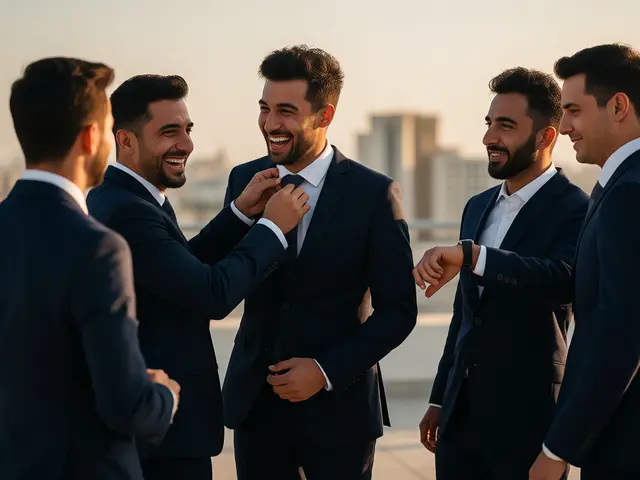
Consider the difference between two scenarios. In Scenario A, six guys stand in a row, hands in pockets, staring straight ahead. In Scenario B, the groom is telling a story, and the groomsmen are reacting-some laughing, some rolling their eyes, one checking his watch because he knows it’s a long story. Which image tells a better story? Scenario B wins every time. It shows dynamics. It shows hierarchy (who’s the joker, who’s the voice of reason). It feels alive.
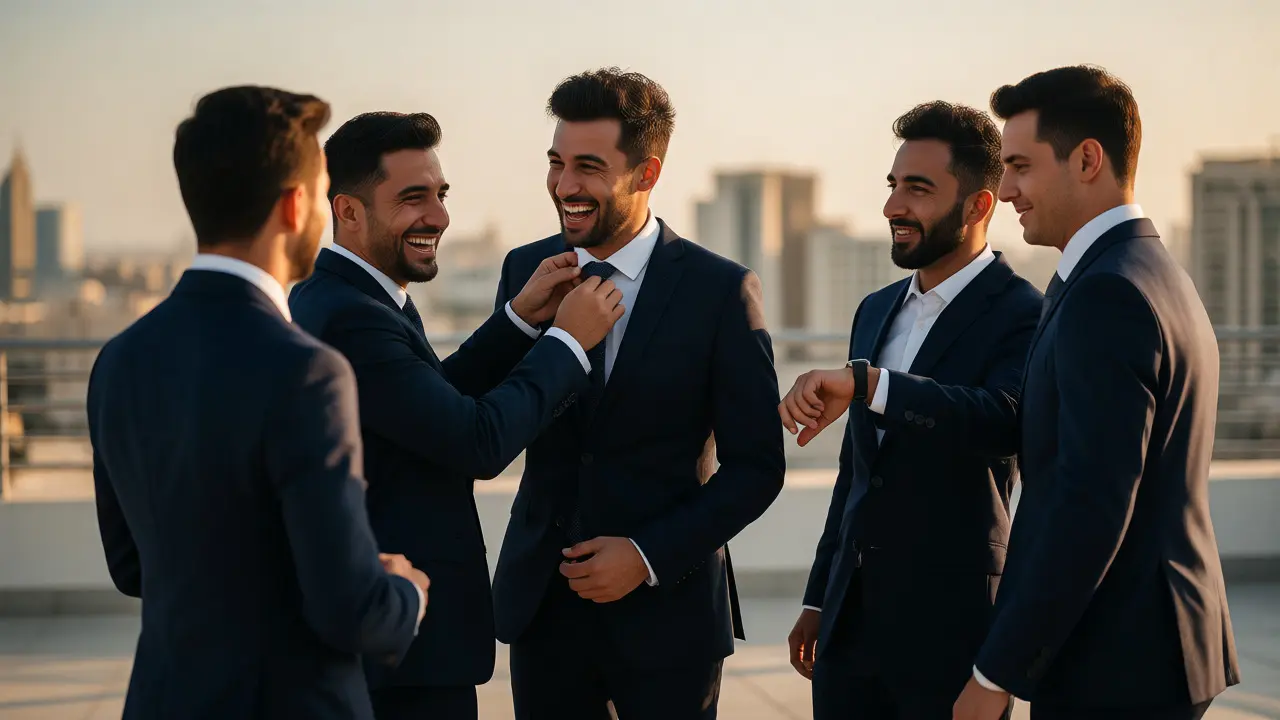
This approach requires trust. You need to trust your photographer to catch the moments, and you need to trust your friends to play along. If you’re naturally reserved, don’t force high-energy antics if they feel fake. A quiet moment of adjusting each other’s ties or sharing a whiskey shot can be just as powerful as a group jump-shot. The key is consistency. If your group is known for dry humor, let that shine. Don’t try to be the loud, jumping crew if that’s not your style.
The Gear Check: Let Your Props Do the Talking
Props are often misunderstood. People hear "props" and think of cheesy mustache cutouts or giant sunglasses. That’s not what we’re talking about here. We’re talking about personal artifacts that signal identity. These objects add context and give your hands something to do, which instantly reduces awkwardness.
Think about your shared interests. Do you all fish? Bring a vintage reel or a specific lure. Are you gamers? Maybe one guy brings a controller, another holds a retro console. If you’re into cars, maybe you pose near a classic motorcycle or hold a wrench. The rule of thumb: the prop should make sense to your inner circle but still be visually interesting to an outsider.
| Group Vibe | Recommended Props | Why It Works |
|---|---|---|
| Sports Fans | Vintage jerseys, team scarves, sports equipment | Adds color and immediate recognition of loyalty |
| Tech/Gamers | Retro consoles, headphones, mechanical keyboards | Nostalgic and shows intellectual hobby |
| Outdoorsy | Fishing rods, hiking boots, compass, flasks | Connects to nature and adventure themes |
| Music Lovers | Instruments, vinyl records, concert tickets | Visual texture and auditory memory trigger |
| Classic Gentlemen | Cigars, whiskey glasses, pocket watches, newspapers | Elevates the formal wear with lifestyle cues |
One warning: don’t overdo it. One or two key items per person is plenty. If everyone is holding three different things, the photo becomes cluttered. Also, check the logistics. If you’re bringing a guitar, make sure it fits in the car. If you’re bringing cigars, ensure you have a place to light them safely. Practicality matters as much as aesthetics.
Location Scouting for Character
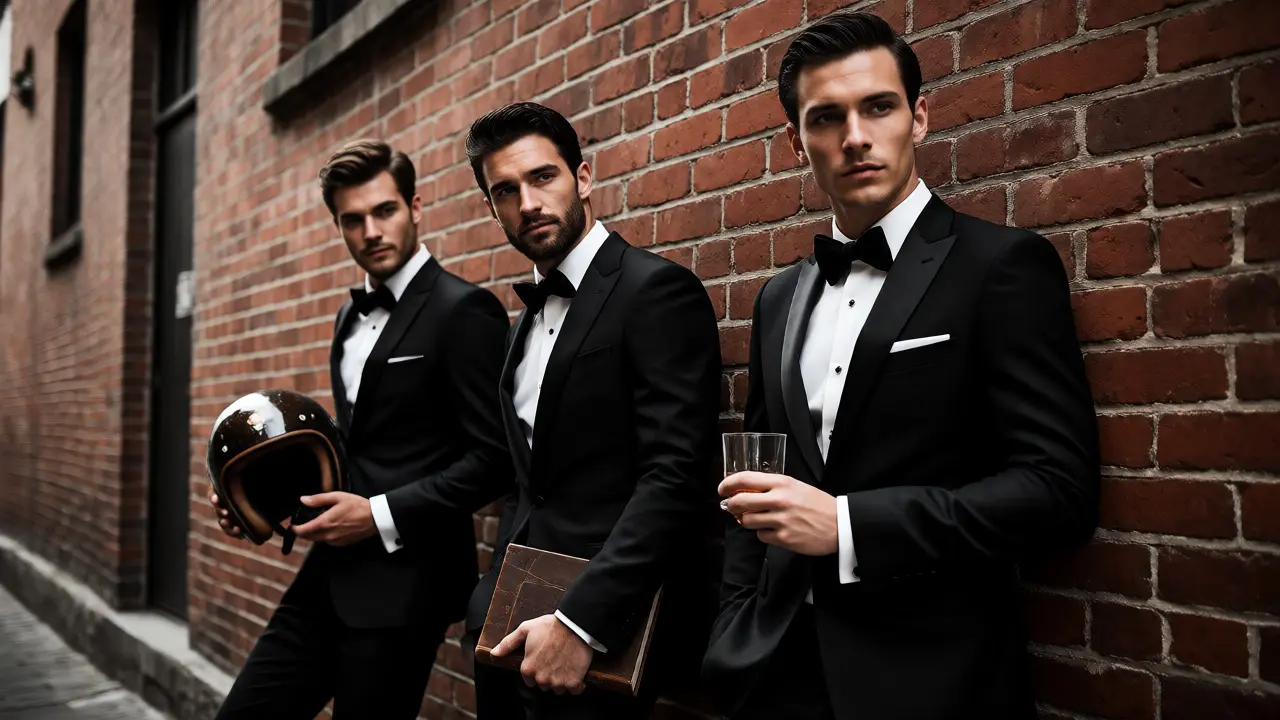
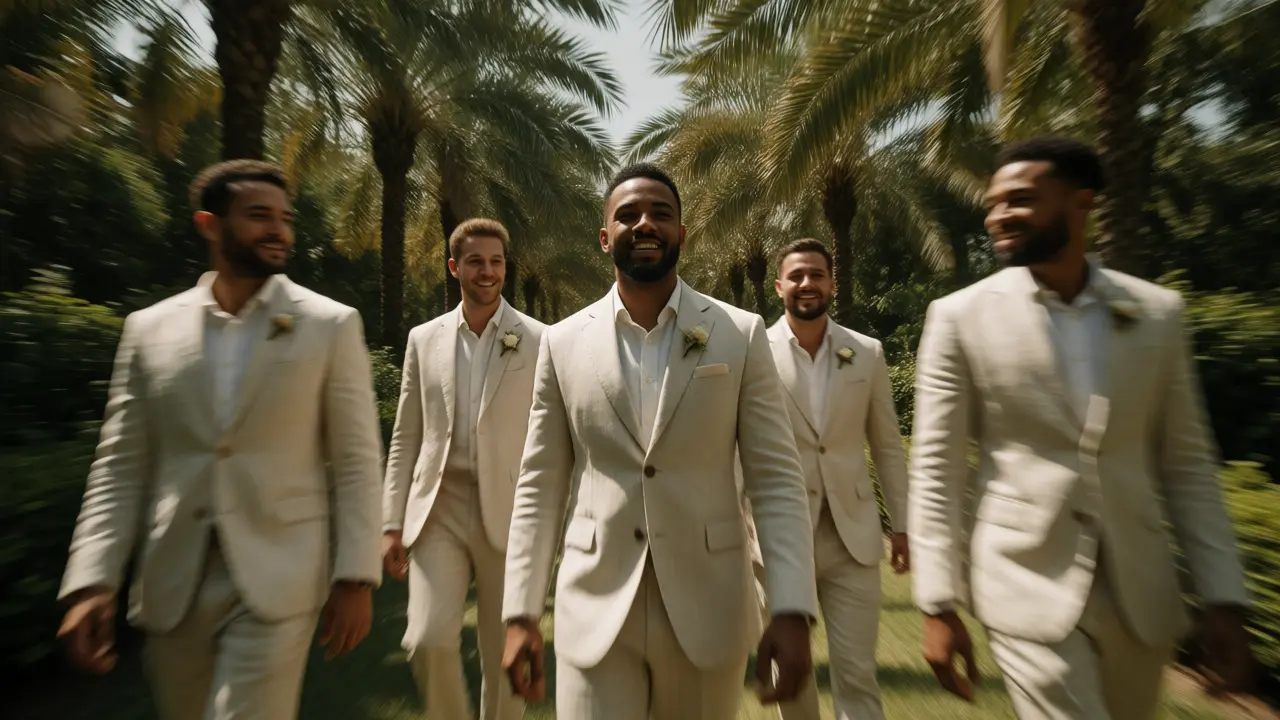
Your venue sets the stage, but you don’t have to stay in the ballroom. Some of the best groom photos happen in unexpected places. Look for textures and backdrops that contrast with your suits. A tuxedo against a brick wall looks gritty and cool. A linen suit against a green forest backdrop looks relaxed and organic.
Ask your planner or photographer about off-site options nearby. Is there a garage? A library? A rooftop with a city view? These locations provide natural framing. For example, posing in front of a row of motorcycles creates a leading line that draws the eye toward the subjects. Standing under an archway adds depth. Even a simple staircase can create dynamic angles, allowing some guys to sit while others stand, breaking up the monotony of a flat plane.
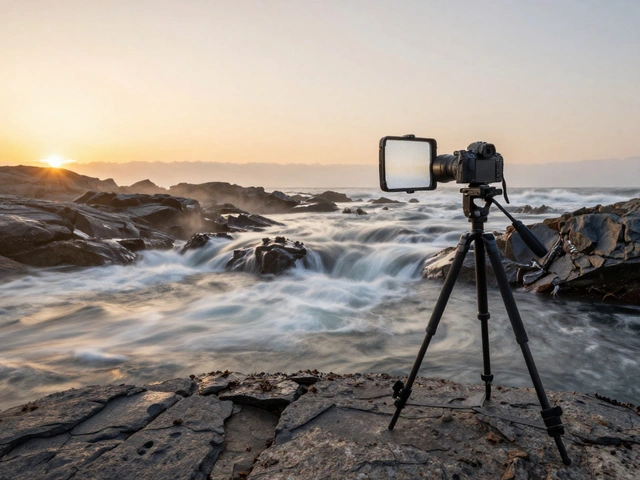
Lighting plays a huge role here. Golden hour-that hour after sunrise or before sunset-is magic for skin tones. It softens shadows and adds a warm glow. If your ceremony is midday, seek out open shade. Direct noon sun creates harsh shadows under the eyes and nose, making everyone look tired. Find a building shadow or a tree canopy and shoot there. Your photographer will thank you, and your Instagram feed will look significantly better.
Posing Without Panic: Simple Frameworks
You don’t need to memorize twenty poses. You need three reliable frameworks that allow for variation. Once you master these, you can adapt them to any location.
- The Triangle Method: Avoid straight lines. Arrange the group so heads form triangles. This means varying heights. Some guys lean against a wall, some stand on steps, some crouch slightly. Triangles guide the viewer’s eye around the image rather than letting it slide off the edge.
- The Interaction Cluster: Pair up. Have two guys talk, two guys laugh at a phone screen, and two guys adjust their cuffs. Then mix the pairs. This prevents the "line-up" look and creates multiple focal points within one frame.
- The Action Shot: Walk towards the camera. Walking relaxes facial muscles and creates natural movement. Ask the group to walk in a loose V-shape, with the groom at the point. Tell them to ignore the lens and talk to each other. The photographer shoots in burst mode. You’ll get dozens of frames, and at least five will be perfect.
Remember, posture matters more than expression. Shoulders back, chin slightly down. This elongates the neck and defines the jawline. Most guys slouch when they’re nervous. Consciously pulling shoulders back signals confidence, even if you’re internally panicking about whether your fly is zipped.
Managing the Crew: Leadership Tips for the Groom
As the groom, you’re the project manager for this shoot. Your groomsmen might be hungover, nervous, or just clueless about how to take a photo. It’s your job to set the tone. If you’re stressed, they’ll be stressed. If you’re having fun, they’ll follow suit.
Brief them beforehand. Send a text the night before: "Hey, no stiff poses tomorrow. Just act normal. I’m going to tell a bad joke, and I want you to react." This gives them permission to be human. During the shoot, keep energy high. Play music on a Bluetooth speaker if allowed. Music changes body language instantly. Slow jazz makes people move slower and smoother. Upbeat rock gets people moving faster and laughing harder.
Also, manage expectations regarding time. A good groom/groomsmen session takes 15-20 minutes. Any longer, and people start getting bored or sweaty. Keep it tight. Have a shot list ready, but be flexible. If the photographer sees a great angle you didn’t plan for, go with it. Trust their expertise. They’ve seen thousands of weddings; they know what works.
Common Pitfalls to Avoid
Even with the best intentions, things go wrong. Here are the most common mistakes and how to fix them.
- Hiding Hands: Guys often shove hands deep into pockets, hiding wrists and fingers. This cuts off the arm line and looks unnatural. Instead, hook thumbs in pockets, leaving fingers visible. Or hold a prop. Visible hands convey openness.
- The Double Chin Angle: Shooting from below makes everyone look heavy. Ask the photographer to shoot from chest height or slightly above. This is universally flattering for men.
- Ignoring the Details: Cufflinks, boutonnieres, and shoe polish matter. Check these right before the shoot. A crooked boutonniere or scuffed oxfords will distract from the overall polish. Do a quick mirror check as a group.
- Forgetting the Height Difference: If one groomsman is 6’4” and another is 5’7”, don’t put them side-by-side unless necessary. Use the environment (steps, benches) to equalize head levels, or embrace the difference by placing the tallest guy in the back center.
Another subtle issue is matching formality. If the groom wears a tuxedo and a groomsman wears a casual blazer, it looks disjointed. Ensure everyone is on the same dress code page. If someone forgot their tie, have a spare. Small inconsistencies break the visual harmony of the group.
Post-Production: What to Expect
Once the shoot is done, the photographer goes to work. Don’t expect raw files. Professional editing involves color correction, exposure balancing, and minor retouching. This isn’t about changing faces; it’s about enhancing reality. Skin tones are normalized, stray hairs removed, and background distractions cleaned up.
Be patient during the turnaround. Wedding photographers are often juggling multiple events. A realistic timeline for edited galleries is 4-8 weeks. If you need sneak peeks for social media, ask specifically. Many photographers offer a small batch of edited images within 48 hours. This helps satisfy the immediate urge to share while you wait for the full album.
When you receive the gallery, look at the variety. Did you get close-ups? Wide shots? Candid laughs? Formal portraits? A well-rounded portfolio covers all bases. If you feel something is missing, communicate clearly with your photographer. Maybe you wanted more action shots or fewer posed ones. Feedback helps them understand your preferences for future projects, though for your own wedding, the moment is already captured.
Final Thoughts on Authenticity
At the end of the day, these photos aren’t just for your parents’ mantel. They’re historical documents of your friendship. Ten years from now, you won’t care if your tie was perfectly centered. You’ll care that you remember how it felt to stand with your brothers-in-arms, ready to support you through the biggest day of your life.
So, relax. Smile with your eyes. Laugh at the ridiculous jokes. Hold the props that mean something to you. Stand tall, but stay loose. Your personality is the most attractive thing you bring to the frame. Everything else-lighting, composition, gear-is just supporting cast.
How many groomsmen photos should we aim for?
Aim for a mix of 10-15 distinct compositions. This includes one formal group portrait, several candid interactions, individual or pair shots, and action-oriented images. Quality over quantity is key; it’s better to have 10 amazing shots than 50 mediocre ones.
What if my groomsmen hate being photographed?
Keep the session short (under 20 minutes) and focused on activity rather than posing. Give them a task, like pouring drinks or fixing ties. Distraction reduces self-consciousness. Also, choose a photographer who specializes in documentary styles, as they are less likely to interrupt with rigid instructions.
Can we use smartphones for groom photos?
Yes, as a secondary source. Smartphones are great for behind-the-scenes content and social media stories. However, rely on your professional photographer for the main portraits due to superior lighting control, depth of field, and resolution suitable for printing.
Should we wear sunglasses in the photos?
Only if it fits the vibe and hides tired eyes! Sunglasses can add mystery and cool factor, especially for outdoor daytime shots. However, avoid them for formal indoor portraits where eye contact and expression are important. Consider removing them for at least half the session.
What is the best time of day for groom photos?
Golden hour (shortly after sunrise or before sunset) offers the most flattering, soft light. Midday sun can be harsh, creating unflattering shadows under eyes and noses. If you must shoot at noon, find open shade or use reflectors to bounce light onto faces.