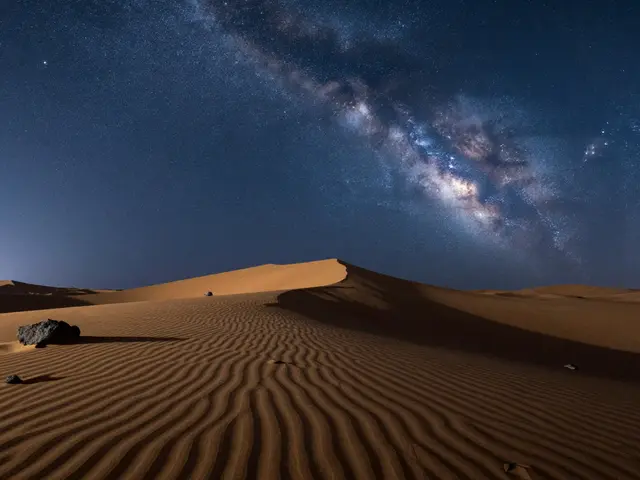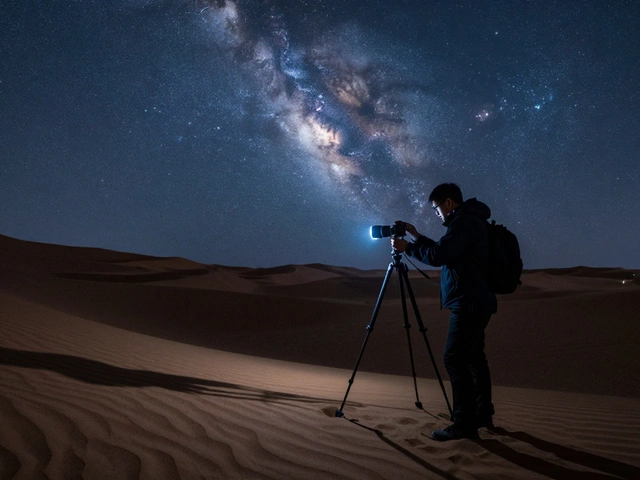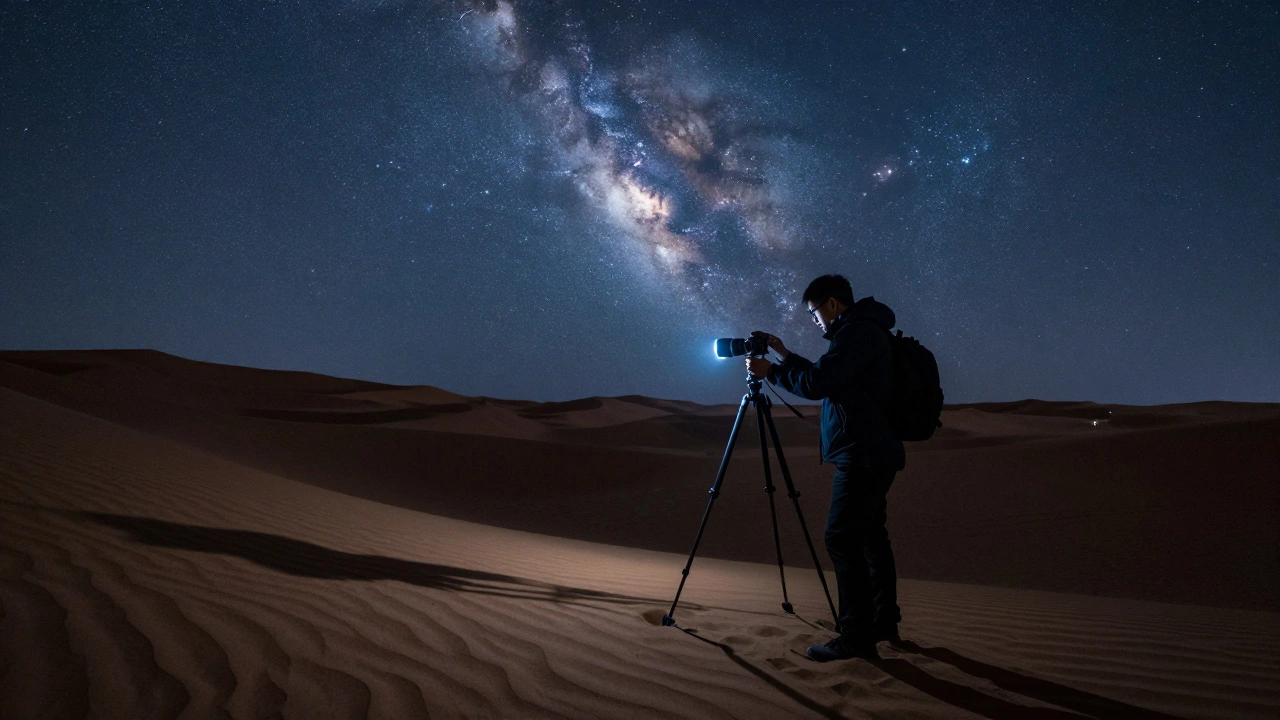
Staring at your screen after a long night shoot, you expect crisp star points across the frame. Instead, you see tiny comets shooting outward from the corners. That annoying optical defect is called coma. It happens when off-axis light rays fail to converge at the same point, turning perfect circles into distorted teardrops. For anyone serious about capturing the Milky Way or nightscape scenes, understanding wide-angle lenses is critical because they stretch this problem across the largest part of your image.
Astrophotography requires specific optical performance that most daylight lenses simply do not provide. A specialized genre of photography capturing celestial objects like stars, nebulae, and galaxies, requiring equipment optimized for low-light conditions. The right glass changes everything between a ruined gallery print and an award-winning shot. You aren't just buying a camera attachment; you are selecting a tool that determines whether your stars stay round or get smeared across the horizon.
The Sweet Spot of Focal Lengths
Choosing the wrong focal length is like wearing shoes that are two sizes too big. You might fit, but movement feels clumsy. In the world of night skies, Focal LengthThe distance from the lens to the camera sensor, determining the angle of view and magnification of the image. dictates how much sky you capture versus how much detail you resolve. A super-wide option gives you sweeping vistas of the Milky Way arching over mountains, while a tighter wide-angle focuses on bright clusters.
If you own a full-frame camera, you probably want to stick between 14mm and 20mm for those grand landscapes. This range captures the bulk of the band while keeping your foreground interesting. For APS-C shooters, that shifts closer to 10mm to 14mm for super-wide and 16mm to 24mm for fast wide angles. Micro Four Thirds cameras have their own scale, usually hovering around 8mm to 16mm depending on how extreme you want to get. The difference isn't just physical distance; it is the math of how many pixels hit the sensor before trailing begins.
| Sensor Type | Super Wide Range | Fast Wide Range |
|---|---|---|
| Micro Four Thirds (M4/3) | 8mm - 10mm | 12mm - 16mm |
| APS-C | 10mm - 14mm | 16mm - 24mm |
| Full-Frame | 14mm - 20mm | 24mm - 35mm |
These classifications help you visualize what fits in the frame. If you are shooting a mountain peak against the Orion Nebula, a 24mm might cut off the peak. A 14mm keeps both. It is a geometric decision first, an artistic one second.
Understanding Coma Aberration
Here is where we get to the core issue. When you buy a fast lens, marketing materials brag about "corner-to-corner sharpness." But in the lab, that test uses flat targets under perfect light. In the dark, with faint light sources billions of miles away, physics takes over. Coma AberrationAn optical imperfection where off-axis point sources of light appear comet-shaped, common in wide-angle lenses used at maximum aperture. strikes hard in wide-angle glass. Because the light enters at a steep angle, the lens struggles to focus it tightly.
You might think expensive lenses fix this completely. They reduce it, yes, but rarely eliminate it. Many manufacturers prioritize center sharpness because that is what casual reviewers measure. They leave the corners slightly flawed to keep costs down. To spot this yourself, look at the furthest edge of a starburst pattern. If the stars turn sideways like little ghosts, your lens has significant coma.
Why does this matter for you? If you plan to crop your image later, those corner stars become unusable artifacts. Post-processing tools exist to shrink them back, but the software degrades the data. It is always better to capture clean data than to try to fix bad data.
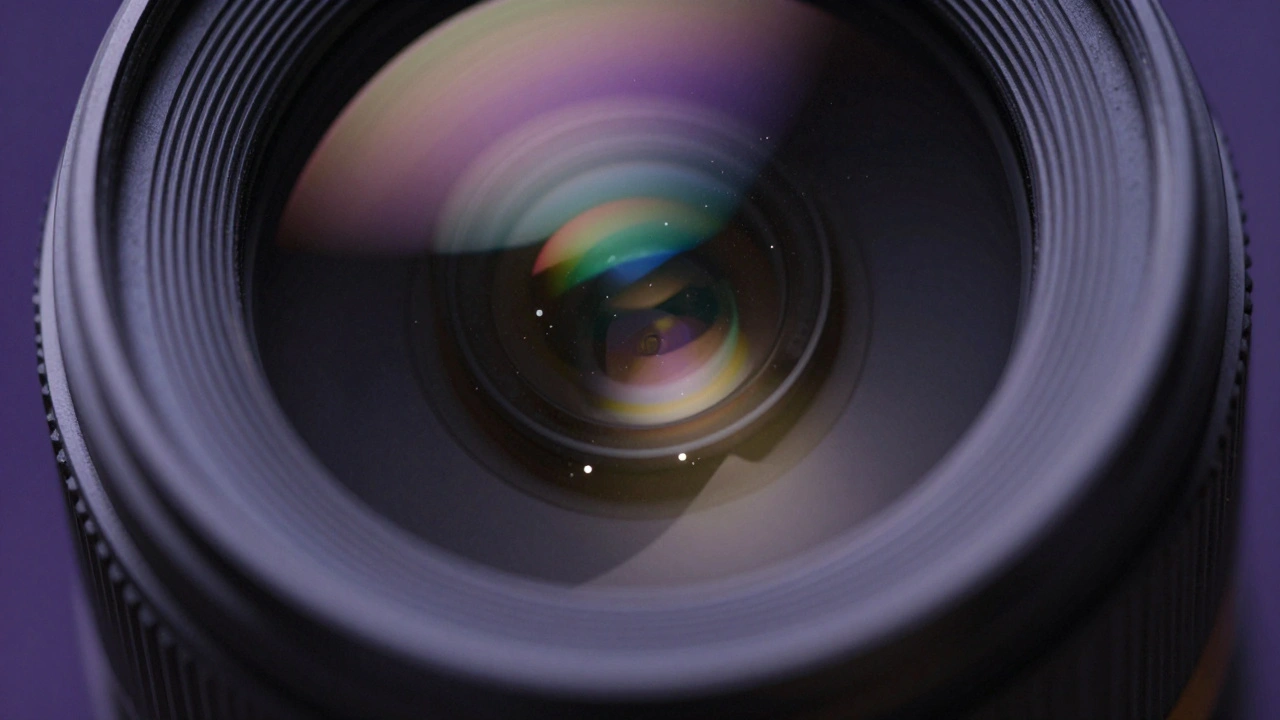
Managing Aperture for Clarity
Finding a lens with a huge aperture is exciting. An f/1.4 or f/1.8 collects massive amounts of light. But speed comes with trade-offs. Many top-tier wide-angle lenses, even the premium ones, perform better when you stop them down slightly. For example, some experienced photographers using the Sigma 14mm F1.8 DG HSMA high-performance ultra-wide prime lens known for excellent landscape astrophotography capabilities. recommend shooting at f/2.8 rather than the maximum f/1.8. Why? Stopping down reduces the impact of coma and chromatic aberration.
This might feel counterintuitive. You bought a fast lens to collect light, right? Sometimes, yes. If you are at a site with heavy light pollution, every fraction counts. However, at a Bortle class 3 site-dark enough to see deep space-shooting at f/2.8 lets you maintain better structure in the star field. You lose half a stop of light, which means doubling your ISO, but you gain structural integrity. With modern sensors handling noise well, that trade-off is often worth it.
Consider the Sony 14mm f/1.8 GM. While incredibly fast, many users find the absolute corner performance improves significantly when dialed down just a notch. The Zeiss Batis 18mm f/2.8 offers a similar philosophy: a slightly slower lens often renders cleaner images without the correction required for faster optics.
Choosing the Right Glass
Making the right choice depends heavily on your camera mount. Sony users have plenty of great native options. The Sony 12-24mm f/2.8 GM is a workhorse zoom that covers the classic landscape ranges. If you prefer primes for maximum light gathering, the Sony 20mm f/1.8 is a solid mid-range contender. The 14mm prime handles the ultra-extreme shots.
Nikon Z system owners have a strong pair of options: the Nikkor Z 17-28mm f/2.8 zoom provides flexibility for changing scenes, while the Nikkor Z 35mm f/1.4 serves up stellar low-light performance. This specific 35mm model stands out for its compact design. It gets close to subjects, allowing you to focus on foreground details like flowers or rocks alongside the sky.
Third-party manufacturers remain kings of value. Brands like Rokinon offer manual focus primes such as the 24mm f/1.8 or 35mm f/1.8. These manual gears force you to know your distances, but they deliver incredible resolution for the price tag. The Sigma 14mm remains a favorite among enthusiasts for balance between cost and optical fidelity.
Price matters. A $950 12mm lens might not be essential unless you specifically need that unique perspective. Evaluate if the extra cost buys you something unattainable with a cheaper alternative. Often, a slightly older optical formula performs just as well if you shoot at f/2.8.
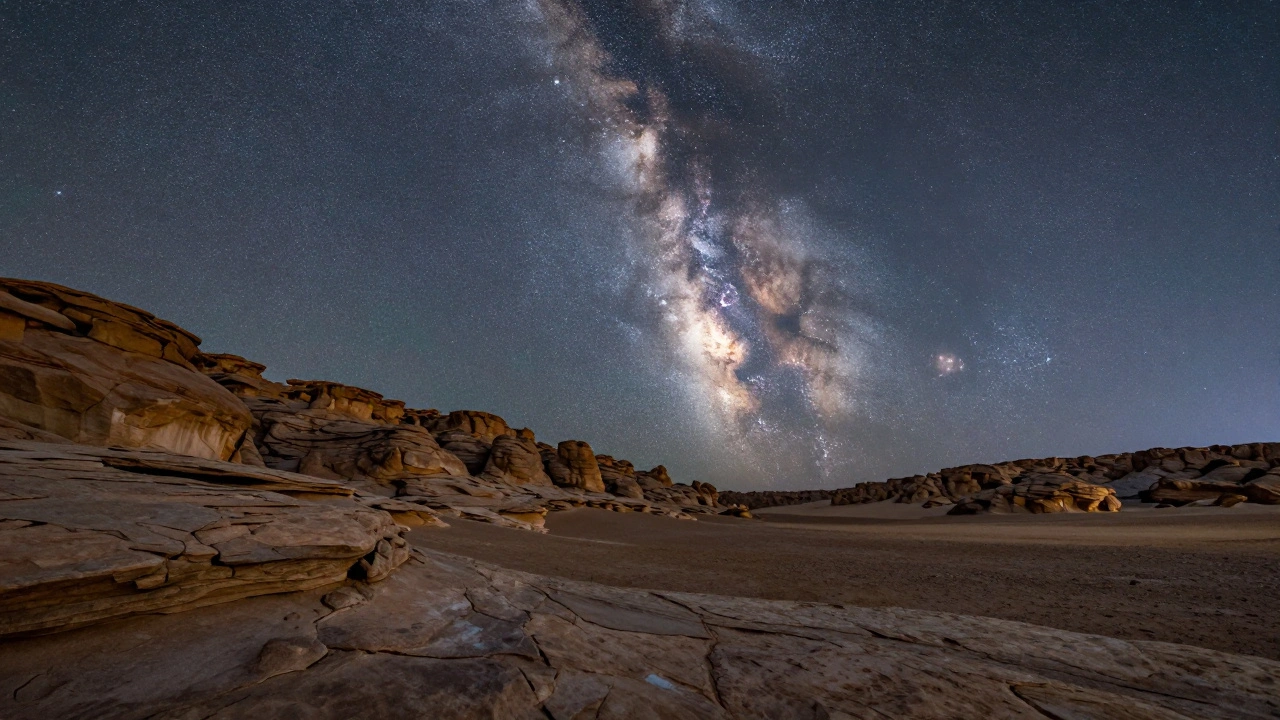
Field Testing and Foreground Composition
Buying the gear is only step one. Using it effectively in the field defines your success. Mechanical focusing distance plays a huge role in nightscape composition. Many old telecentric lenses had minimum focus distances of several feet, meaning you couldn't put a rock in the bottom third of your photo. Newer optics, like the Nikkor Z 35mm f/1.4, drop that distance to just 10.6 inches.
This allows creative layering. A pinecone, a fallen log, or a silhouetted tree in the immediate foreground adds depth to the vast empty sky. Without close-focusing capability, you are forced to shoot only the sky, losing the storytelling element of place.
To test your new lens, go to a dark location away from city glow. Set up your tripod. Use live view to manually focus on a bright star. Zoom in 10x on the LCD screen. Check the corners specifically. If the stars are blooming, dial the aperture to f/2.8 and check again. Record your settings. Knowing how your specific unit behaves saves hours of frustration when you finally travel to a prime viewing spot.
Common Questions About Gear
What is the best focal length for Milky Way photos?
For full-frame cameras, 14mm to 20mm is ideal for capturing the full arch of the Milky Way. On APS-C sensors, 10mm to 16mm achieves a similar effect due to the crop factor narrowing the field of view.
Does stopping down reduce coma?
Yes. Reducing the aperture size limits the light entering from the extreme angles of the lens elements, which minimizes optical distortions like coma. Moving from f/1.8 to f/2.8 often yields significantly sharper stars in the corners.
Are manual focus lenses good for astrophotography?
Manual focus lenses, like those from Rokinon, are excellent. They often cost less and include internal motors for smoother operation, though you must use Live View peaking to ensure accuracy in the dark.
Can I use a zoom lens for stars?
Modern f/2.8 zooms are viable, especially if they cover the 14mm-24mm range. However, dedicated prime lenses often have superior corner-to-corner sharpness and lower levels of coma aberration compared to zooms in the same price bracket.
Which lens handles light pollution better?
Lenses with coatings designed to block infrared light often handle color fringing better, but physically, the widest aperture (fastest) lens lets you lower ISO, reducing noise in light-polluted environments. A 14mm f/1.8 gathers more signal than an f/2.8 variant.