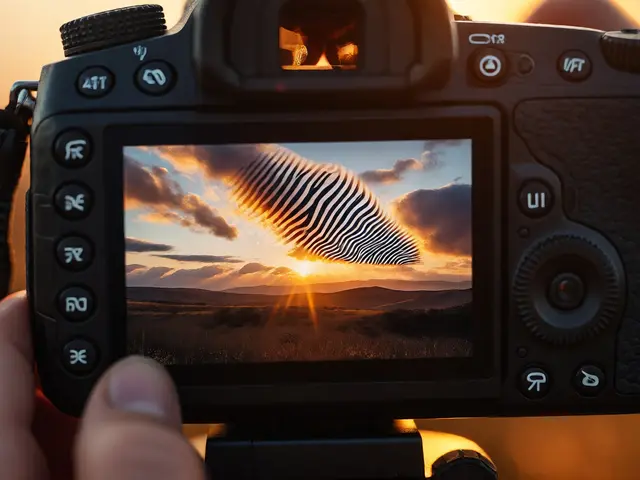
When you're out shooting in a foreign city, your camera isn't just gear-it's your livelihood, your memory, your art. And if you're not careful, it can vanish in seconds. Travel photography is beautiful, but it comes with real risks: pickpockets in crowded markets, stolen bags on trains, and ruined memory cards from humidity or drops. The good news? You can protect your gear and your photos with simple, practical steps. This isn't about paranoia. It's about smart habits.
Don't Flash Your Gear
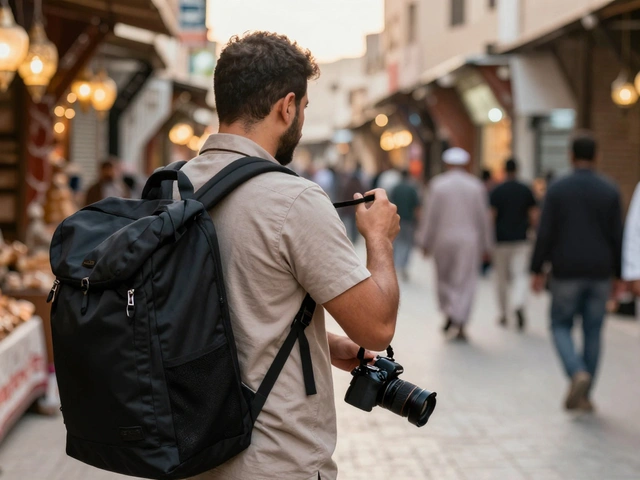
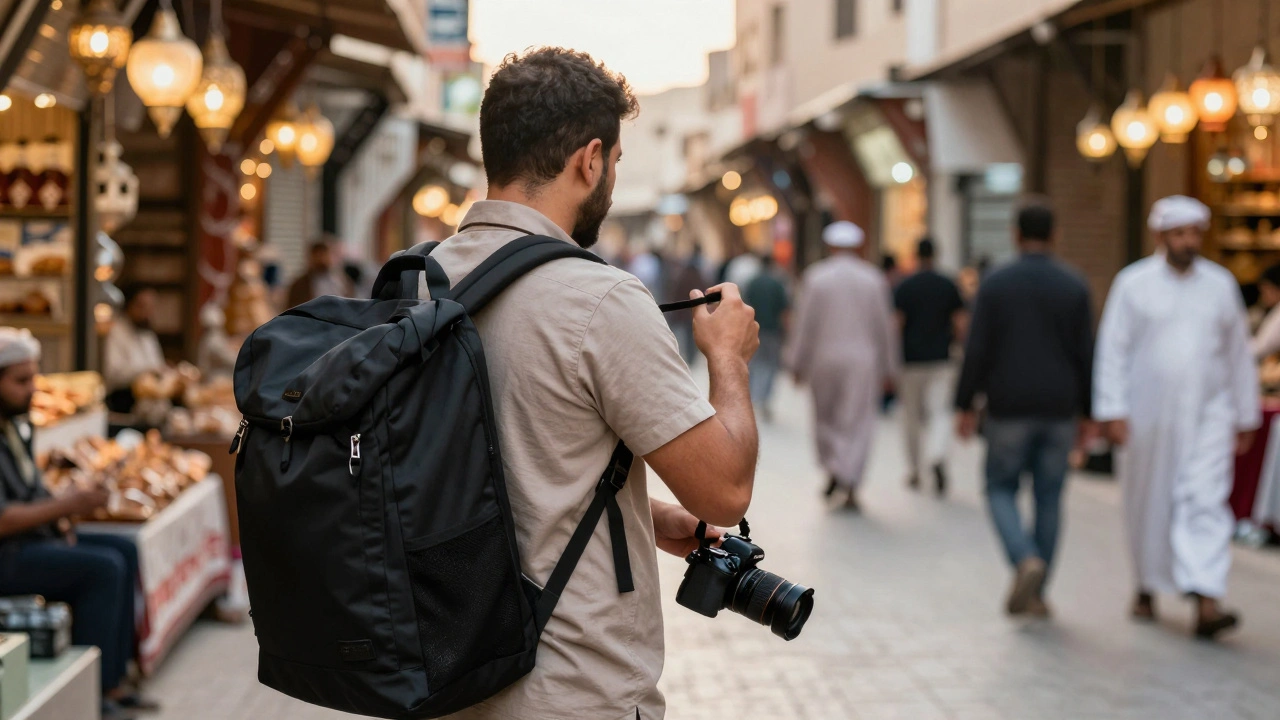
That bright red camera bag with "PRO PHOTOGRAPHY" stitched on the side? It’s a target. Thieves don’t need to know you’re a pro-they just need to see a bag that looks like it holds expensive stuff. The best way to avoid attention is to look like just another traveler. Use a regular backpack or daypack that doesn’t scream "camera gear." Inside, slip in a padded camera cube or DIY insert made from foam and Velcro. Brands like Peak Design and Ona make low-profile bags that look like everyday backpacks but have hidden compartments and lockable zippers. If you’re using a sling or crossbody strap, keep it tight against your body. Never leave your bag unattended, even for a minute. In busy places like markets or transit hubs, wear your bag in front of you. It’s awkward? Maybe. But it’s safer than losing your entire kit.
Lock It, Track It, Tag It
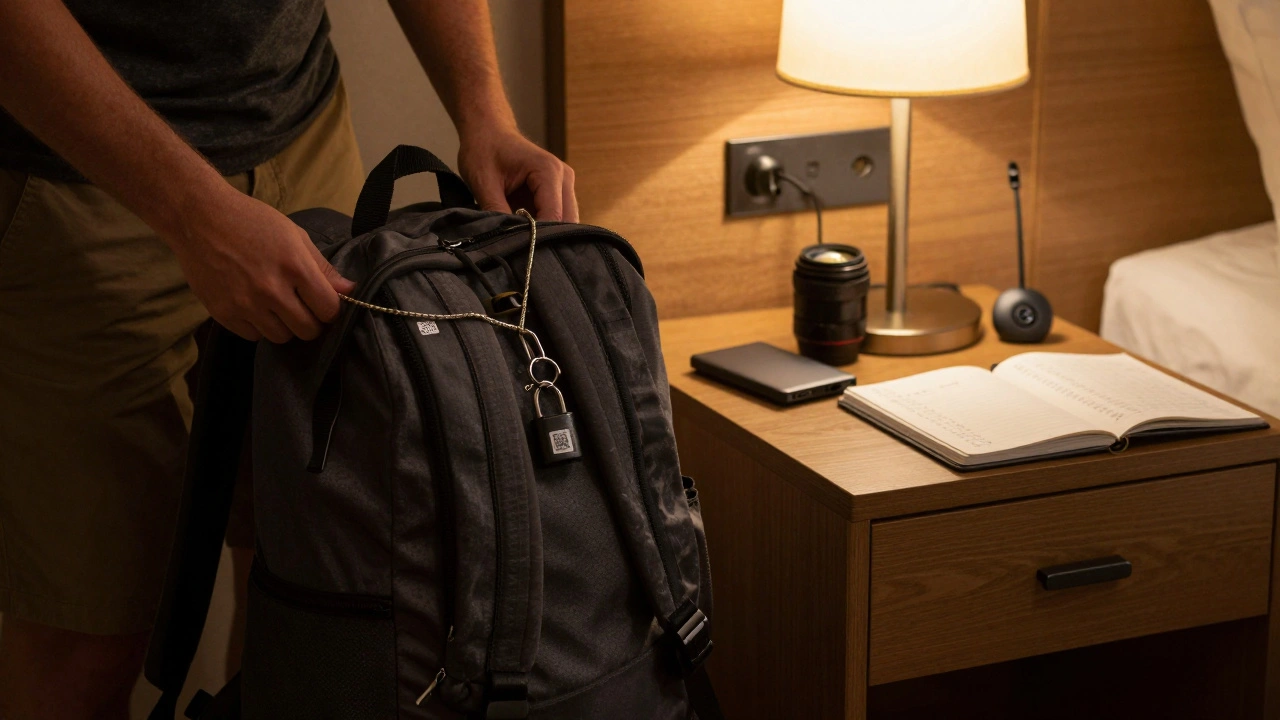
Physical security matters. When you’re in a hotel room, don’t just leave your gear on the bed. Use a cable lock to secure your bag to a heavy piece of furniture-like a desk leg or bed frame. A $10 cable lock from Amazon can stop a casual thief. For extra peace of mind, stick QR code labels on your gear. Print one with your name, email, and a small reward offer like "$50 for return." If someone finds your camera on a train, they’re more likely to return it than sell it. Bluetooth trackers like Tile or Apple AirTag can be tucked into lens caps or battery compartments. They won’t help if your gear is stolen across borders, but they’ll ping you if it’s left in a taxi or hotel room. GPS trackers for luggage are overkill for most, but if you’re shipping gear or traveling long-term, they’re worth considering.
Insurance Isn’t Optional
Most travel insurance policies won’t cover your $5,000 lens unless you specifically add equipment coverage. Don’t assume your credit card or home insurance covers it either. Call your provider and ask: "Does this policy cover theft or loss of professional photography equipment while traveling?" If the answer isn’t a clear yes, get a specialized policy. Companies like Hiscox, Markel, and Camera Insurance Direct offer plans tailored to photographers. Before you leave, take clear photos of every item in your bag-camera, lenses, tripod, drone-and write down their serial numbers. Store that list in your email and on a cloud drive. If your gear disappears, you’ll need this paperwork to file a claim. Police reports help too, so report theft immediately-even if you’re in a country where bureaucracy is slow.
Separate Your Gear From Your Photos
This is the single most important rule: never keep your memory cards in the same place as your camera. If your bag gets stolen, you don’t want to lose everything. Store full memory cards in a separate, locked compartment-like a small pouch in your wallet or a hidden pocket in your clothing. Keep unused cards in another spot. Some photographers use a small, waterproof case for cards and tuck it into their shoe or under their shirt. The idea is simple: if your camera is gone, your photos are still safe. And don’t delete anything until you’re home. Even if you think you’ve backed up, don’t risk formatting a card mid-trip. You’ll forget one. You always do.
Back Up Your Photos Every Night
Cloud backups aren’t just for convenience-they’re your last line of defense. Upload your photos to at least two cloud services every night. Use Google Photos, Dropbox, or Adobe Cloud, and enable auto-upload over Wi-Fi. If you’re in a remote area without internet, carry a portable SSD or external hard drive. Plug it into your laptop or phone, copy your files, then unplug it and store it separately from your camera. Some photographers even carry two drives and keep one in their suitcase and one in their carry-on. That way, if one gets lost, the other survives. Automated apps like PhotoMechanic or ShotBox can trigger uploads the moment your device connects to a network. Set a daily alarm to remind yourself. No excuses. Missing one night can cost you everything.
Protect Gear From the Elements
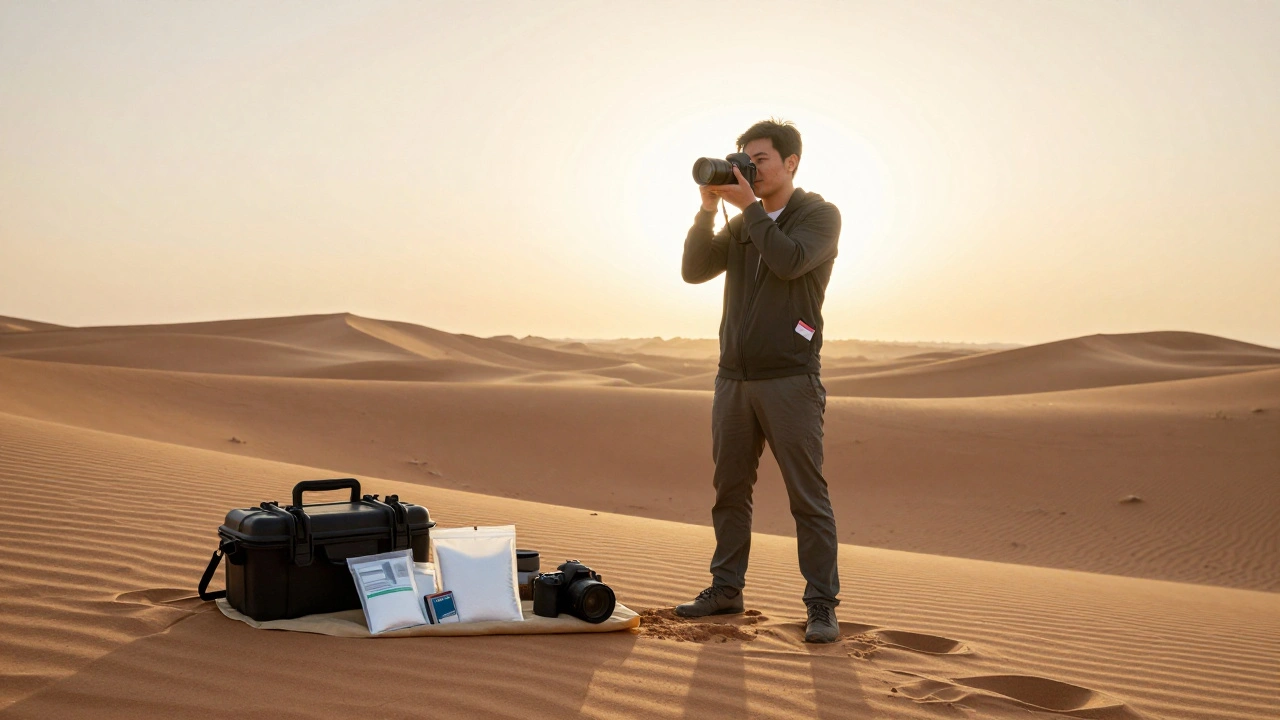
Sand, rain, humidity-they don’t care how good your lens is. Always carry silica gel packs in your bag to absorb moisture. Keep them in a sealed plastic bag with your gear. For rain, use a waterproof camera cover. A $15 neoprene sleeve from Peak Design works better than a flimsy plastic bag. Clean your gear daily with a microfiber cloth and lens pen. Never use a T-shirt or paper towel. If you’re shooting near the ocean, rinse your gear with fresh water after use-even if it’s just a quick spray. Salt corrodes metal contacts and gaskets. Bring a universal power adapter and a power bank. Don’t rely on hotel outlets. Surge protectors help if you’re staying in older buildings. Solar chargers are useful for long treks, but they’re slow-use them as backup, not primary power.
Be Smart About Behavior
Thieves look for distracted targets. If you’re glued to your viewfinder in a crowded square, you’re an easy mark. Keep your head up. Look around. Dress like a local. No need to wear a vest full of pockets or a belt with five camera straps. Carry a cheap point-and-shoot camera for casual shots. If someone tries to snatch something, hand over the cheap one. Most thieves won’t bother checking if it’s the real gear. Travel in groups when you can. Even if you’re solo, find a local guide. They know which streets are safe and which are hotspots. They’ll also help you blend in. And never, ever leave your gear unattended while you go to the bathroom, grab coffee, or take a selfie. People think, "It’s only a minute." That minute is all a thief needs.
Plan for the Worst
Before you leave, make a checklist. Write down every item: camera body, lens 1, lens 2, tripod, batteries, chargers, memory cards. Take a photo of the list. Save it. Do the same every morning during your trip. If something’s missing, you’ll know immediately. Keep emergency contacts handy: your insurance number, a local embassy phone, and a trusted friend or family member who can help if you’re stranded. Have a backup camera-even a used smartphone with a good camera-so you can keep shooting if your main gear is gone. This isn’t about being paranoid. It’s about being prepared. You’ve worked hard to get here. Don’t let one careless moment erase it all.
Should I use a branded camera bag for travel?
No. Branded camera bags attract attention. Thieves target them because they know what’s inside. Use a low-profile backpack that looks like a regular daypack. Inside, use a padded insert to protect your gear. Brands like Peak Design and Ona make bags that look casual but have secure, hidden compartments.
Is cloud backup enough to protect my photos?
Cloud backup is essential, but it shouldn’t be your only method. Combine it with encrypted external drives stored in separate locations-like your suitcase and your carry-on. If your gear is stolen and your phone dies, you still need a way to access your files. Cloud backups give you peace of mind, but physical backups are your fallback.
What should I do if my camera is stolen?
Report it to local police immediately. Have your serial numbers and photos of your gear ready. Contact your insurance provider within 24 hours. If you used a Bluetooth tracker or QR code, check the location or send the reward message. Don’t wait. The sooner you act, the better your chance of recovery or claim approval.
Can I use my home insurance for stolen gear while traveling?
Maybe, but rarely enough. Most home insurance policies have low limits for electronics and exclude theft while traveling. Always check your policy details. For full coverage, get a specialized photography travel insurance plan. They cover higher values and include worldwide protection.
How many memory cards should I carry?
Carry enough to last your entire trip without needing to delete or reuse cards. If you’re shooting 500 photos a day for a week, bring at least 10 cards. Store used cards separately from unused ones. Never keep all cards with your camera. Use a small, secure pouch for them, and keep it in a different bag or on your person.