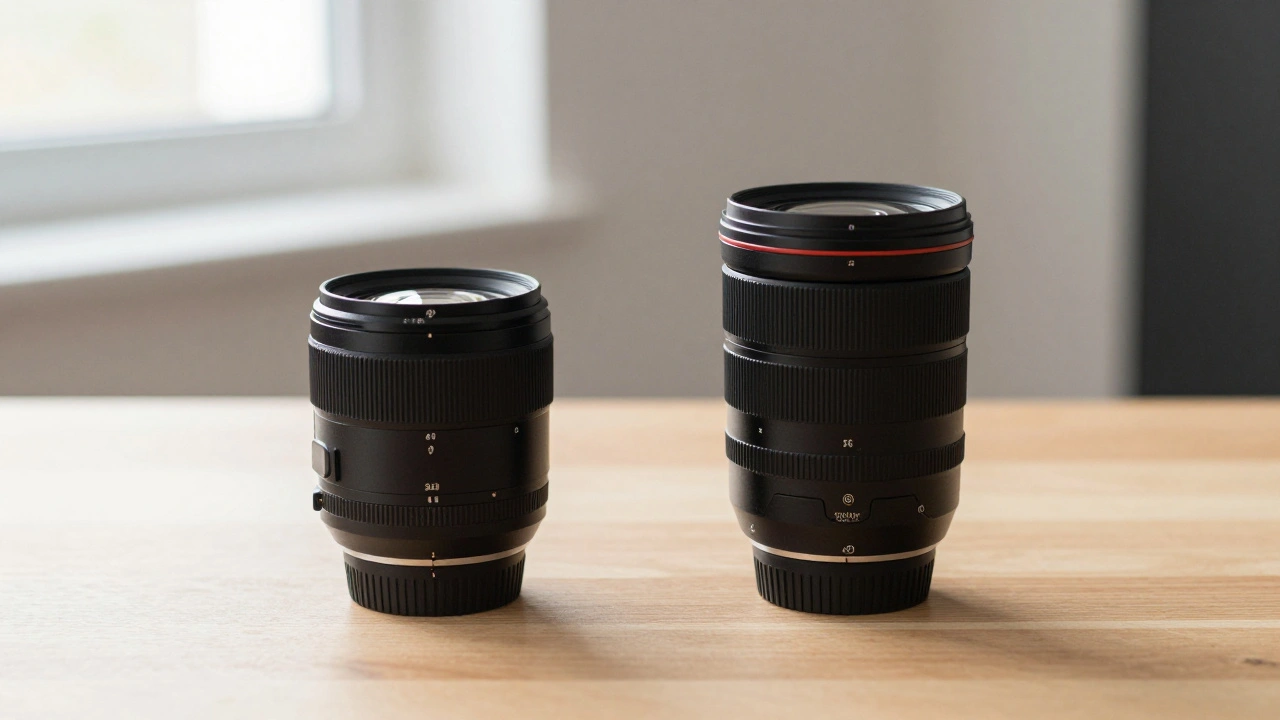
You've probably stood there with your camera, staring at a subject, and wondered if you should just step closer or twist the lens ring to get the shot. It's the age-old debate in photography: do you go for the flexibility of a zoom or the precision of a prime? Many beginners think it's just about whether the lens moves, but the real trade-off is between speed of execution and optical purity. Depending on what you're shooting, picking the wrong one can mean the difference between a tack-sharp masterpiece and a blurry mess that you'll spend hours trying to fix in Lightroom.
| Feature | Prime Lenses | Zoom Lenses |
|---|---|---|
| Focal Length | Fixed (e.g., 50mm) | Variable (e.g., 24-70mm) |
| Aperture | Generally wider (f/1.2 - f/2) | Generally narrower (f/2.8 - f/5.6) |
| Weight/Size | Often smaller and lighter | Generally bulkier |
| Image Quality | Higher consistency & sharpness | Varies across the zoom range |
| Versatility | Low (requires physical movement) | High (frame from one spot) |
What Exactly Are We Talking About?
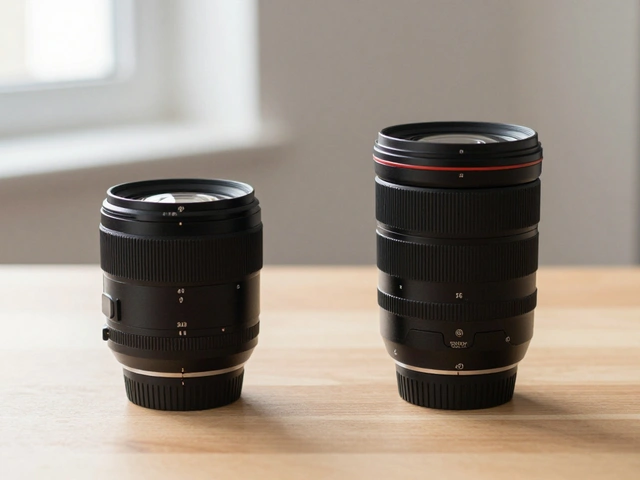
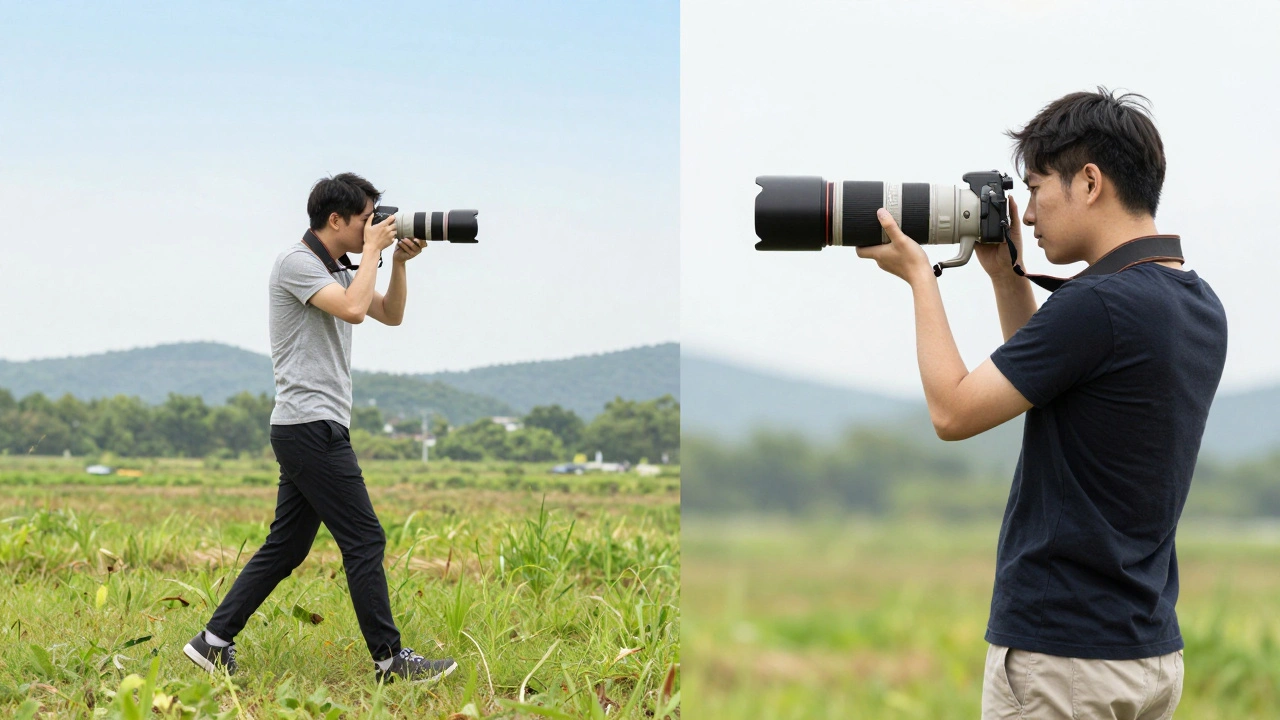
To keep things simple, a Prime Lens is a lens with a single, fixed focal length. If you have a 50mm lens, that's all you get. You can't zoom in to see a bird on a branch or zoom out to capture a whole mountain range. To change your composition, you have to use your feet-a technique often called "sneaker zooming."
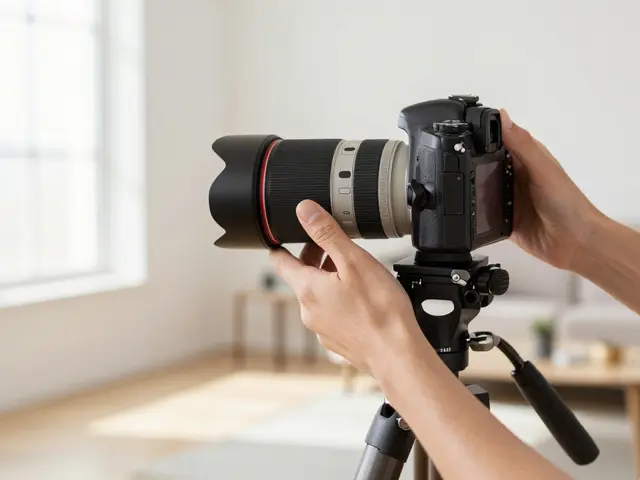
On the other side, a Zoom Lens is a versatile tool that allows you to change the focal length by twisting a ring on the barrel. This means you can go from a wide-angle shot to a tight portrait without ever leaving your spot. It's basically several lenses wrapped into one piece of glass.
The Battle of the Aperture and Light
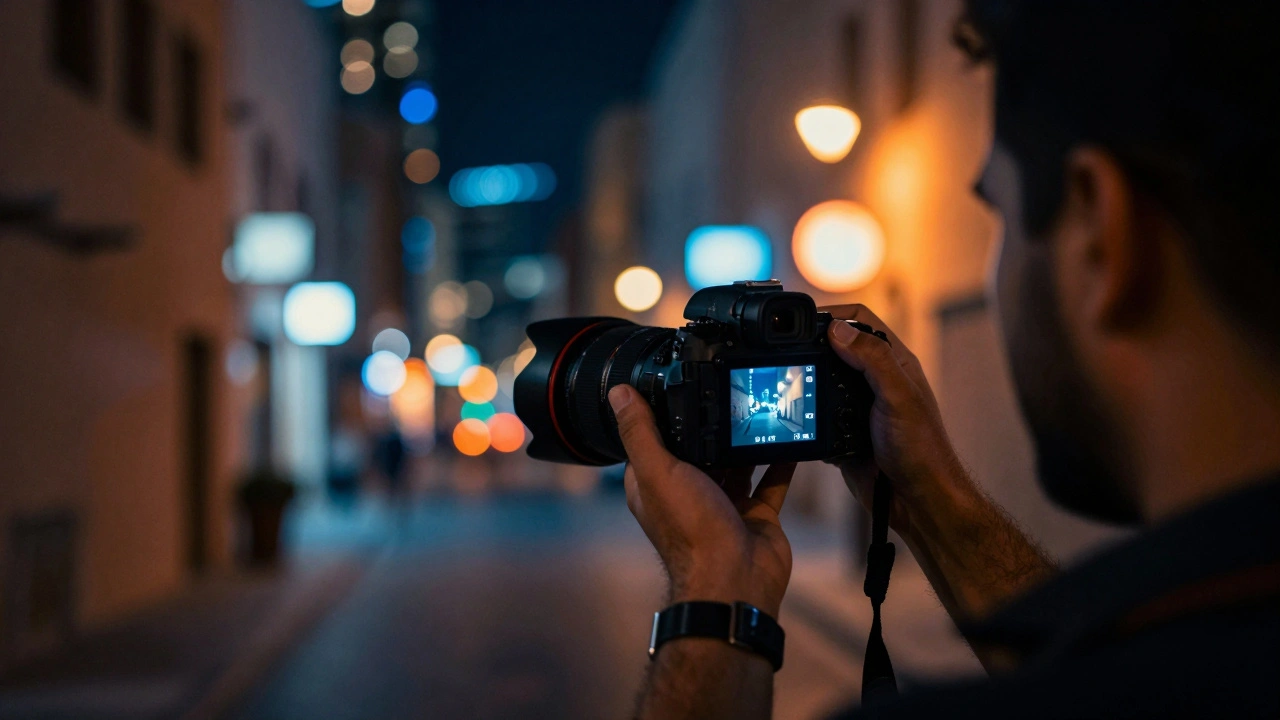
If you're shooting in a dimly lit jazz club or a rainy street at night, this is where the choice really matters. Aperture refers to the opening of the lens that lets in light. Prime lenses are famous for being "fast," meaning they have very wide maximum apertures, sometimes as wide as f/1.2 or f/1.4.
Compare that to a professional Zoom Lens, which typically maxes out at f/2.8. While f/2.8 is decent, a prime lens at f/1.2 lets in significantly more light-sometimes two to three times as much. This allows you to keep your shutter speed high enough to freeze a moving subject without your images looking like a grainy mess from cranking up the ISO.
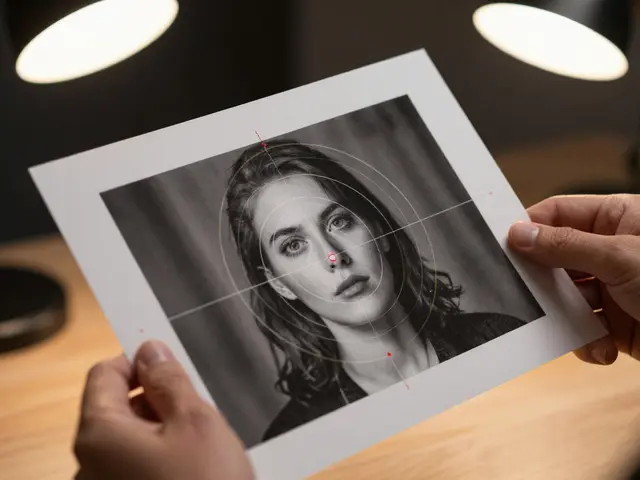
Then there's the Bokeh. That creamy, blurred-out background you see in professional portraits? That's a result of a shallow depth of field, which is much easier to achieve with the wide apertures found in primes. While you can get some blur with a zoom, a fast prime creates a level of subject isolation that makes the person pop off the screen.
Sharpness and Optical Trade-offs
In the world of optics, simplicity usually wins. Because a prime lens is designed to do only one thing-focus light at one specific focal length-it generally does it better. You'll often find that primes are sharper, especially toward the corners of the image where zoom lenses tend to lose detail.
Zoom lenses are complex machines. They have multiple groups of glass elements moving back and forth. While modern high-end glass is incredible, many zooms struggle at their extremes. You might notice that a zoom lens is slightly soft when pushed to its maximum telephoto reach (like at 200mm) or exhibits distortion when pushed to its widest angle. If you're printing huge posters or doing high-end commercial work, that extra single-digit percentage of sharpness from a prime is worth the hassle of switching lenses.
Versatility vs. Creative Intention
Let's be honest: zoom lenses are a productivity powerhouse. If you're shooting a wedding or a fast-paced sports event, you don't have time to swap lenses every ten seconds. You need to capture the kiss and then immediately zoom in on the grandmother's reaction. In these scenarios, a zoom is the only logical choice. It allows you to maintain focus on dynamic subjects without repositioning yourself and risking missing a fleeting moment.
But here is the secret: the limitation of a prime lens can actually make you a better photographer. When you can't zoom, you're forced to think three-dimensionally. You have to move your body, change your angle, and really consider what belongs in the frame. This creates a more intentional approach to composition. Instead of just standing in one spot and zooming, you're exploring the scene, which often leads to more unique and interesting perspectives.
The Weight and Cost Equation
If you enjoy hiking or traveling light, the physical footprint matters. Most primes (especially those under 100mm) are significantly smaller and lighter than their zoom counterparts. Carrying a small 35mm prime is far less taxing on your neck than lugging around a 24-70mm f/2.8 beast for eight hours.
When it comes to your wallet, it's a bit of a toss-up. A single prime lens is usually cheaper than a high-quality zoom. However, if you find yourself needing a wide, a standard, and a telephoto prime to cover the same range as one zoom, you'll quickly spend more money. The real question is whether you prefer one expensive, all-in-one tool or a collection of specialized instruments.
How to Choose Your Setup
You don't have to pick just one. Many pros use a hybrid approach. They might carry a versatile zoom for 90% of the day to ensure they get the shot, but keep one "hero" prime (like an 85mm for portraits) in their bag for those moments when they need maximum image quality and low-light performance.
If you're just starting, try a "prime challenge." Limit yourself to one fixed focal length for a month. You'll quickly learn exactly how that focal length feels and where your natural eye tends to frame. Once you hit a wall where you're consistently missing shots because you can't get close enough or wide enough, you'll know exactly which zoom range you actually need.
Can a zoom lens ever be as sharp as a prime?
In modern high-end lenses, the gap is closing. Some professional-grade zooms are incredibly sharp in the center of the frame. However, primes usually maintain that sharpness across the entire image, including the edges, and generally perform better when shot wide open.
Which is better for beginners?
It depends on the goal. Zoom lenses are easier to use and more forgiving. However, many instructors recommend primes for students because they force you to learn composition and movement, which are the foundations of great photography.
What is "sneaker zoom"?
Sneaker zoom is the act of physically walking toward or away from your subject to change the framing of the shot since you are using a prime lens with a fixed focal length.
Do zoom lenses always have variable apertures?
Not always. Professional zooms (like a 24-70mm f/2.8) have a "constant aperture," meaning the f/2.8 remains the same regardless of the zoom level. Cheaper consumer zooms often have variable apertures (e.g., f/3.5-5.6), where the lens gets "darker" as you zoom in.
Will a prime lens help me in low light?
Yes, significantly. Because primes typically offer wider apertures (like f/1.8 or f/1.4), they can let in far more light than most zooms, allowing you to shoot without a flash or without raising your ISO to levels that introduce noise.