Have you ever wondered why some photos look crystal clear while others look grainy, even if they were taken with the same camera? The secret usually comes down to one setting: base ISO. If you want the absolute best image quality your gear can offer, understanding this single value is more important than buying a more expensive lens. It is the foundation of a clean image, and using it incorrectly is the fastest way to ruin a great shot.
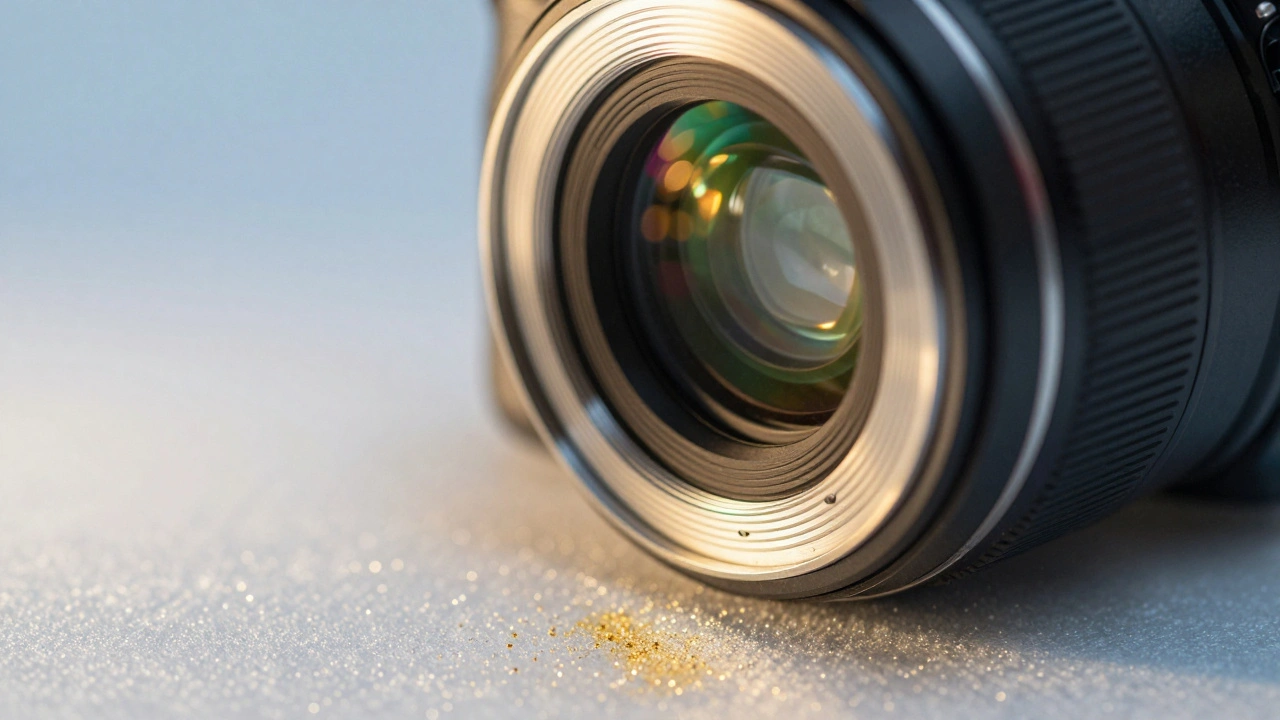
Think of base ISO as the "natural state" of your camera's sensor. When you shoot at this setting, the camera isn't trying to "fake" more light by electronically boosting the signal. It is simply capturing the light exactly as it hits the sensor. For most modern cameras, this is typically ISO 100 or ISO 200, though some professional models might start at 50. In short, it's the sweet spot where your camera produces the least amount of noise and the most detail.
What Exactly is Base ISO Doing?
To understand base ISO, you have to understand that ISO isn't actually about "sensitivity" in the way we think of a sponge absorbing water. The sensor's physical ability to collect light doesn't change. Instead, ISO is about amplification. When you increase your ISO, you are telling the camera to take the signal it already captured and multiply it-much like turning up the volume on a quiet radio station.
The problem is that when you turn up the volume, you also hear the hiss and static in the background. In photography, that "static" is digital noise. Base ISO is the point where the amplification is at 0dB, meaning no extra gain is added. Because there is no artificial boost, the image remains pure, the colors are more accurate, and the transitions between light and shadow are smooth.
Why You Should Prioritize Base ISO
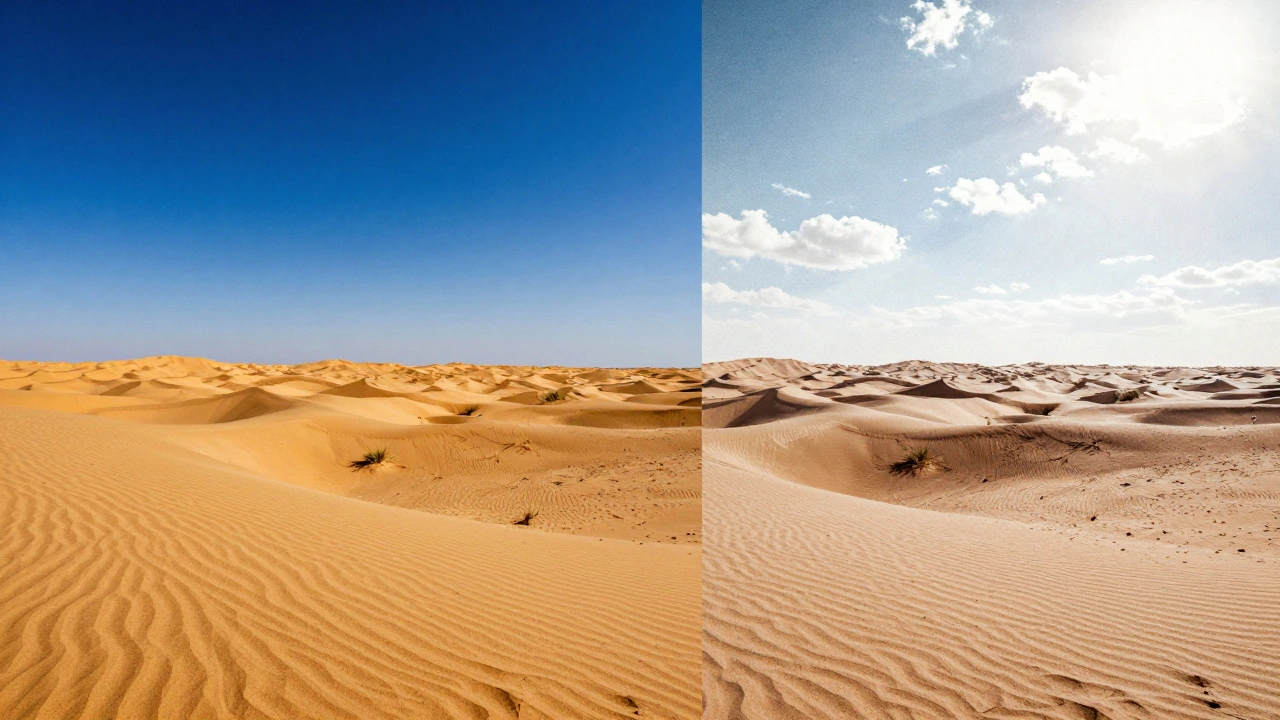
There are two massive reasons to stick to your base ISO whenever possible: noise and dynamic range. Dynamic range is essentially the camera's ability to see detail in both the brightest highlights (like a white cloud) and the deepest shadows (like a dark alley) at the same time.
When you crank up the ISO, your dynamic range shrinks. You might find that your highlights "blow out" into pure white or your shadows become muddy and gray much faster than they would at ISO 100. If you're shooting a landscape on a bright day, using base ISO ensures you keep all that rich detail in the sky and the foreground, which gives you way more flexibility when you start editing your photos later.
| Feature | Base ISO (e.g., 100) | High ISO (e.g., 6400) |
|---|---|---|
| Digital Noise | Minimal / Clean | High / Grainy |
| Dynamic Range | Maximum possible | Significantly reduced |
| Color Accuracy | Highest precision | Can shift or degrade |
| Best Use Case | Sunny days, Tripods, Studio | Night scenes, Fast action |
The Struggle with Low Light
If base ISO is so great, why do we even have higher settings? Because reality isn't always a sunny beach. Imagine you're in a dim restaurant lit by candles. If you insist on using ISO 100, your photo will likely come out pitch black unless you use a tripod and a very long exposure-which would make any moving person look like a ghostly blur.
This is where the exposure triangle comes into play. You have to balance ISO with aperture (how wide the lens opens) and shutter speed (how long the sensor is exposed). If you can't open your aperture any wider and you can't slow down your shutter without blurring the image, your only remaining option is to raise the ISO. In this case, a noisy photo is better than a blurry or black one. It's a compromise, not a preference.
Dual Base ISO: A Pro Secret
Some high-end cameras, especially cinema cameras like the Canon C300 or certain mirrorless models, have a feature called Dual Base ISO (or Dual Native ISO). Instead of just one "sweet spot," these cameras have two.
For example, a camera might have a base ISO of 100 for bright daylight and a second base ISO of 6,400 for low light. This means that shooting at ISO 6,400 might actually produce a cleaner image with less noise than shooting at ISO 3,200. Why? Because at 6,400, the camera switches to a different internal circuit designed specifically for high gain. If you own a camera with this feature, check your manual to find those specific numbers; it can be a game-changer for night photography.
Practical Tips for Staying at Base ISO
If you're determined to keep your images clean but the light is too bright or too dark, here are a few ways to cheat the system:
- Use a Tripod: If your subject isn't moving, slow down your shutter speed. This lets you keep your ISO at 100 even in a dark room.
- Get a Wider Aperture: Switching from a kit lens (f/3.5) to a prime lens (f/1.8) lets in significantly more light, reducing the need to boost ISO.
- Invest in Neutral Density (ND) Filters: These are like sunglasses for your lens. If it's high noon and you want that blurry background (wide aperture) without overexposing your image, an ND filter lets you stick to base ISO while using a slower shutter speed.
- Test Your Gear: Every sensor is different. Some cameras, like the old Panasonic Lumix GH2, had specific "quirks" where certain ISO values were cleaner than others. Take a few test shots at different levels to find your camera's true breaking point.
When to Ignore the Rules
Despite everything I've said, there are times when you should happily embrace high ISO. In sports or wildlife photography, freezing a bird in flight requires a very fast shutter speed (like 1/4000th of a second). There is no way to get enough light at that speed using base ISO.
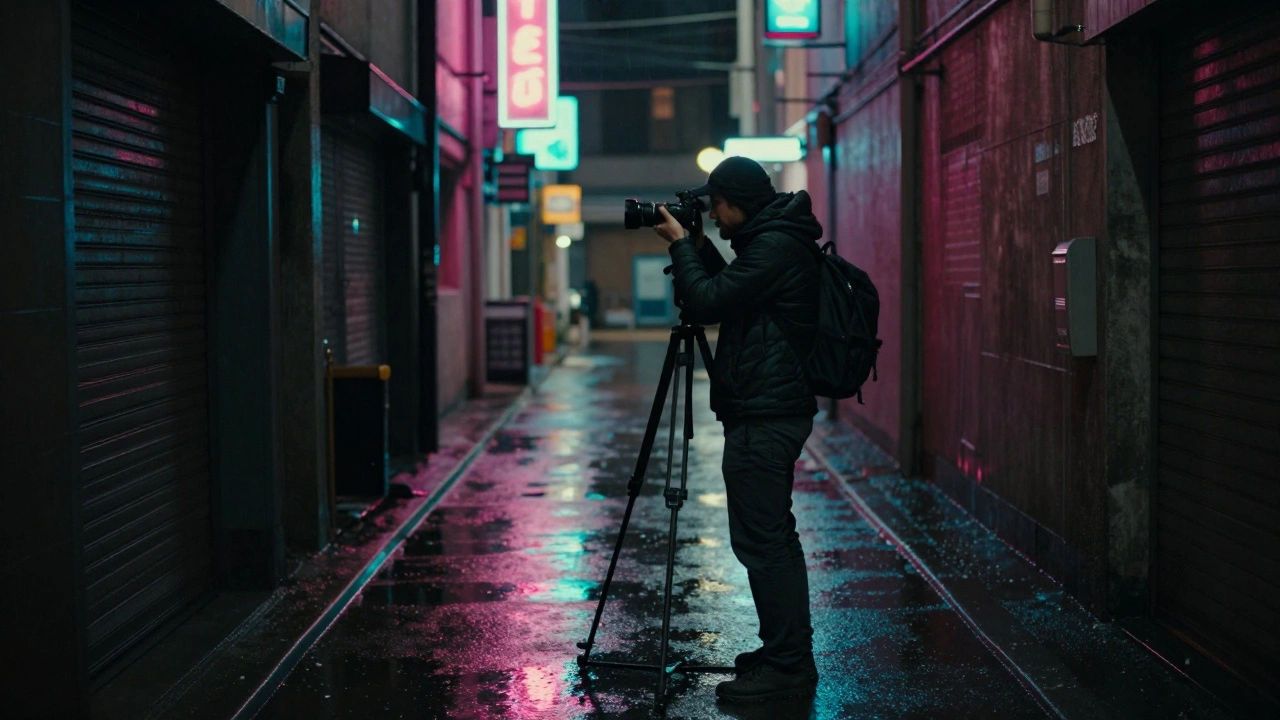
Moreover, some photographers actually like a bit of grain. It can give a photo a "filmic" or gritty look that fits certain moods. If you're shooting a moody street portrait in the rain, a little noise might actually add to the atmosphere. The goal isn't to avoid high ISO at all costs, but to avoid it when it doesn't serve a purpose.
Does base ISO change if I use a Log profile?
Yes, often it does. When you switch to a Log (logarithmic) profile or a "flat" picture style to save more detail for color grading, the camera often shifts the base ISO higher. For example, a camera that normally bases at 100 might base at 800 when in Log mode. This is done to optimize the signal-to-noise ratio for that specific mathematical way of recording light.
Can I fix ISO noise in post-processing?
You can reduce it using software like Adobe Lightroom or AI-powered denoisers, but you can't "create" the detail that was lost. Noise reduction often makes images look "plastic" or smudgey if pushed too far. Starting with base ISO is always better than trying to fix a noisy image later.
Is ISO 50 better than ISO 100?
Not necessarily. On many cameras, ISO 50 is an "extended' setting that is actually achieved by capturing the image at ISO 100 and then digitally darkening it. This can sometimes lead to a slight loss in dynamic range in the highlights. Check if ISO 100 is your camera's native base before dropping to 50.
How do I find my camera's base ISO?
The easiest way is to check your user manual. If you don't have one, look at your ISO dial; the lowest standard number (usually 100) is typically the base. For video-centric cameras, search for "native ISO" or "dual gain" in the technical specs.
Will a full-frame camera handle high ISO better than a crop sensor?
Generally, yes. Full-frame sensors have larger individual pixels (photosites) that can collect more light. This means they can usually be pushed to higher ISOs before the digital noise becomes distracting compared to smaller APS-C or Micro Four Thirds sensors.