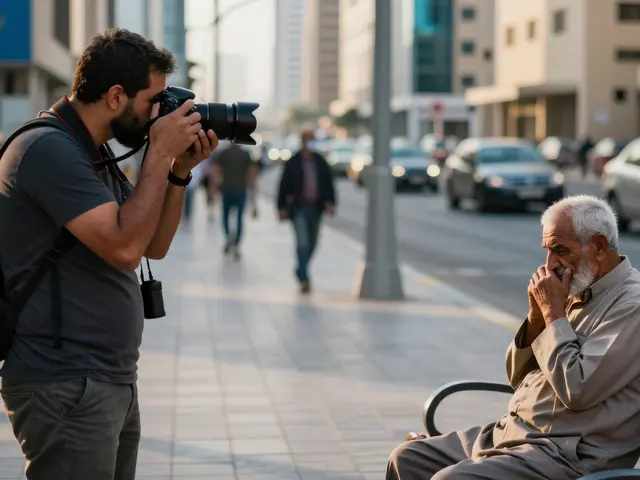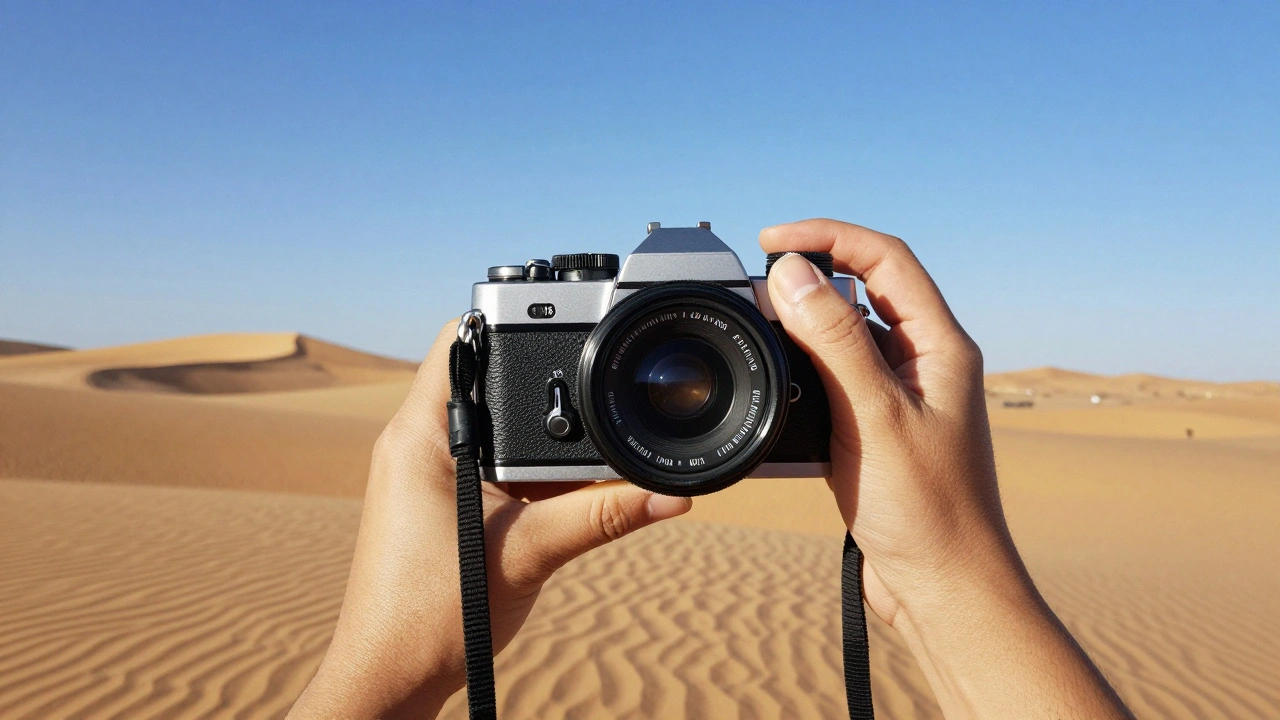
Ever been out shooting on a bright day and realized your camera’s meter is acting weird? Or maybe you’re shooting film and don’t even have a light meter handy? There’s a simple, old-school trick that’s still wildly useful today: the Sunny 16 rule. It’s not magic. It’s math. And once you get it, you’ll never have to guess your exposure again - even in tricky lighting.
What Is the Sunny 16 Rule?
The Sunny 16 rule says this: on a clear, sunny day, set your aperture to f/16 and your shutter speed to the reciprocal of your ISO. That’s it. So if you’re using ISO 100, set your shutter speed to 1/125. At ISO 200, use 1/250. At ISO 400, go with 1/500. The math is simple: ISO X = 1/X second.
This rule was born in the film era, when photographers carried no meters. They needed a reliable way to guess exposure before stepping out the door. Today, it’s even more useful. With digital cameras, you can change ISO on the fly. That means you can use Sunny 16 as a starting point, then tweak it for creative control - not just survival.
Why It Works: Light, Not Reflection
Most camera meters measure reflected light. That means they look at how much light bounces off your subject. Problem? Snow looks bright, so the meter thinks there’s too much light and tries to darken it - turning your white snow into gray slush. Dark rocks? The meter thinks it’s too dark and overexposes them into washed-out blobs.
The Sunny 16 rule doesn’t care about your subject. It measures the incident light - the actual brightness of sunlight hitting the scene. That’s why it works so well for extreme contrasts. Snow? Still fine. Black asphalt? Still fine. The rule treats the sun like a constant, reliable source. And it usually is.
How to Use It: The Full Guide
You don’t just need one setting. The rule scales with lighting. Here’s what to use in real-world conditions:
- Bright sun, harsh shadows - f/16 at 1/ISO (e.g., f/16, 1/200 at ISO 200)
- Slightly overcast, soft shadows - f/11 at 1/ISO
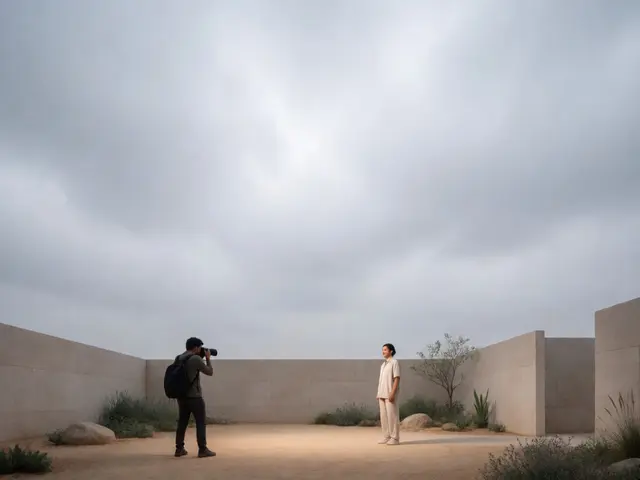
- Overcast sky, no shadows - f/8 at 1/ISO
- Heavy overcast, dark skies - f/5.6 at 1/ISO
- Open shade or sunset - f/4 at 1/ISO
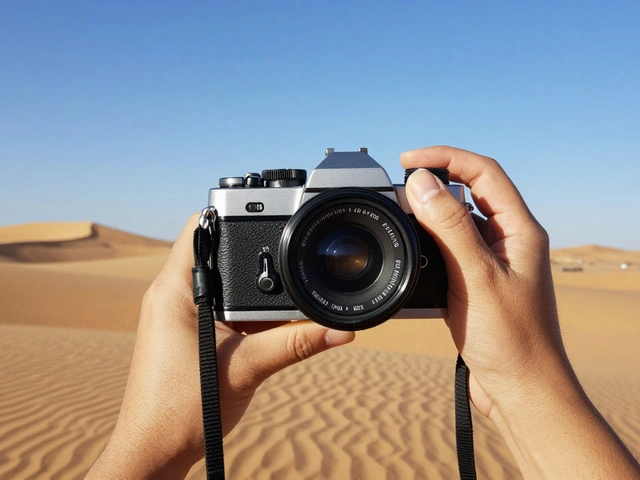
- Snow or sand with bright sun - f/22 at 1/ISO
Notice how each step changes by one stop? That’s key. Each time you open the aperture by one stop (f/16 → f/11 → f/8), you double the light. So you need to halve your shutter speed to keep exposure balanced. Go from f/16 to f/8? That’s two stops. Your shutter speed needs to go from 1/200 to 1/800 at ISO 200.
Real Example: Shooting at ISO 400
Let’s say you’re out hiking at noon. The sun’s out. Shadows are sharp. You’re at ISO 400. Sunny 16 says: f/16, 1/400. You want a shallow depth of field for your subject. So you open to f/8 - that’s two stops wider than f/16. Two stops means you need to cut your shutter speed in half, twice. 1/400 → 1/800 → 1/1600. So now you’re at f/8, 1/1600. Perfect. You got your blur without overexposing.
No meter needed. No guesswork. Just logic.
Why It’s Better Than Your Camera’s Meter
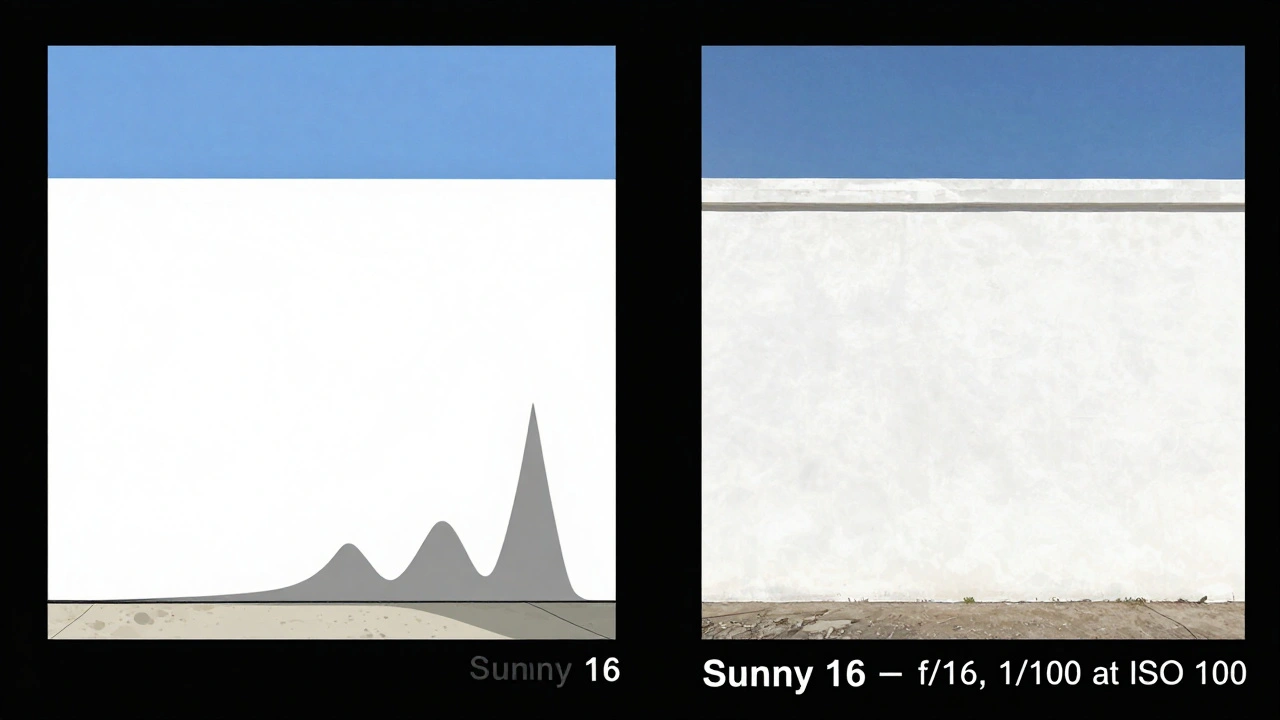
Your camera’s meter is smart, but it’s easily fooled. Try this: take a photo of a white wall in direct sun. Your camera will likely underexpose it. Now take a photo of a black car in the same light. It’ll overexpose. Why? Because the meter assumes everything is middle gray. It doesn’t know you’re shooting snow or charcoal.
The Sunny 16 rule doesn’t care. It’s calibrated to the sun. If the sun’s out, you’re golden. No matter what’s in front of the lens. That’s why film photographers trusted it. And why digital shooters still use it as a sanity check.
Use It to Test Your Camera
Here’s a pro tip: use Sunny 16 to check if your camera’s meter is off. Set your camera to manual mode. Use ISO 100, f/16, 1/125. Go outside on a clear day. Take the shot. Now check the histogram. If it’s clipped on the right side, your camera’s meter might be underexposing. If it’s too dark, it might be overexposing. You can then adjust your camera’s exposure compensation setting permanently. No more guessing on every shoot.
It’s Not Just for Film
Some people think this is an old film trick. Wrong. It’s even more powerful now. Digital lets you change ISO instantly. So if you’re shooting in shade, you don’t need to fumble with settings. Just bump your ISO to 800, keep f/16, and shoot at 1/800. Done. You’ve effectively turned shade into bright sun by boosting sensitivity.
And if you’re shooting video? Same thing. Many filmmakers use Sunny 16 as a baseline for exposure. It keeps lighting consistent across scenes. No flickering. No hunting for exposure in post.
When It Fails - And How to Fix It
It’s not perfect. If the sun is low on the horizon - like at sunrise or sunset - the light changes fast. Sunny 16 won’t hold up. Same if you’re shooting through heavy haze, smoke, or fog. The rule assumes clear, direct sunlight. So use it as a guide, not a law.
Still, even in tricky light, it gives you a solid anchor. If you’re unsure, start with Sunny 16. Then adjust. Shoot a test frame. Check the histogram. Tweak. You’ll get there faster than if you started from zero.
Build Muscle Memory
The goal isn’t to memorize every setting. It’s to understand the relationship. Aperture and shutter speed trade off. ISO changes the baseline. Once you get that, you can eyeball exposure anywhere. You’ll start noticing how shadows look at different times of day. You’ll know when the light’s soft or harsh. And you’ll stop depending on blinking lights on your camera.
Try this: next time you go out, turn off auto ISO. Set your camera to manual. Pick a scene. Use Sunny 16. Shoot. Then try f/11. Then f/8. See how the exposure changes. You’ll learn more in 10 minutes than you would in a month of auto mode.
This rule isn’t about being old-school. It’s about being confident. You don’t need a meter. You need to understand light. And Sunny 16? It’s the simplest way to start.
Do I need to use f/16 exactly?
No. f/16 is just the starting point for bright sun. You can use any aperture - as long as you adjust shutter speed to match. Open to f/8? Then speed up your shutter by two stops. The rule is about balance, not fixed settings.
Can I use Sunny 16 at night?
No. The rule only works under direct sunlight. At night, you need a different baseline - like the Looney 11 rule for moonlight. Sunny 16 is for daylight only.
Does this work with mirrorless cameras?
Yes. Mirrorless cameras are even better for this. You can see exposure in real time on the screen. Use Sunny 16 as your starting point, then tweak until the histogram looks right. It’s faster than relying on auto metering.
What if my ISO is 125 or 160?
Round it. At ISO 125, use 1/125. At ISO 160, use 1/160. You’re close enough. The rule is designed for quick estimates, not lab precision. Your exposure will still be spot-on for most scenes.
Is Sunny 16 still used today?
Absolutely. Professional photographers, especially in outdoor and documentary work, use it daily. It’s taught in photography schools. It’s in camera manuals. It’s not a relic - it’s a foundational skill.