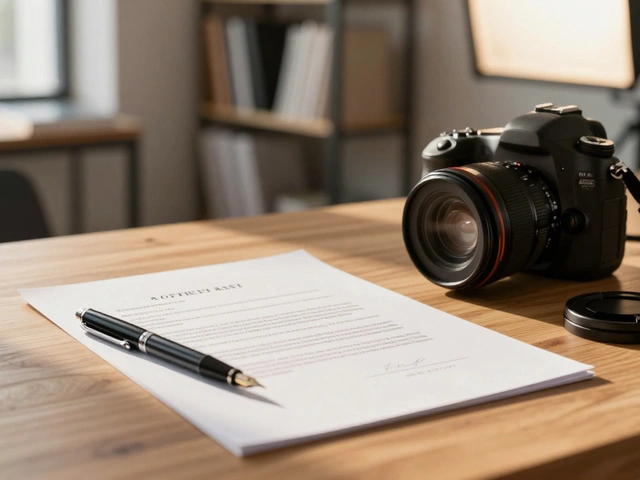
You have the perfect shot in mind. The lighting is right. The client is excited. But then they send over a contract that looks like it was written by a lawyer who hates photographers. Or worse, you send them yours, and they want to change half of it before signing. This moment-where art meets business-is where most photography disputes begin.
A contract isn’t just paperwork; it’s your safety net. It defines what you will do, how much you get paid, and what happens when things go wrong. Without clear clauses on scope, revisions, and cancellation fees (often called kill fees), you risk working for free or losing control of your images. Let’s break down exactly what needs to be in your agreement so you can protect your time, your talent, and your income.
Defining the Scope of Services
Vague promises lead to angry clients. If your contract says "8 hours of coverage," does that include travel? Setup? Breaks? A strong scope of services clause leaves no room for interpretation. According to industry guides like Amy Gould’s contract templates, you must list every deliverable explicitly.
Instead of writing "wedding photography," specify:
- Date and location of the event
- Exact start and end times (e.g., "4:00 PM to 12:00 AM")
- Number of photographers (lead + second shooter)
- Minimum number of edited images delivered (e.g., "at least 400 high-resolution files")
- Whether an online gallery or prints are included
When you quantify your work, you prevent clients from expecting extra sessions or unlimited edits for the same price. This clarity also anchors your pricing structure. If you add more hours or shooters, the fee should reflect that addition immediately.
Payment Terms: Retainers vs. Deposits
Money talks, but only if the terms are clear. Many photographers confuse deposits with retainers, which can cost them thousands in lost bookings. A deposit is often refundable under certain conditions. A retainer is non-refundable payment made to secure your date and compensate you for turning away other clients.
Best practice in 2026 suggests charging a non-refundable retainer between 25% and 50% of the total project fee upon signing. Specify the payment schedule clearly:
- Retainer due on signing
- Balance due 14 days before the event
- Late fees for overdue balances (e.g., 1.5% per month)
If a client cancels after paying the retainer, you keep it. This protects your cash flow and ensures you aren’t left empty-handed because someone changed their mind last minute.
Cancellation, Rescheduling, and Force Majeure
Life happens. Clients get sick. Venues close. Weather ruins outdoor shoots. Your contract must address these scenarios before they happen.
Cancellation Policy: Create tiers based on how far in advance the client cancels. For example:
- More than 60 days out: Full refund minus admin fee
- 30-59 days out: Retainer kept, balance refunded
- Less than 30 days out: Full fee owed (or significant portion retained)
Rescheduling: Allow one free reschedule if requested well in advance (e.g., 60+ days). Charge a fee for subsequent changes to cover administrative costs and lost opportunities.
Force Majeure: This clause covers events beyond anyone’s control, such as natural disasters, pandemics, or government shutdowns. Since 2020, this has become critical. Specify whether payments are refunded, credited toward a future date, or retained as liquidated damages. You should also reserve the right to substitute another qualified photographer if you fall ill, ensuring the client still gets their photos without breaching the contract.

Copyright and Usage Rights
This is where many photographers lose money long-term. Under U.S. Copyright Act of 1976, you own the copyright to your images unless you sign a specific work-for-hire agreement. Most clients don’t need ownership; they need a license to use the photos.
Define the license clearly:
- Personal Use: Printing photos for home, sharing on personal social media, gifting to family.
- Commercial Use: Using images for advertising, marketing, websites, or sales. This usually requires a higher fee and specific limitations on territory, duration, and media type.
Never grant "all rights" unless the price reflects that loss of control. Also, include an AI Prohibition Clause is a provision preventing clients from using your images to train generative AI models without permission. With AI tools evolving rapidly, protecting your style and likeness from unauthorized dataset training is now standard in professional contracts.
Revisions and Editing Limits
Scope creep kills profitability. If you don’t limit revisions, clients may ask for endless tweaks. Define what "editing" includes in your base fee. Typically, this means color correction, exposure adjustment, and basic cropping for all delivered images.
Specify how many rounds of retouching are included. For branding or portrait work, you might offer one round of minor adjustments. For commercial campaigns, define formal review stages (proofs, first finals, color-managed finals). Any additional requests beyond the agreed scope should be billed at an hourly rate or per-image fee. Make sure clients understand that body reshaping, background replacement, or complex object removal are premium services.

Kill Fees: Protecting Your Investment
A kill fee is compensation you receive if a client cancels an assignment after work has begun or decides not to use the images. This is common in editorial and commercial photography. If you’ve already scouted locations, hired assistants, or traveled, you deserve to be paid for that effort.
Kill fees are usually tiered:
- Pre-shoot cancellation: 25%-50% of the total fee
- Post-shoot cancellation: 50%-100% of the total fee
In editorial contexts, magazines may drop stories after publication. Even if they don’t publish your work, you provided the service. Negotiate a kill fee that covers your base costs and some profit. Always ensure that approved expenses (travel, props, assistant wages) are reimbursed separately from the creative fee, regardless of whether the job is killed.
Model Releases and Liability
If you plan to use client images for your portfolio, website, or social media, you need a model release. Include this in your contract or as a separate document. Offer opt-out options for sensitive sessions like boudoir or children’s portraits.
Liability clauses protect you from lawsuits. Limit your liability to the amount paid under the contract. State clearly that you are not responsible for missed shots due to guest interference, venue restrictions, or weather. Require clients to indemnify you against claims arising from their actions, such as using unlicensed music or props during the shoot.
Practical Next Steps
Don’t wait until a dispute arises to fix your contract. Review your current template against these key areas. If you’re unsure about legal language, invest in a professionally drafted contract tailored to your niche. Present your contract first-it sets the tone for negotiation. Use electronic signing platforms to streamline the process and ensure every client signs before booking. Your peace of mind is worth the upfront effort.
What is a kill fee in photography?
A kill fee is a partial payment owed to a photographer if a client cancels an assignment after work has started or decides not to use the final images. It compensates the photographer for time, preparation, and opportunity costs incurred before cancellation.
How many revision rounds should I include in my contract?
Most photographers include one round of minor revisions in the base fee. For larger projects, define specific review stages. Additional revisions should be billed separately to prevent scope creep and protect your hourly rate.
Do I need a model release for every client?
Yes, if you intend to use their images for your portfolio, marketing, or social media. Always obtain written permission. Offer opt-out options for sensitive sessions to respect client privacy while protecting your right to showcase your work.
What should a force majeure clause cover?
It should cover unforeseen events beyond control, such as natural disasters, pandemics, or government orders. Specify whether payments are refunded, credited, or retained, and clarify your right to substitute another photographer if necessary.
Is a retainer the same as a deposit?
No. A retainer is typically non-refundable and secures your date by compensating you for turning away other clients. A deposit may be refundable depending on terms. Always label your upfront payment as a "non-refundable retainer" to avoid ambiguity.