Have you ever tried to photograph a bee only to have it sting you because your camera was too close? Or maybe you’ve spent twenty minutes setting up perfect lighting for a flower, only to realize your lens is blocking the light before it even hits the subject. These frustrating moments usually come down to one overlooked metric: working distance.
In macro photography, working distance isn’t just a number on a spec sheet. It’s the physical gap between the front of your lens and your subject. This space determines whether you can safely approach a skittish insect, fit a ring flash around your lens, or simply breathe without fogging up your sensor. While manufacturers obsess over minimum focusing distance, working distance is what actually dictates your shooting experience.
Understanding Working Distance vs. Minimum Focusing Distance
To master macro photography, you first need to stop looking at the wrong numbers. Camera manufacturers typically publish the minimum focusing distance. This is the distance from your camera’s sensor plane to the subject. It sounds technical, but it doesn’t tell you how close your nose needs to get to that spider.
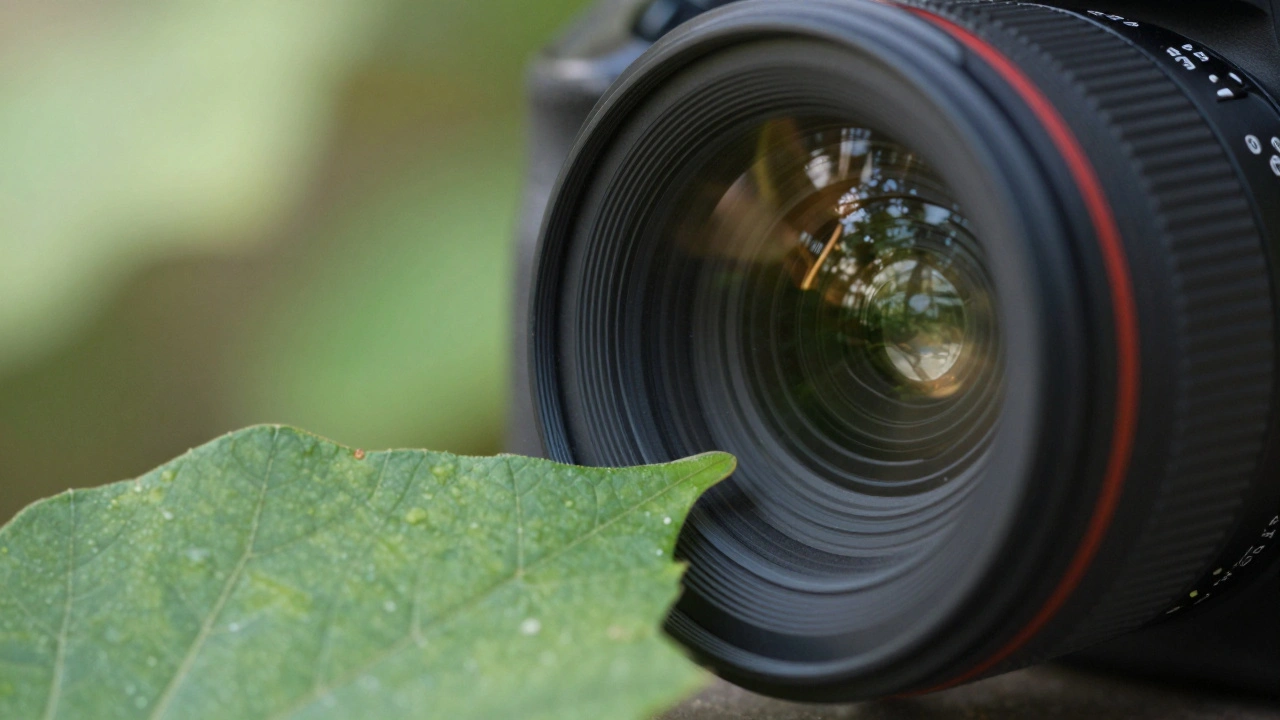
Working distance, on the other hand, is measured from the very front element of your lens to the subject. If your lens has a long barrel, the minimum focusing distance might be 30 centimeters, but if the lens itself is 15 centimeters long, your actual working distance is only 15 centimeters. You are still hovering right over your subject.
Why does this distinction matter? Because working distance directly impacts three things: safety, lighting, and composition. A short working distance means you are physically intruding on the subject’s space. A long working distance gives you room to maneuver. Understanding this difference helps you choose the right tool for the job, rather than guessing based on magnification ratios alone.
The Focal Length Trade-Off
The primary driver of working distance is focal length. There is an inverse relationship here: shorter focal lengths mean shorter working distances, while longer focal lengths provide more breathing room. This is the core trade-off every macro photographer faces.
| Focal Length | Typical Working Distance (at 1:1) | Best Use Case | Lighting Difficulty |
|---|---|---|---|
| 35mm - 60mm | Very Short (< 5 cm) | Tabletop objects, stationary plants | High (Lens blocks light) |
| 90mm - 105mm | Moderate (10 - 20 cm) | General macro, flowers, small insects | Moderate |
| 150mm - 200mm | Long (30+ cm) | Skittish insects, wildlife, portraits | Low (Easy to position lights) |
A 35mm macro lens is compact and cheap, but you practically need to touch the subject to focus. This is fine for a coin on a table, but terrible for a jumping grasshopper. Conversely, a 200mm telephoto macro lens lets you stand back and shoot. The subject doesn’t feel threatened, and you have plenty of room to set up lights. However, these lenses are heavier, more expensive, and require faster shutter speeds to avoid shake.
Safety and Comfort in the Field
When you step outside with a macro lens, safety becomes a practical concern, not just a theoretical one. If you are photographing defensive insects like wasps, bees, or ants, your working distance is your buffer zone. A short working distance forces you into their strike range. One sudden movement, and you’re bitten or stung.
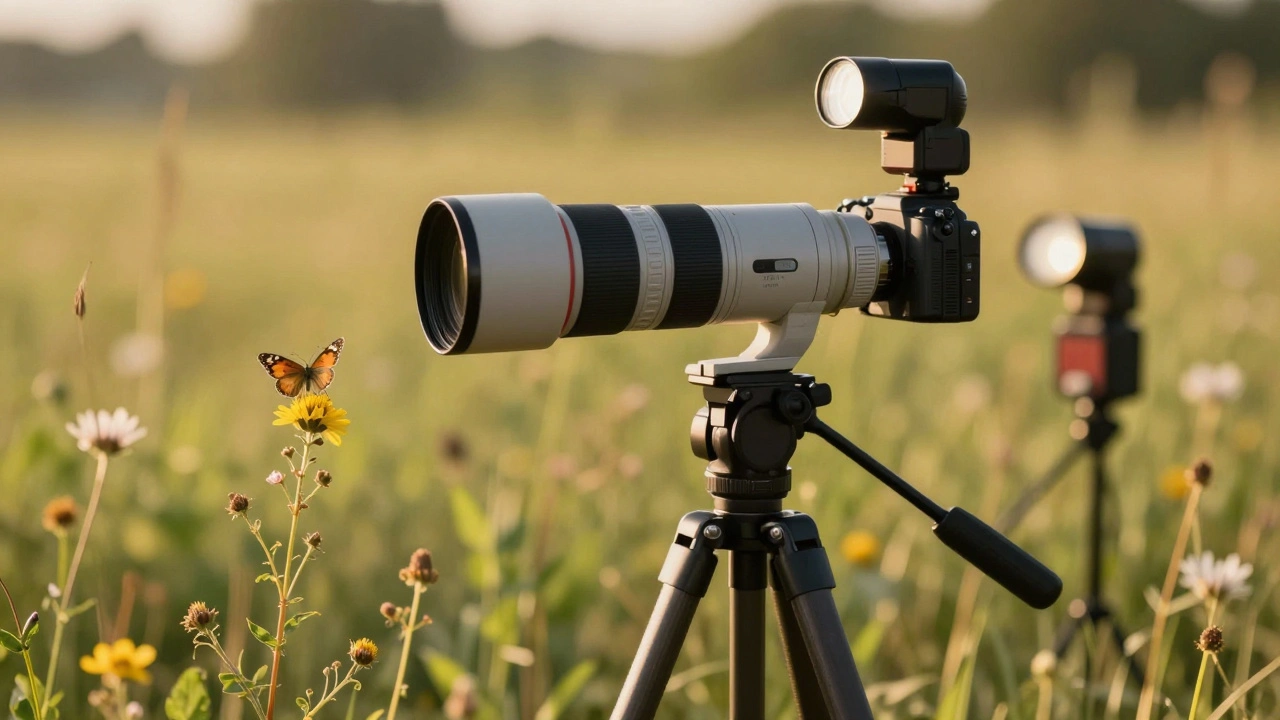
Telephoto macro lenses solve this by allowing you to maintain a safe perimeter. With a 180mm or 200mm lens, you can stay half a meter away from a subject. This distance is often enough to keep the insect calm. They don’t perceive you as an immediate threat looming directly above them. This psychological comfort for the subject translates to better behavior and more natural poses.
Comfort also matters for the photographer. Crouching inches from the ground for hours causes back pain and fatigue. Longer working distances allow you to use tripods at higher elevations or lie comfortably on your back while shooting upward. Your body posture affects your stability, which in turn affects image sharpness. If you are cramped and uncomfortable, your hands will shake, and your shots will blur.
Lighting Constraints and Solutions
Lighting is where working distance reveals its true impact. In macro photography, depth of field is razor-thin. To get sharp images, you need small apertures (like f/16 or f/22), which let in very little light. Therefore, you almost always need additional lighting sources like flashes or LEDs.
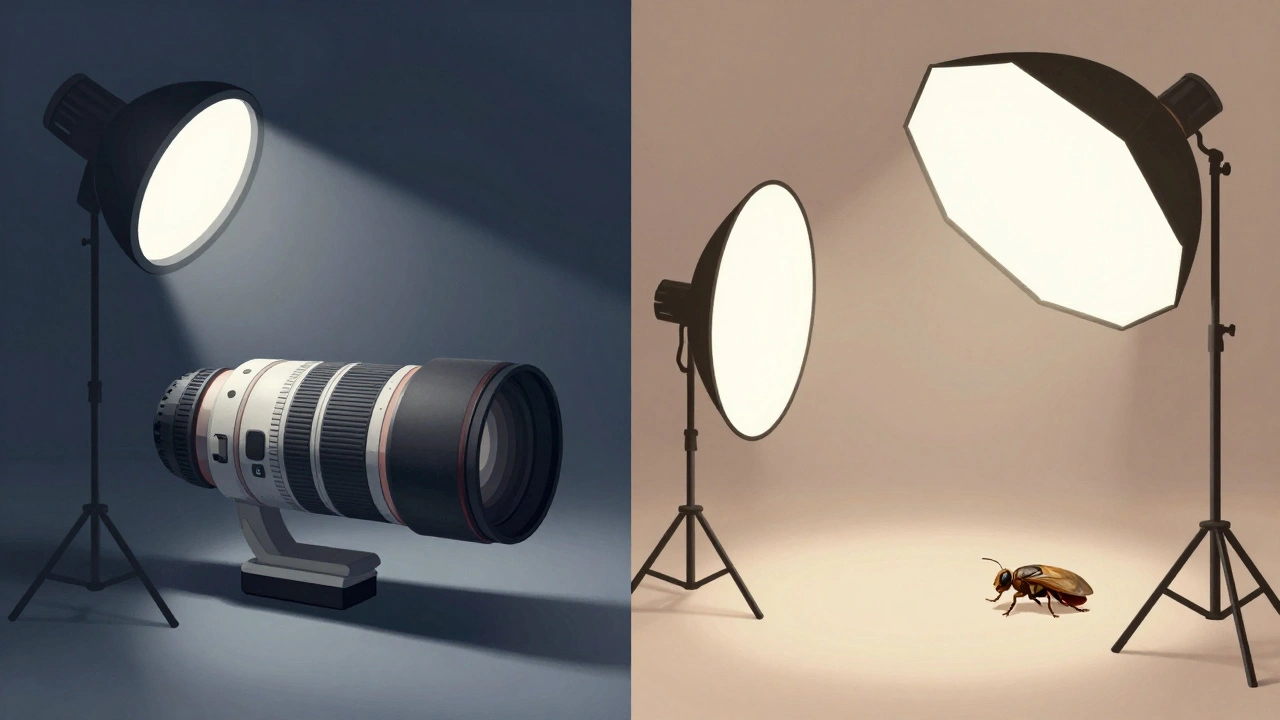
If your working distance is short, your lens becomes a giant obstacle. You cannot place a standard speedlight next to the lens because the lens barrel is already touching the subject. The light source ends up casting harsh shadows or appearing in the frame itself. This is why photographers using short macro lenses often struggle with flat, uninteresting lighting.
Longer working distances open up creative possibilities. You can position off-camera flashes to create dramatic side-lighting, backlighting, or rim lighting. You can use reflectors to bounce light softly onto the subject. You can even use diffusers to soften the harshness of direct flash. The space allows you to sculpt light rather than just blast it.
For those stuck with short working distances, specialized tools are necessary. Ring flashes attach directly to the lens, providing even illumination from all angles without casting shadows. Twin flashes offer similar benefits with more control. Fiber optic light guides can thread through tiny gaps to illuminate specific details without blocking the view. These solutions work, but they limit your ability to create dynamic, directional lighting.
Numerical Aperture and Image Quality
Beyond safety and lighting, working distance interacts with optical physics, specifically Numerical Aperture (NA). NA measures a lens’s ability to gather light and resolve fine detail. In macro photography, there is a fundamental trade-off: shorter working distances generally allow for higher NA, meaning sharper detail and better resolution.
However, pushing for maximum NA by getting extremely close introduces challenges. Diffraction effects become more pronounced at small apertures, reducing overall sharpness. Additionally, the shallow depth of field makes it nearly impossible to keep the entire subject in focus. You might get incredible detail on one eye of an insect, but the rest of the body blurs out completely.
Longer working distances reduce the effective NA slightly, which can mean a minor loss in ultimate resolution compared to a microscope objective. But for most photographic purposes, this loss is negligible. The benefits of easier focusing, better lighting control, and reduced subject disturbance far outweigh the marginal gain in raw resolution from being dangerously close.
Choosing the Right Lens for Your Needs
Selecting a macro lens should start with your intended subjects and environment. Ask yourself: Will I be shooting stationary objects on a desk, or active creatures in the wild?
- For Tabletop and Studio Work: A 60mm or 90mm lens is ideal. You have full control over lighting, the subject won’t run away, and you can afford the shorter working distance. These lenses are lighter and cheaper, making them great entry points.
- For General Nature Photography: A 100mm or 105mm lens offers a versatile middle ground. It provides enough working distance to handle most flowers and small insects without being overly bulky. It’s the most popular choice for general macro enthusiasts.
- For Wildlife and Skittish Subjects: Invest in a 150mm or 200mm telephoto macro lens. The extra cost and weight are justified by the safety margin and the ability to capture natural behavior without disturbing the subject. Pair this with a sturdy tripod and remote trigger for best results.
Remember that working distance is not fixed. Using extension tubes or close-up filters reduces your working distance further, even on telephoto lenses. If you buy a long lens specifically for its working distance, avoid accessories that negate that advantage unless you understand the trade-offs.
Practical Tips for Maximizing Working Distance
If you already own a macro lens and want to improve your workflow, consider these practical adjustments. First, learn to calculate your effective working distance. Measure the length of your lens barrel and subtract it from the manufacturer’s stated minimum focusing distance. Knowing your exact limits prevents accidental collisions with delicate subjects.
Second, embrace off-camera lighting whenever possible. Even with moderate working distances, moving your flash off the camera axis creates dimensionality. Use a wireless trigger and a small flash unit positioned to the side. This simple change transforms flat macro images into three-dimensional works of art.
Third, practice patience and slow movements. Regardless of your lens, sudden motions scare subjects. Approach slowly, pause frequently, and let the subject adjust to your presence. A longer working distance gives you more time to react if the subject moves, reducing the chance of missed shots or damaged gear.
Finally, consider your background. With longer working distances, the background falls away more quickly due to perspective compression. This helps isolate your subject against a smooth, blurred backdrop. Short working distances often result in busy, distracting backgrounds because the background is physically closer to the subject relative to the lens.
What is the difference between working distance and minimum focusing distance?
Minimum focusing distance is measured from the camera sensor to the subject. Working distance is measured from the front element of the lens to the subject. Working distance is always shorter than minimum focusing distance by the length of the lens barrel. Working distance is more practical for determining how close you must physically get to your subject.
Which macro lens is best for photographing insects?
A telephoto macro lens with a focal length of 150mm or 200mm is best for insects. The longer working distance allows you to shoot from a safe distance without startling or provoking defensive reactions from skittish or dangerous insects. It also provides more room for lighting equipment.
How does working distance affect lighting in macro photography?
Short working distances make it difficult to position external lights without them blocking the subject or appearing in the frame. Long working distances provide ample space to position off-camera flashes, reflectors, and diffusers, allowing for more creative and dimensional lighting setups.
Can I increase the working distance of my current macro lens?
No, you cannot increase the working distance of a given lens. Adding extension tubes or close-up filters actually decreases the working distance further. To increase working distance, you must switch to a lens with a longer focal length, such as upgrading from a 90mm to a 200mm macro lens.
Is a 100mm macro lens considered a telephoto macro lens?
Yes, a 100mm macro lens is often categorized as a mid-range or short telephoto macro lens. It offers a good balance between working distance and portability. While not as long as 150mm or 200mm options, it provides significantly more working distance than 50mm or 60mm lenses, making it suitable for many nature photography scenarios.