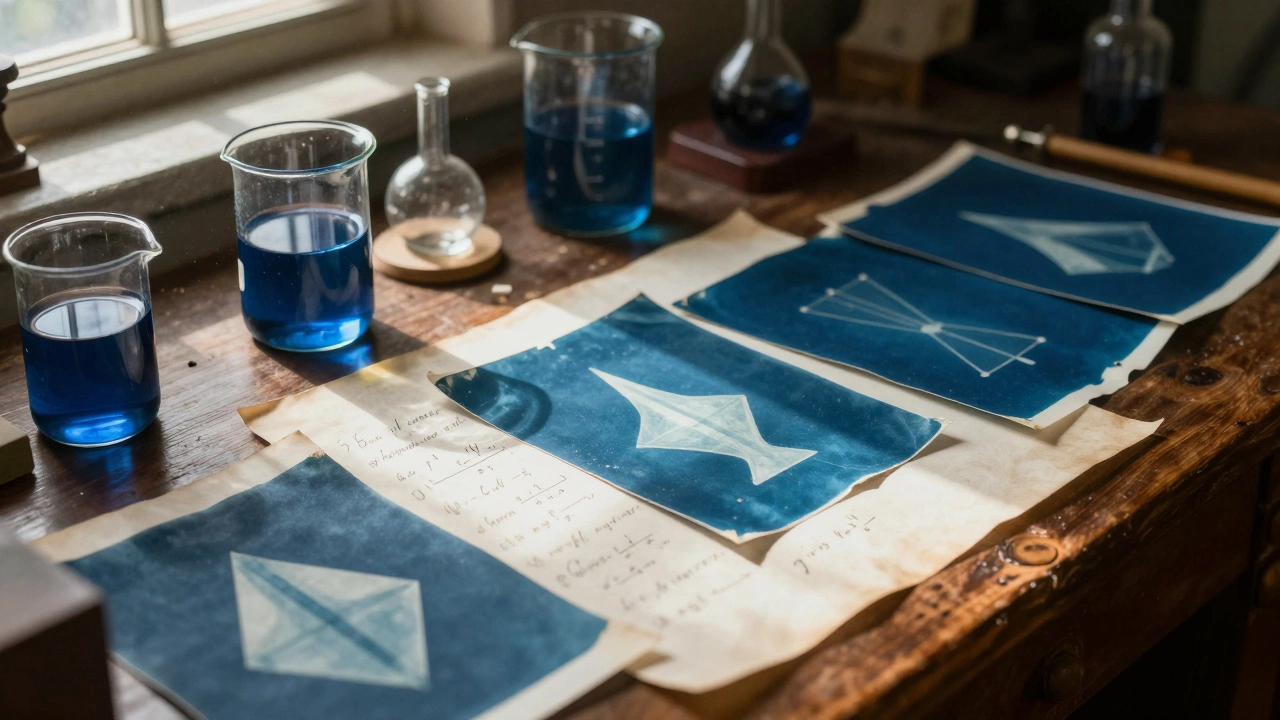
Imagine a world where your photos aren't captured by a sensor or a shiny piece of film, but by a chemical reaction triggered by the sun. Long before digital screens and instant prints, photographers were experimenting with the raw chemistry of light and minerals. One of the most striking results of this era is the cyanotype process, a method that produces haunting, deep blue images that look more like art than a traditional snapshot. If you've ever heard the term "blueprints," you're actually talking about this specific historical technique.
The Birth of the Blue Print
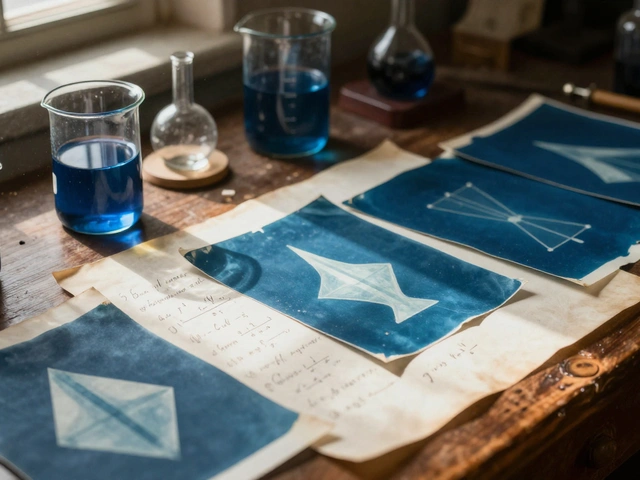
The story starts in 1842 with Sir John F. W. Herschel, a brilliant English astronomer. Unlike many inventors of his time, Herschel wasn't looking to make art; he wanted a way to copy complex mathematical tables and technical drawings without spending hours hand-copying them. He discovered that certain iron salts were sensitive to ultraviolet light, and when exposed, they created a permanent pigment known as Prussian blue.
Herschel did something unusual for the time: he didn't patent his discovery. By giving the process away for free, he allowed it to spread across the globe almost instantly. He also gave us the very language we use today in photography, coining terms like "negative," "positive," and "snapshot." While others were obsessed with silver-based chemistry, Herschel's iron-based approach was cheaper, easier, and completely bypassed the need for a darkroom.
How the Chemistry Actually Works
To understand a cyanotype, you have to think of the paper as a canvas of light-sensitive chemicals. The process relies on two main ingredients: potassium ferricyanide and ferric ammonium citrate. When these are mixed and coated onto a piece of paper, they create a surface that is hungry for UV light.
- Coating: You apply the solution to the paper in dim light and let it dry completely.
- Exposure: You place a negative or a physical object (like a leaf or a piece of lace) directly on the paper and set it in the sun. The UV rays trigger a reaction where the ferric salts turn into ferrous salts.
- Washing: You rinse the paper in plain water. This is the magic moment: the water washes away the chemicals that weren't exposed to light, leaving behind the stark white areas, while the exposed parts stay a deep, vibrant blue.
Because it doesn't require expensive silver or a light-proof room, it became the first "democratic" form of photography. Anyone with a sunny backyard and a few chemicals could create a permanent image.
Anna Atkins and the First Photo-Book
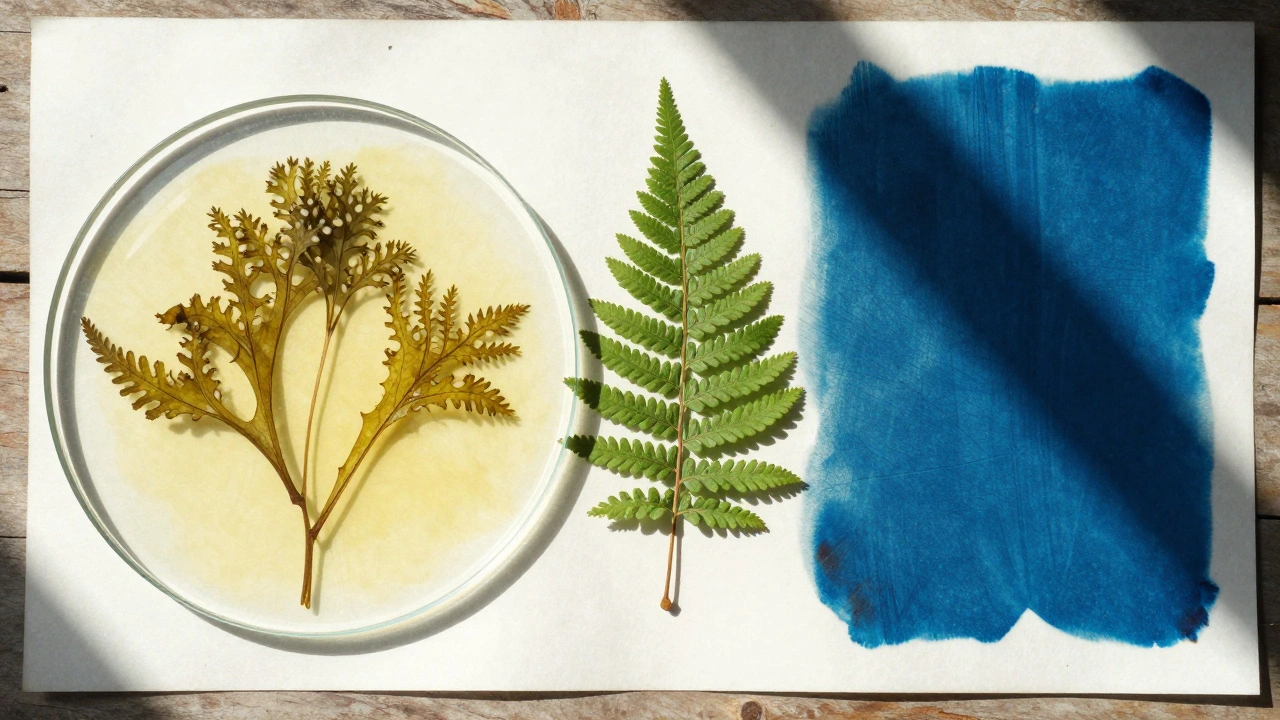
While Herschel invented the tool, Anna Atkins showed the world how to use it for science. A botanist by trade, Atkins realized that the cyanotype was the perfect way to document plant specimens with absolute precision. In 1843, she published "Photographs of British Algae: Cyanotype Impressions."
This wasn't just a book; it was a revolution. It was the first book ever to be illustrated with photographic images rather than hand-drawn engravings. Atkins didn't use a camera for these; she used a technique called a photogram, placing dried seaweed directly onto the sensitized paper. Her work proved that photography could be a rigorous tool for scientific documentation, bridging the gap between art and biology.
From Art to Architecture: The Blueprint Era
By the late 1800s, the cyanotype shifted from the artist's studio to the engineer's office. The process was so reliable and cheap that it became the gold standard for reproducing architectural plans. In 1876, commercial blueprint paper known as "Papier Fer Prussiate" hit the US market, and by the 1880s, it was everywhere.
For nearly a century, if you were building a bridge or a skyscraper, your plans were cyanotypes. This industrial application kept the process alive long after the early pioneers had passed. However, the standard process produced negative images (white lines on blue). To fix this, chemists like Henri Pellet developed a direct positive method in 1877 using gum arabic, allowing for better tonal control and a more "natural" look.
| Feature | Cyanotype | Daguerreotype | Calotype |
|---|---|---|---|
| Primary Chemical | Iron Salts | Silver Iodide | Silver Nitrate |
| Color Palette | Prussian Blue / White | Silver / Grey | Sepia / Brown |
| Darkroom Needed? | No | Yes | Yes |
| Main Use Case | Technical Blueprints | Individual Portraits | Artistic Landscapes |
The Modern Revival: Why Go Analog?
In the mid-20th century, the cyanotype almost vanished, replaced by the photocopy machine and digital scanners. But starting in the 1960s, a wave of artists began pushing back against the clinical perfection of modern photography. They wanted something tactile, something that felt organic and imperfect.
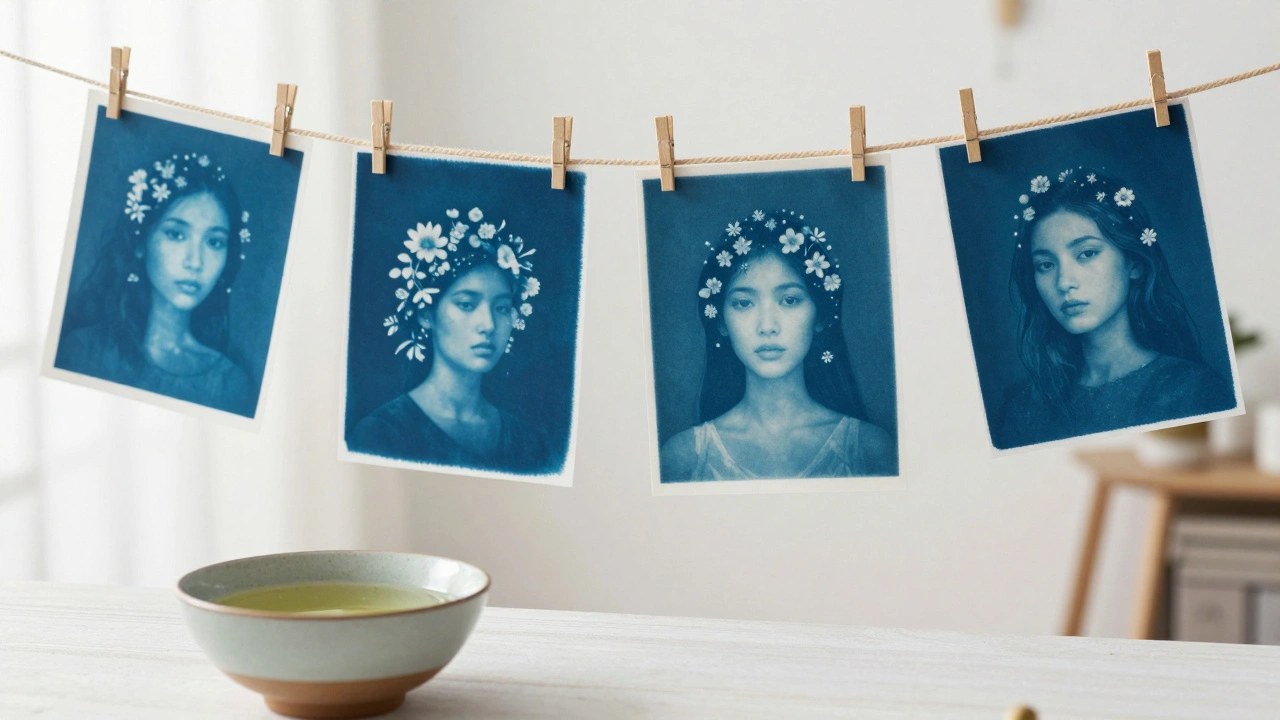
Today, the revival of alternative printing is stronger than ever. In an era of AI-generated images and endless filters, the act of mixing chemicals and waiting for the sun to "burn" an image into paper is a meditative process. Modern photographers use cyanotypes to create ethereal, dream-like portraits or to add a physical, archival quality to their work that a digital file simply cannot match.
The archival stability is a huge draw. Unlike some old prints that fade into yellow, a well-made cyanotype is incredibly hardy. Images created in the 19th century are often just as vivid today as when they were first washed in a bucket of water.
Practical Tips for Trying it Today
If you're looking to get into this, you don't need a chemistry degree. Most hobbyists start with pre-made kits that include the necessary salts. The biggest challenge for beginners is usually the light source. Since the process is UV-dependent, a cloudy day in Seattle or Portland can significantly slow down your exposure time. On the other hand, a bright July afternoon might overexpose your image in minutes.
One pro tip: experiment with the paper. While standard watercolor paper works well, using handmade cotton paper can give the blue tones a deeper, more textured appearance. Also, try "toning" your prints. You can soak a finished blue print in a solution of green tea or coffee to shift the Prussian blue toward a more muted, antique grey or gold tone.
Do I need a camera to make a cyanotype?
No, you don't! You can make "photograms" by placing objects-like leaves, keys, or lace-directly onto the sensitized paper. However, if you want to print a specific photograph, you'll need a "digital negative," which is a high-contrast transparency of your image printed on a plastic sheet.
Is the chemistry dangerous?
The chemicals are relatively safe compared to the toxic mercury used in early daguerreotypes, but you should still be careful. Always wear gloves when mixing the salts to avoid staining your skin, and avoid inhaling the powder. Since it's water-developed, it's much cleaner than traditional silver-based photography.
Why did my print turn out too light?
Under-exposure is the most common issue. This usually happens because of insufficient UV light (clouds or indoor lighting) or because the chemicals weren't mixed in the correct ratio. Make sure you are using direct sunlight or a dedicated UV lamp, and check that your paper was completely dry before adding your negative.
Can I do this indoors?
Standard indoor lightbulbs don't emit enough UV rays to trigger the reaction. You can do it indoors if you have a UV light box or if you place your paper on a windowsill that gets direct, strong sunlight. Otherwise, you'll find your prints barely changing color.
How long do cyanotypes last?
They are incredibly stable. The Prussian blue pigment is resistant to fading under normal conditions. As long as you wash the paper thoroughly to remove all unreacted chemicals, your prints can last for over a century without losing their characteristic color.