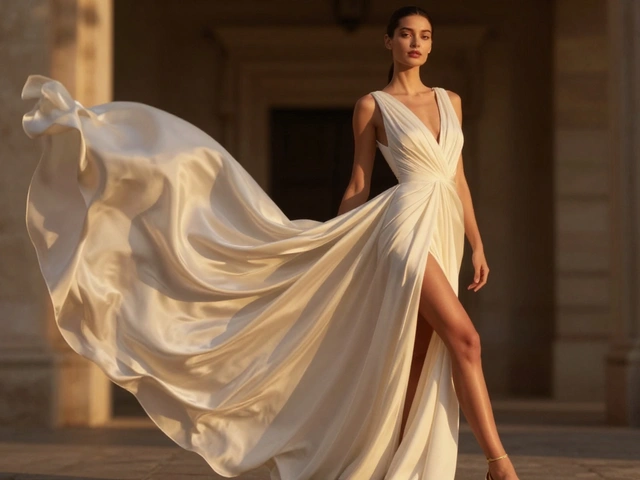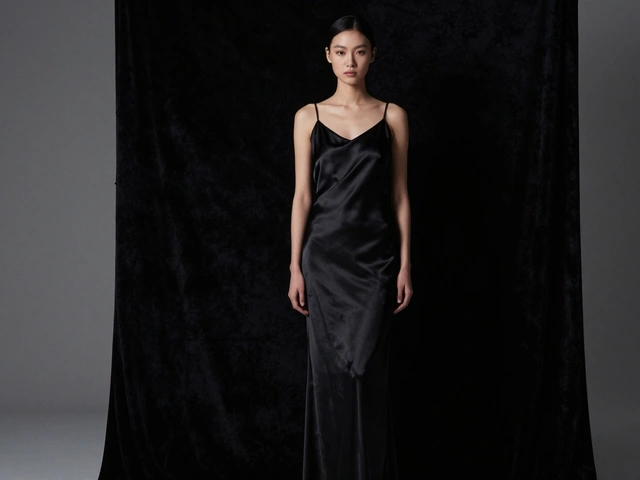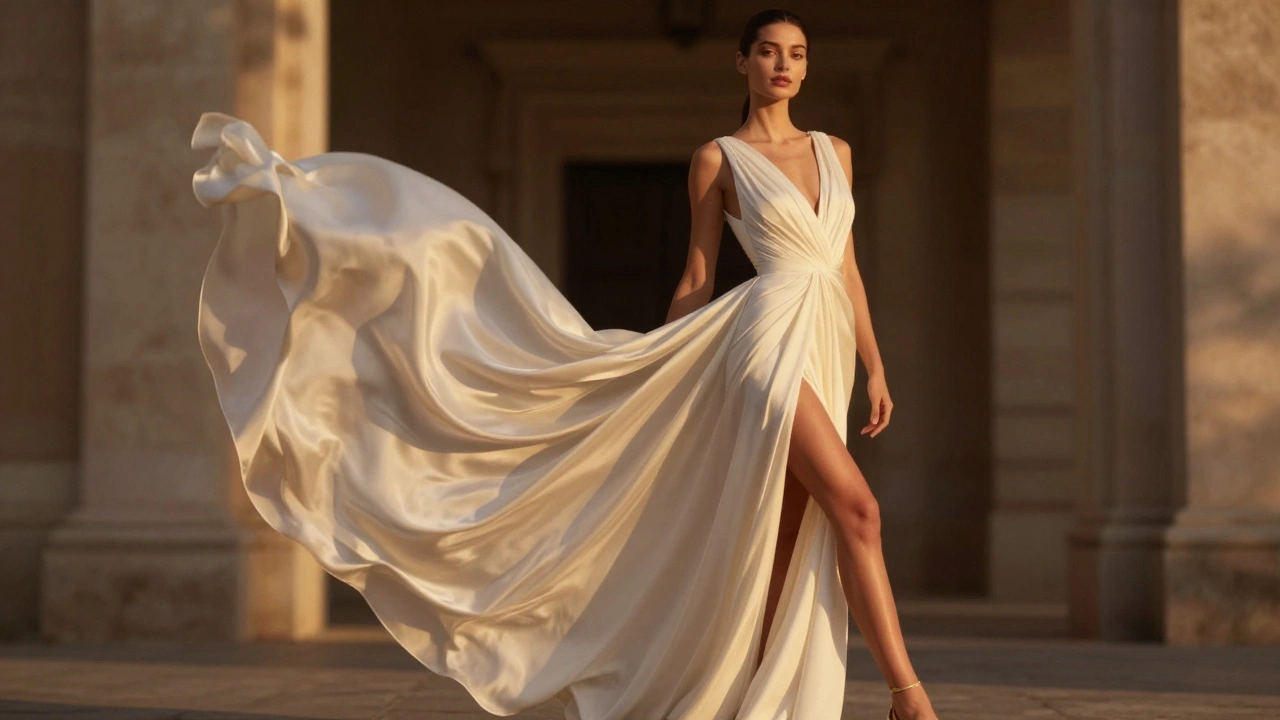
When you see a dress in a fashion magazine or on a runway video, it doesn’t just hang there. It’s posed. Every fold, every drape, every slit is carefully arranged to look intentional, elegant, or daring. That’s not luck. It’s garment-specific posing - a skill that turns a model into a living mannequin and a dress into the star of the shot.
Why Posing Changes Everything for Dresses
A dress isn’t just fabric. It’s structure. It’s movement. It’s how light hits the seams, how the hem falls, how the waist cinches. A poorly posed dress looks stiff, boxy, or worse - invisible. A well-posed one? It sings. The model doesn’t just wear it. She becomes its extension. Think about a long, floor-length gown. If the model stands straight with feet together, the fabric just pools awkwardly. But if she crosses her ankles, shifts her weight slightly to one hip, and lets her spine curve naturally? Suddenly, the dress flows like water. That’s the difference between a snapshot and a story.The Crossed Ankle: Simple, Powerful, Everywhere
This is the go-to pose for almost every long dress. One ankle crossed over the other, knees slightly bent, weight on the back leg. It’s not complicated, but it works because it does three things at once:- It elongates the legs visually
- It creates a subtle S-curve in the spine
- It keeps the hemline from bunching up
The Leg-to-the-Side Pose: Show Off the Details
If your dress has a side slit, a cutout, or asymmetrical draping, this is your pose. The model stands with one leg extended to the side - not too far, just enough to create a clean line from hip to toe. Her hands rest lightly on her hips, fingers gently pressing into the fabric. This does two things:- It defines the waist
- It pulls attention to the side detail
The One Leg Wonder: Easy, Natural, Effective
This is the pose beginners love because it’s hard to mess up. One leg (usually the right) is placed just a few inches forward of the other. The knee is soft. The foot points straight. No stiff stance. No locked joints. Why does it work? It adds dimension. A front-facing pose with both feet flat looks flat. This slight stagger creates depth. It’s subtle, but it’s enough to make the dress look like it’s moving - even when the model isn’t. Pro tip: Have the model shift her weight slightly onto the back leg. It relaxes the hips and makes the posture look natural, not staged.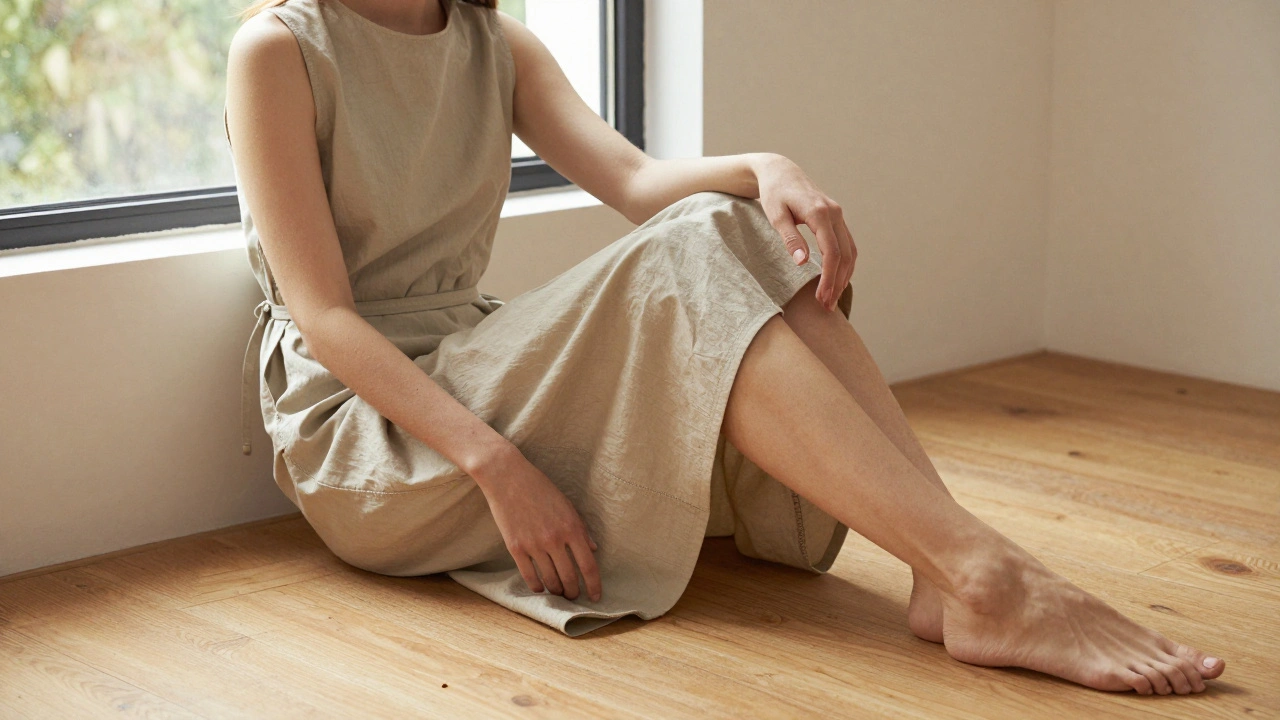
Seated Poses: Where Fabric Tells the Real Story
Standing poses are great. But seated? That’s where you see how a dress really behaves. Sit on a chair, a bench, the floor - it doesn’t matter. What matters is how the legs are positioned.- Crossed legs: Perfect for A-line or sheath dresses. Creates a slim, elegant line from waist to ankle.
- Legs extended: Ideal for maxi dresses with heavy fabric. Lets the hem flow naturally without wrinkles.
- One knee up, foot flat: Great for mid-length dresses. Adds casual energy and shows off shoe details.
The Lean Back: Confidence in a Pose
This one’s a classic. The model leans back slightly - maybe against a wall, a chair, or just her own balance - while facing the camera at a three-quarter angle. Her head turns just enough to keep eye contact. Her arms rest naturally at her sides or one hand touches her hip. Why it works: It shows the front of the dress without looking stiff. It reveals the bodice fit. It creates space between the body and the camera, letting the fabric breathe. The mistake? Leaning too far. If the model’s back is flat against the wall, it looks like she’s resting. If she’s leaning just enough to feel like she’s holding herself up? That’s power.Movement Is a Pose Too
Don’t think of posing as frozen. Think of it as captured motion. A dress with flow - silk, chiffon, tulle - needs to be photographed while moving. Have the model take three steps forward. Then stop. Capture the moment right after the step. The fabric will still be settling. That’s when it looks most alive. Jumping? Yes. But not like a kid on a trampoline. A small hop - just enough to lift the hem slightly - with arms loose and hair falling naturally. The goal isn’t to show athleticism. It’s to show how the dress moves when the body does.The Over-the-Shoulder Look: Show the Back
If the dress has buttons down the back, lace detailing, or a plunging neckline? This pose is non-negotiable. The model turns her body 90 degrees away from the camera, then looks back over her shoulder. Her head tilts slightly. Her eyes lock with the lens. Her hand might brush her hair away. It’s intimate. It’s mysterious. And it’s the only way to show off the back of a dress without turning the whole photo into a profile shot.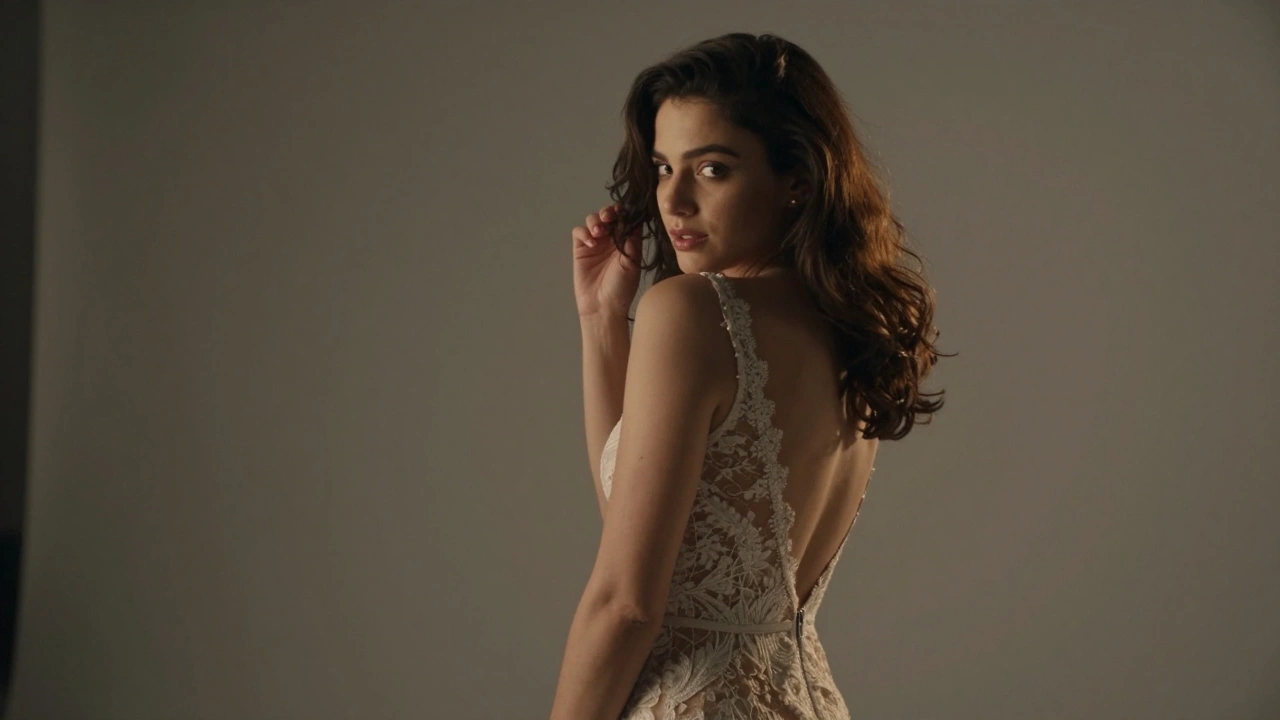
Body Language Is the Secret Ingredient
A pose isn’t just about where the legs go. It’s about what the body says.- Hands on hips? Confident. Powerful. Classic.
- Arms crossed? Defensive. Not good - unless the dress is a structured blazer.
- Fingers gently touching the fabric? Tender. Human. Real.