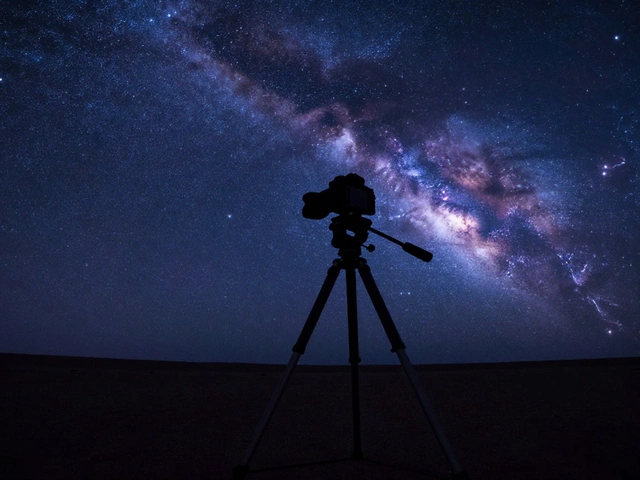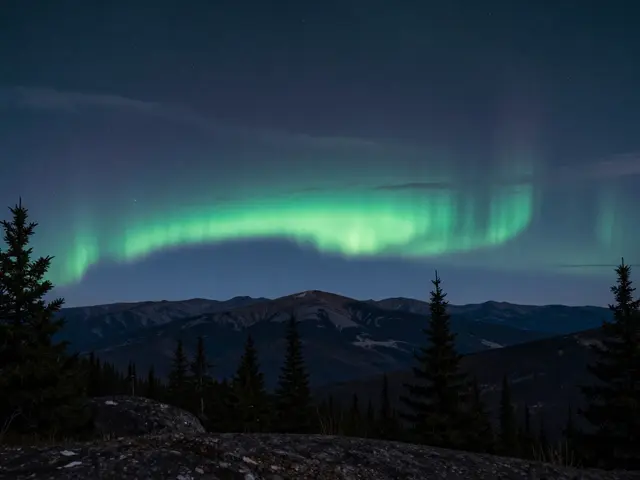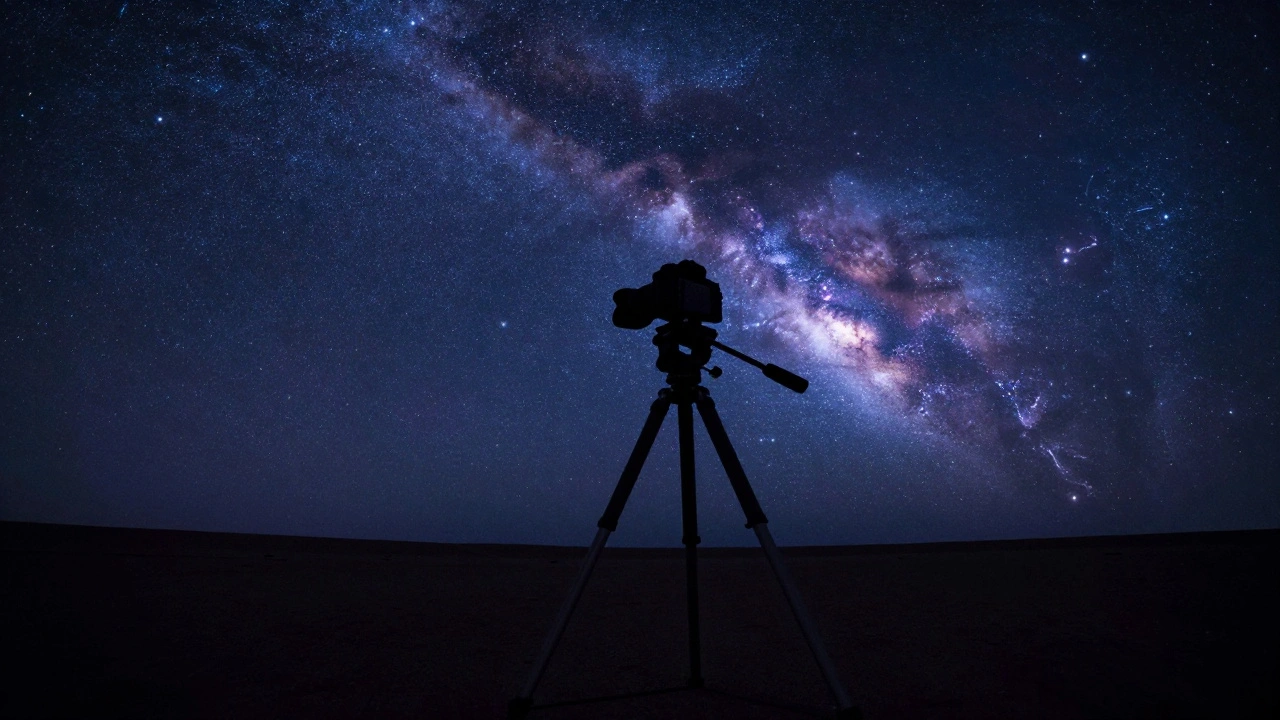
If you've ever looked at a photo of the Andromeda Galaxy or the Orion Nebula and wondered how they got those glowing, ethereal details, you're looking at the result of deep sky astrophotography. Unlike snapping a photo of the moon, which is bright and close, capturing deep sky objects requires a bit of a mental shift. You aren't just taking a picture; you're collecting photons over hours of time to reveal things that are practically invisible to the naked eye.
The biggest hurdle for any beginner is the Earth's rotation. Because we're spinning, the stars appear to move across the sky. If you leave your shutter open for more than a few seconds, those pinpoint stars turn into blurry streaks. To fix this, we use deep sky astrophotography techniques that combine specialized hardware to follow the stars and software to clean up the resulting images.
The Essential Gear: Beyond the Tripod
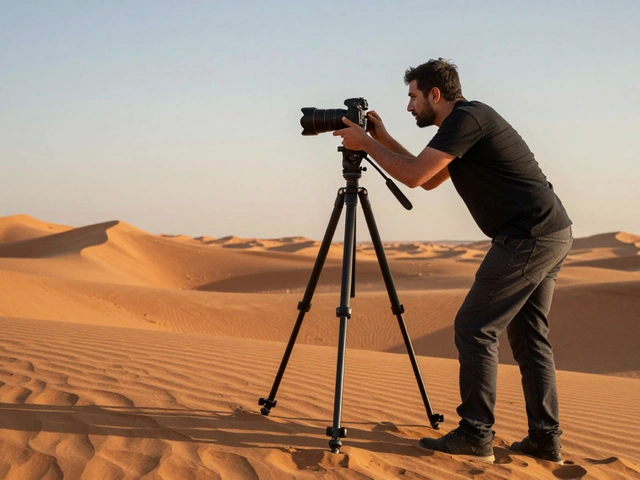
While you can start with a DSLR and a tripod, you'll quickly hit a ceiling. To capture faint nebulae, you need a way to counteract the Earth's spin. This is where an Equatorial Mount is a specialized tripod head that rotates on a single axis aligned with the Earth's polar axis, allowing it to track celestial objects precisely as they move. Devices like the Star Adventurer are great entry points for those using cameras with lenses rather than full telescopes.
If you're moving into longer focal lengths, you'll likely want a Telescope. Depending on your target, you might choose a refractor (great for wide nebulae) or a reflector (better for distant galaxies). However, the telescope is only as good as the mount it sits on. If your mount isn't balanced, your images will be blurry. Remember the physics: Moment = Force × Distance. By sliding your counterweights in or out, you neutralize the turning force, which reduces stress on the motors and keeps your tracking smooth.
| Target Type | Recommended Focal Length | Suggested Gear | Tracking Requirement |
|---|---|---|---|
| Large Nebulae | Under 200mm | Wide lens + Star Tracker | Basic Tracking |
| Galaxies | 400mm - 1000mm | Apo Refractor + EQ Mount | Precise Polar Alignment |
| Small Planetary Nebulae | 1000mm+ | Newtonian Reflector + EQ Mount | Autoguiding Required |
Mastering the Move: Polar Alignment and Guiding
Having a mount isn't enough; you have to point it in the right direction. Polar Alignment is the process of aligning the mount's axis of rotation exactly with the North Celestial Pole (NCP) in the northern hemisphere or the South Celestial Pole (SCP) in the southern hemisphere. If you're off by even a few degrees, the stars will slowly drift out of frame during long exposures.
For those using ultra-long focal lengths, even the best mounts have "periodic error"-tiny mechanical hiccups that cause stars to wobble. To fix this, pro photographers use Guiding. This involves a second, smaller camera and scope that locks onto a single star. If that star moves even a fraction of a pixel, the guiding software sends a correction signal to the main mount to nudge it back into place. If you're staying under 200mm, don't sweat this-you likely don't need it.
Another pro tip is Dithering. This is when you slightly shift the camera's position between shots. By moving the frame by a few pixels every few exposures, you ensure that the same sensor noise doesn't land on the same spot in every frame. This makes it much easier for the software to strip away the junk during the stacking phase.
The Magic of Stacking: Turning Noise into Signal
When you take a single 30-second shot of a galaxy, it will look dark and grainy. This is because the "signal" (the light from the galaxy) is buried under "noise" (electronic interference from the camera sensor). To solve this, we use Image Stacking, also known as integration. By taking 50 or 100 images of the same object and layering them, the random noise cancels itself out while the consistent signal from the stars builds up.
For galaxies and nebulae, aim for a total of 1 to 2 hours of exposure. Instead of one giant 2-hour photo, take multiple 30-second "subs" (sub-exposures). This prevents a single satellite or plane from ruining your entire night's work.
To get a clean result, you can't just stack the "Light frames" (the actual photos). You need calibration frames to remove sensor defects:
- Dark Frames: Taken with the lens cap on at the same temperature and exposure as your light frames. These remove "amp glow" from CMOS sensors.
- Bias Frames: The fastest possible exposure with the lens cap on. These kill the remaining dead pixels and fixed-pattern noise.
- Flat Frames: Images of a neutral white light source used to remove vignetting and dust spots on the lens.
Processing the Data with Software
Once you have your files, you need a way to crunch the numbers. DeepSkyStacker is a popular free software tool used to calibrate, register, and stack astronomical images. It handles the heavy lifting of aligning the stars across dozens of frames.
When using DeepSkyStacker, don't just stick to the defaults. Check your star detection threshold; you generally want the software to identify between 50 and 100 stars for the most accurate alignment. If the software is confusing hot pixels with stars, try reducing the number of stars used for calibration.
However, be warned: the image coming out of the stacker often looks flat or dark. This is normal. The data is there, but it's "linear." You'll need to use a tool like PixInsight or Adobe Photoshop to "stretch" the image. Stretching is the process of pulling the faint, dark details into the visible range without blowing out the bright stars.
Planning Your Session
Don't just go outside and hope for the best. Use a simulator like Telescopius to plug in your camera and lens specs. It will show you exactly how a specific galaxy will fit in your frame, so you don't spend two hours tracking an object that's too big for your sensor. This planning phase saves you from the frustration of "cropping out" half your target after the fact.
Do I need a telescope for deep sky photos?
Not necessarily. Many incredible photos of large nebulae are taken with 135mm or 200mm telephoto lenses. Telescopes are mostly needed for smaller targets like distant galaxies or planetary nebulae where you need more magnification.
Why do I need Dark and Bias frames?
Digital sensors aren't perfect. They create electronic noise (amp glow) and have dead pixels. Dark frames record that noise so the software can subtract it from your actual photo, and Bias frames remove the base electronic offset of the sensor.
What is the best exposure time for a single sub-frame?
For beginners, 30 seconds is a sweet spot. It's long enough to capture signal but short enough that minor tracking errors won't ruin the image. Total integration time (the sum of all subs) is more important than the length of a single shot.
Is DeepSkyStacker better than paid software?
It's an excellent starting point because it's free and easy. However, professional tools like PixInsight offer far more control over the post-processing and stretching phases, which is where the "art" of the final image happens.
How do I know if my mount is properly balanced?
Release the clutches on your mount. If the telescope stays in place without swinging wildly in one direction, it's balanced. If it crashes down or drifts up, adjust your counterweights until it remains stationary.