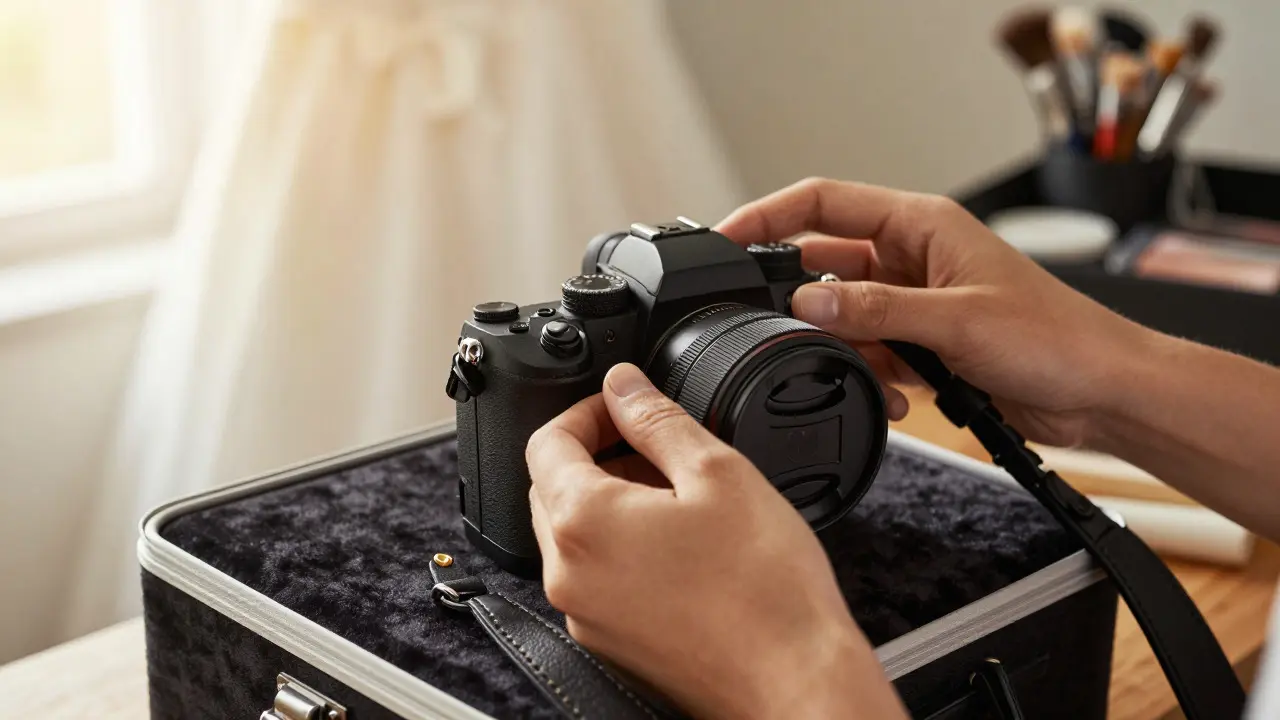
Imagine this: It’s 10:30 AM on a Saturday in Portland. The bride is getting ready in a sun-drenched suite, the light is shifting fast, and you have exactly four minutes to capture her first look before the makeup artist needs to touch up her lashes. Miss that window, and you lose a shot that can’t be recreated. This is why wedding photography isn’t just about having a nice camera; it’s about executing a precise wedding photography workflow that keeps you one step ahead of the chaos.
Most photographers fail not because they lack talent, but because their gear fails them or their process is too rigid for the unpredictable nature of a wedding day. Whether you are shooting a black-tie gala or a backyard ceremony, your equipment and routine need to flex. Here is how to build a system that ensures you never miss a moment, no matter what happens.
The Core Camera System: Redundancy is King
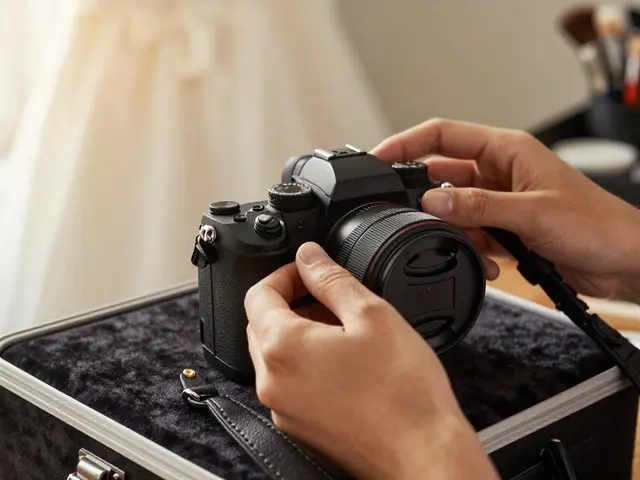
Your primary asset is your camera body, but relying on a single unit is a recipe for disaster. If your main body dies at the altar, there is no second chance. You need a dual-body setup that allows you to switch lenses without missing a beat. For most working pros, this means two bodies with similar sensor sizes so your image quality remains consistent across both.
Consider using a high-resolution full-frame mirrorless system as your workhorse. These cameras offer excellent low-light performance, which is critical for indoor receptions where lighting drops significantly. Pair this with a slightly lighter, more compact body for candid shots during the cocktail hour when you want to blend into the background. The key here is battery life. A full day of shooting can drain three or four batteries per body. Carry at least six charged batteries in a dedicated organizer, not loose in a bag.
- Main Body: High-end full-frame model with dual card slots for simultaneous RAW/JPEG recording.
- Secondary Body: Compact mirrorless for discretion and faster lens changes.
- Batteries: Minimum of 6 fully charged units plus a portable charger.
- Memory Cards: Fast UHS-II cards, minimum 128GB each, formatted before the event.
Lens Strategy: Covering Every Scenario
Lenses define the mood of your images. A zoom lens gives you versatility, but prime lenses give you speed and shallow depth of field. You don’t need ten lenses; you need three specific tools that cover 95% of situations. Start with a fast standard zoom, like a 24-70mm f/2.8. This is your do-it-all lens for group shots, detail shots of rings, and environmental portraits. It handles everything from wide-angle room setups to tight facial expressions.
Next, grab a short telephoto zoom, such as a 70-200mm f/2.8. This is essential for capturing candid moments from a distance without intruding on the couple’s space. It also provides beautiful compression for portrait backgrounds, blurring out distracting elements in the venue. Finally, include a fast prime, like a 50mm f/1.4 or 35mm f/1.4. Primes force you to move your feet, resulting in more dynamic compositions, and their wide apertures allow you to shoot in dimly lit churches or ballrooms without raising your ISO to unusable levels.
| Focal Length | Aperture | Primary Use Case | Key Benefit |
|---|---|---|---|
| 24-70mm | f/2.8 | Ceremony, Groups, Details | Versatility, Sharpness |
| 70-200mm | f/2.8 | Candids, Portraits, Speeches | Reach, Background Blur |
| 50mm Prime | f/1.4 | Low Light, Intimate Moments | Speed, Bokeh Quality |
Lighting Essentials: Taming Indoor Chaos
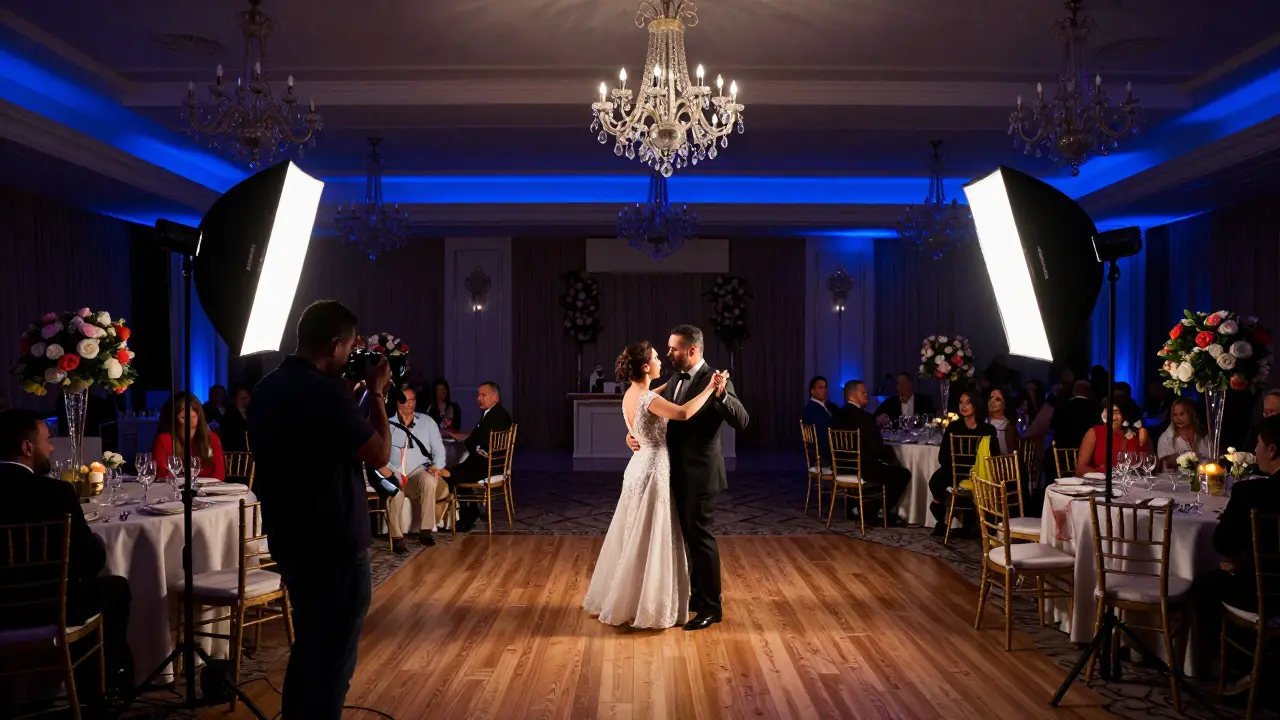
Receptions are often dark, colorful, and inconsistent. Relying solely on ambient light usually results in noisy, muddy images. You need a flash system that works both on-camera and off-camera. A speedlight mounted on your secondary body serves as a safety net for quick fills, but your real power comes from a wireless strobe system. Bring at least two studio-grade flashes with radio triggers. One can stay near the dance floor for general illumination, while the other moves with you to light specific speakers or the couple during the first dance.
Don’t forget modifiers. A large softbox creates flattering, wrap-around light for portraits, while a snoot helps isolate subjects in busy rooms. Keep a gel kit handy too. If the venue has heavy blue ambient light, a CTO (Color Temperature Orange) gel on your flash will help match the white balance, saving you hours in post-production. Test your lighting setup 30 minutes before the reception starts. Walking around with your assistant to check for hot spots and shadows is non-negotiable.
The Backup Plan: Storage and Power
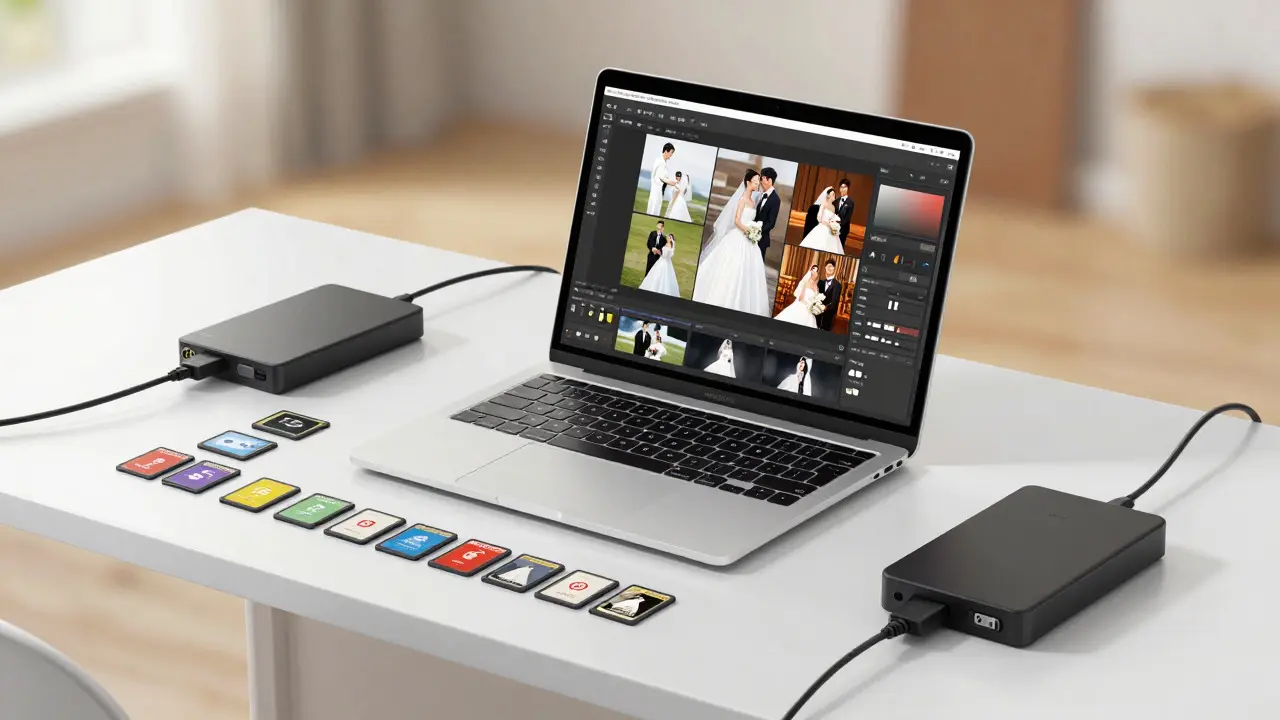
Data loss is the only true failure in wedding photography. Clients pay for memories, not files. Therefore, your storage strategy must be redundant. Never rely on a single memory card. Shoot to both slots simultaneously if possible, or use two different brands of cards to avoid firmware-related corruption. At the end of the day, immediately back up all footage to a rugged external hard drive. Do not go home until you have verified the checksums on your files.
Power management is equally critical. Your laptop, flash chargers, and phone all need juice. Bring a high-capacity power bank capable of charging multiple devices via USB-C. If you plan to edit on-site for previews, ensure your laptop has a spare battery or access to a reliable outlet. In remote venues, a portable solar panel might be overkill, but a robust battery pack is essential. Label every cable and adapter. Nothing kills momentum like searching for the right HDMI cable in a dark van.
Workflow Optimization: From Capture to Delivery
Your workflow doesn’t end when the last photo is taken. It begins with preparation. Two weeks before the wedding, confirm the timeline with the coordinator. Know where the ceremony is, where the photos will be, and when the speeches start. On the day, assign a second shooter if the budget allows. Having eyes in two places doubles your coverage and reduces stress. During breaks, spend five minutes organizing your cards and checking your backups. Small habits prevent big problems later.
In post-production, establish a strict culling schedule. Don’t let unedited galleries pile up. Aim to deliver sneak peeks within 48 hours to keep clients excited. Use automated workflows in editing software to apply base corrections, then focus your creative energy on retouching key portraits. Consistency in color grading builds trust. If your engagement session looks warm and golden, your wedding gallery should feel the same way. Clients expect visual continuity across their entire experience with you.
Common Pitfalls to Avoid
Even experienced photographers make mistakes. One common error is ignoring the weather. In Portland, rain is frequent. Always bring a rain cover for your camera and a microfiber cloth to wipe condensation off lenses. Another pitfall is forgetting to change lenses between indoor and outdoor settings. Dust settles quickly in humid environments. Use a blower and brush regularly. Finally, don’t underestimate the importance of communication. Talk to the couple before you start. Ask them who their important family members are. Knowing who to prioritize saves you from awkward moments when a grandparent asks for a solo shot while you’re focused on the couple.
Frequently Asked Questions
How many batteries should I bring to a full-day wedding?
Bring at least six fully charged batteries for two camera bodies. This accounts for continuous shooting, live view usage, and cold weather conditions that drain power faster. Always carry a portable charger as a backup source.
Is it better to use a prime or zoom lens for weddings?
Use both. Zoom lenses provide flexibility for changing distances and focal lengths quickly, which is crucial during ceremonies. Prime lenses offer wider apertures for low-light situations and superior optical quality for portraits. A mix of both covers all scenarios effectively.
What is the best way to back up wedding photos on the day?
Shoot to dual card slots simultaneously. At the end of the day, copy all files to a rugged external hard drive. Verify the integrity of the files using checksum software before leaving the venue. Only after verification should you consider the data safe.
Do I need off-camera flash for every wedding?
Not every wedding, but most receptions benefit from it. Off-camera flash allows you to control the direction and quality of light, creating professional-looking portraits even in dark venues. If the venue has ample natural light or professional house lighting, you may get away with ambient light alone, but flash offers more creative control.
How early should I arrive at the wedding venue?
Arrive at least 60 to 90 minutes before the first scheduled event. This time allows you to scout locations, test lighting, charge batteries, and meet the couple and coordinator. Being late stresses the client and reduces your ability to prepare for unexpected changes.