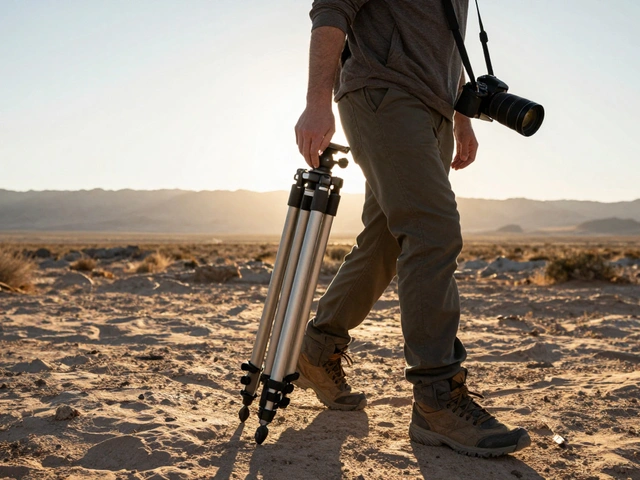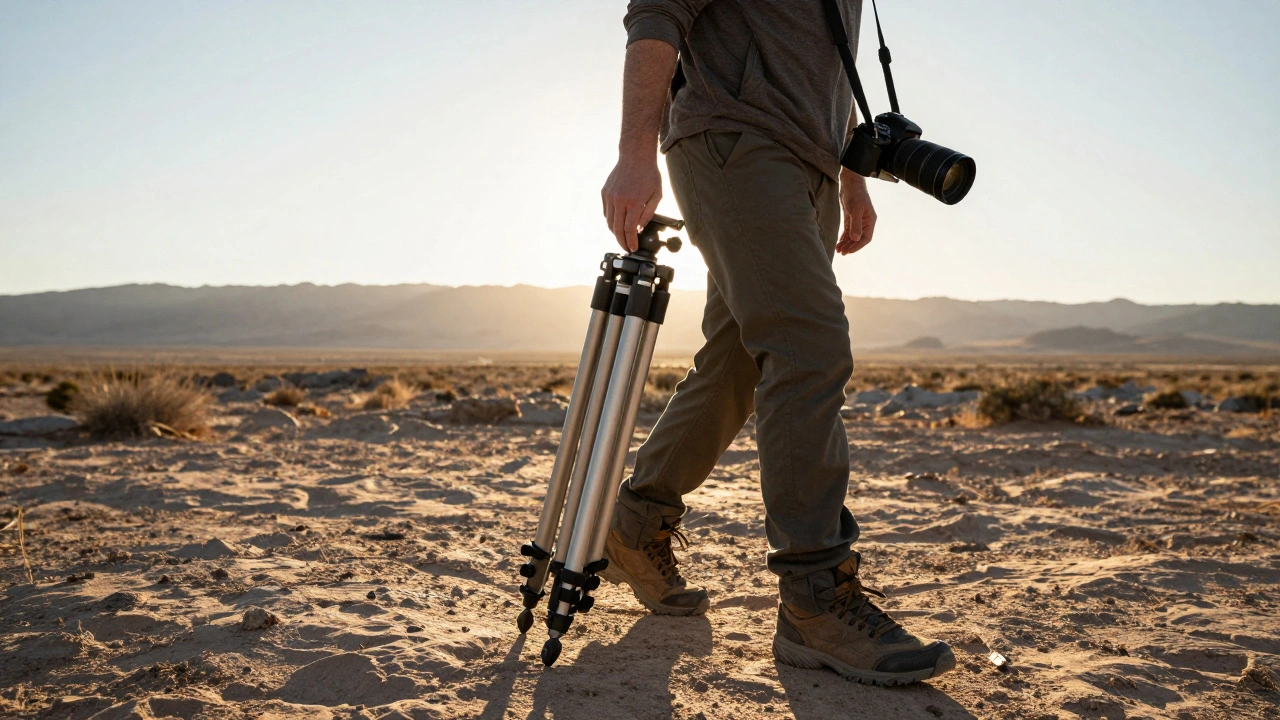
Carrying a heavy tripod on a long hike, through crowded streets, or across international borders isn’t just inconvenient-it’s a dealbreaker for many photographers. That’s why travel tripods have become the go-to solution for anyone who wants sharp, steady shots without dragging around a studio-grade stand. But not all lightweight tripods are created equal. Some feel flimsy. Others cost as much as a used camera. And a few barely hold up under a basic DSLR. So how do you pick one that actually works?
What Makes a Good Travel Tripod?
A travel tripod isn’t just a smaller version of a regular one. It’s a carefully engineered compromise. You need it to fold down small enough to fit in a backpack, lift high enough to shoot at eye level, and hold your gear steady-even when the wind picks up or you’re shooting at 1/15th of a second. The trick? Balancing weight, strength, and usability. Most serious travelers look for tripods under 2kg (4.4 lbs). Anything heavier starts to feel like a burden. But if you go too light-under 1kg-you risk losing stability. That’s why the sweet spot for most users is between 1.3kg and 1.8kg. Models like the Manfrotto Befree Advanced (1.51kg) and the MeFOTO RoadTrip Classic hit that mark perfectly. They’re light enough to carry all day, but solid enough to handle a full-frame camera with a 70-200mm lens without shaking.Material Matters: Carbon Fiber vs. Aluminum
Here’s the big debate: carbon fiber or aluminum? Carbon fiber is lighter. That’s true. A carbon tripod can save you about 200 grams compared to its aluminum twin. Sounds great, right? But here’s the catch: that weight saving doesn’t always mean better performance. Aluminum tripods are heavier, sure. But they’re also stiffer. More mass means less vibration. The Manfrotto Befree Advanced in aluminum holds up better in windy conditions than its carbon version. TechGearLab’s tests showed aluminum models delivered smoother, more stable results during long exposures and telephoto shots. Plus, aluminum is cheaper and easier to repair. If you crack a carbon leg, you’re buying a new tripod. A bent aluminum leg? Often fixable with a little elbow grease. Carbon fiber is still great-if you’re hiking 10 miles a day or flying with strict baggage limits. But for most travelers? Aluminum gives you more bang for your buck. Unless you’re carrying a 600mm lens, the weight difference barely matters. What matters is whether your photos come out sharp. And aluminum often wins that test.Key Features That Actually Make a Difference
Not all features are created equal. Some are marketing fluff. Others? Game-changers.- Leg sections: Five-section legs fold smaller than three or four. The Vanguard and Slik 633 both use five sections to collapse under 30cm-perfect for tight backpacks. But more sections mean more joints. That can mean less rigidity. Look for thick, reinforced leg tubes, especially the smallest ones.
- Center column: A splittable center column lets you flip the tripod upside down for ultra-low shots. The Manfrotto Befree and 3 Legged Thing Leo 2.0 both do this. It’s useful for macro or ground-level shots, but don’t extend it too far. The higher the column, the less stable it gets.
- Leg locks: Twist locks are sleek and quiet. Lever locks are faster and easier to use with gloves. If you’re shooting in cold weather or rushing to catch light, levers win.
- Monopod conversion: The GEEKOTO 58" Compact lets you turn into a monopod in seconds. That’s huge if you’re shooting video or need quick mobility. No need to carry two pieces of gear.
- Feet: Rubber feet grip pavement. Spiked feet dig into dirt. Some models, like the Peak Design, include both. If you’re shooting in varied terrain, dual feet are worth the extra cost.
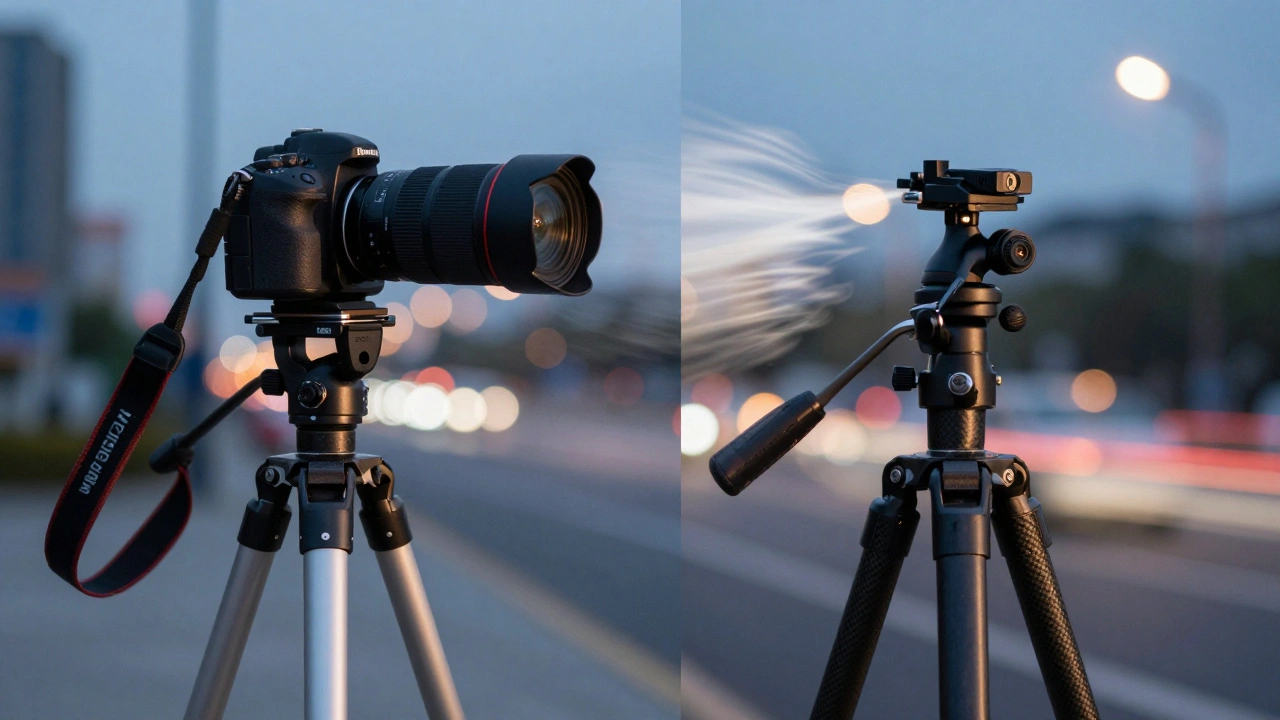
Real-World Performance: What Experts and Users Say
The Manfrotto Befree Advanced and MeFOTO RoadTrip Classic consistently rank as the most stable in side-by-side tests. Why? They’ve got thick leg tubes, solid ball heads, and smooth column movement. The 3 Legged Thing Leo 2.0 is a beast-holding up to 30kg. That’s more than enough for a camera with a heavy telephoto lens. But it costs nearly twice as much as the Manfrotto. Is it worth it? Only if you’re shooting video professionally or need absolute rigidity at full extension. The Slik 633 is another standout. At just 26.8 ounces (1.7kg), it supports a Kowa TSN 88A spotting scope-something most tripods can’t handle. Backcountry hunters swear by it. Even with the center column fully extended, it doesn’t wobble. That’s rare. On the other end, the K&F Concept 61" Carbon Fiber Tripod is cheap and light, but it’s made with a plastic mounting plate. Users report it flexes under heavier lenses. If you’re using a 100-400mm zoom, you’ll feel the shake. It’s a budget option, but not for serious work.Who Should Buy What?
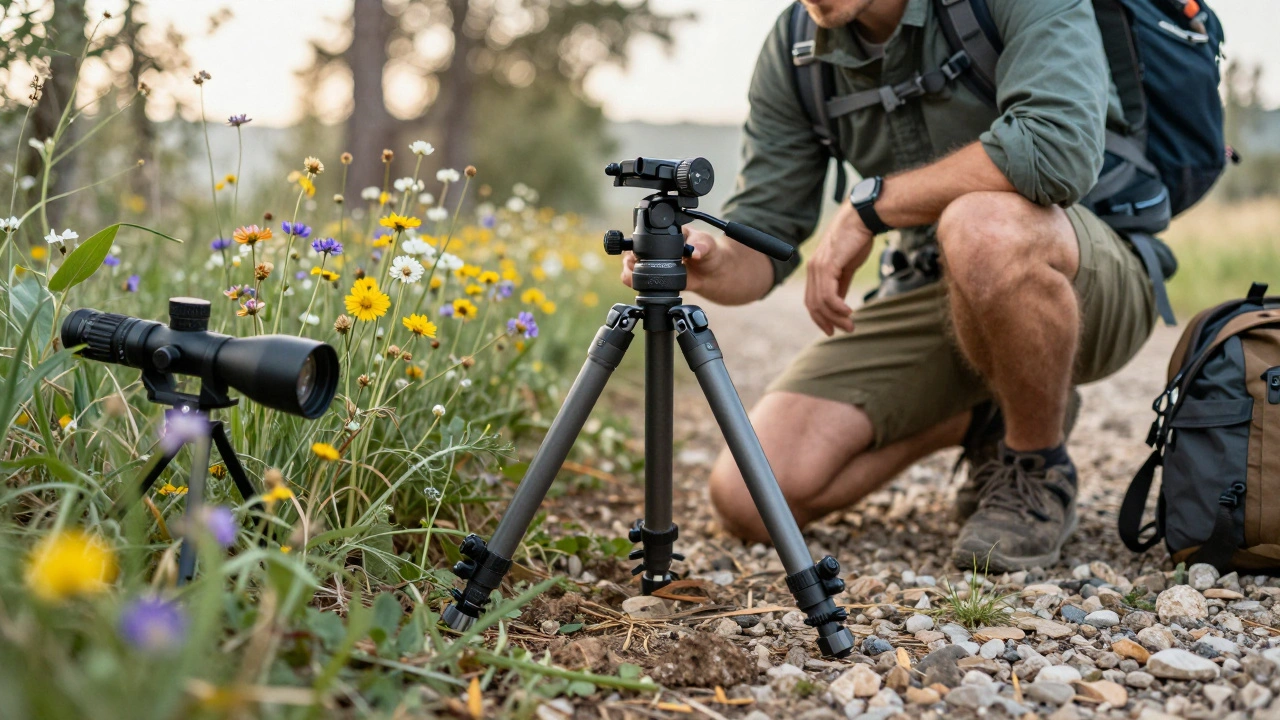
- Backpackers & hikers: Go for the Slik 633 or Tricer BC. They’re ultralight, stable even at height, and built for rugged use. You won’t mind carrying them 20 miles.
- Travel photographers: The Manfrotto Befree Advanced or MeFOTO RoadTrip Classic. They’re the gold standard-light, sturdy, and versatile. Great for cities, beaches, and mountain trails.
- Video creators: The GEEKOTO 58" Compact. Monopod mode is a lifesaver for smooth panning shots. Plus, it’s surprisingly stable.
- Budget shoppers: Stick with aluminum. The Befree in aluminum costs $100 less than the carbon version and performs almost as well. No need to overpay for weight savings that don’t improve your photos.
- Professional videographers: The 3 Legged Thing Leo 2.0. It’s expensive, but if you’re shooting 4K video with a heavy rig, you need the stability. It’s the only one that feels like a studio tripod in your pack.
Common Mistakes to Avoid
- Buying the lightest tripod you can find. You’ll regret it when your photos are blurry.
- Ignoring load capacity. Check the max weight rating. If your camera + lens combo weighs 2.5kg, don’t get a tripod rated for 2kg.
- Skipping the ball head. A cheap head ruins even the best tripod. Look for one with a quick-release plate and smooth movement.
- Not testing it in-store. Pick it up. Extend it. Feel how it balances. A tripod that looks great online might feel awkward in your hands.
Final Thoughts: It’s About Balance
There’s no perfect travel tripod. Only the one that fits your life. If you’re chasing sunrises on mountain peaks, go ultralight. If you’re shooting street portraits in Tokyo, prioritize stability. Most people don’t need carbon fiber. They need something that works, doesn’t break, and doesn’t weigh them down. The best choice? For 90% of travelers: the Manfrotto Befree Advanced in aluminum. It’s not the cheapest. It’s not the lightest. But it’s the most balanced. It holds your gear steady. It folds small. It lasts. And it won’t drain your wallet. If you’re still unsure, start with aluminum. Upgrade later if you find yourself constantly fighting shake. Until then, don’t overthink it. Your photos will thank you.What’s the ideal weight for a travel tripod?
The sweet spot is between 1.3kg and 1.8kg (3-4 lbs). Lighter than that, and you risk instability. Heavier than that, and it defeats the purpose of being a travel tripod. Most professional reviewers agree that 1.5kg strikes the best balance between portability and performance.
Is carbon fiber worth the extra cost?
Only if you’re hiking long distances daily or flying with strict baggage limits. Carbon fiber saves about 200 grams-roughly the weight of a smartphone. For most travelers, that tiny reduction isn’t worth paying 50-100% more. Aluminum models like the Manfrotto Befree deliver nearly identical stability at a much lower price.
Can a travel tripod support a heavy telephoto lens?
Yes, but check the load capacity. Most travel tripods handle 5-9kg, which is enough for a 70-200mm f/2.8 or 100-400mm lens. For heavier setups, look at the 3 Legged Thing Leo 2.0 (30kg capacity) or the Slik 633. Avoid ultralight models under 1kg if you’re using a large lens-they’ll flex and ruin your sharpness.
Do I need a ball head or a pan-tilt head?
Ball heads are faster and more compact-ideal for travel. Pan-tilt heads give more precise control but are bulkier and slower to adjust. For most travelers, a good ball head with a quick-release plate is the best choice. It’s intuitive, lightweight, and works for both photos and video.
How do I know if a tripod is stable enough?
Test it with your gear. Set up the tripod, mount your camera with your heaviest lens, and take a photo at 1/15th of a second. If the image is blurry, the tripod isn’t stiff enough. Also, look at reviews from TechGearLab or Digital Camera World-they test stability under real conditions, not just specs.
Can I use a travel tripod for video?
Absolutely. Many travel tripods, like the GEEKOTO 58" Compact, even convert into monopods for smooth panning. Just make sure the ball head has smooth rotation and a fluid drag mechanism. Avoid cheap heads that jerk or stick. For serious video work, look for models with a 360-degree pan base and a bubble level.
Are there travel tripods for hunters or birdwatchers?
Yes. The Slik 633 and Tricer BC are popular among hunters and birdwatchers because they’re lightweight, stable at height, and designed to support spotting scopes. Some models even have a center column that allows the camera to be mounted sideways for low-angle viewing. These aren’t meant for standard photography-they’re specialized tools for specific outdoor needs.