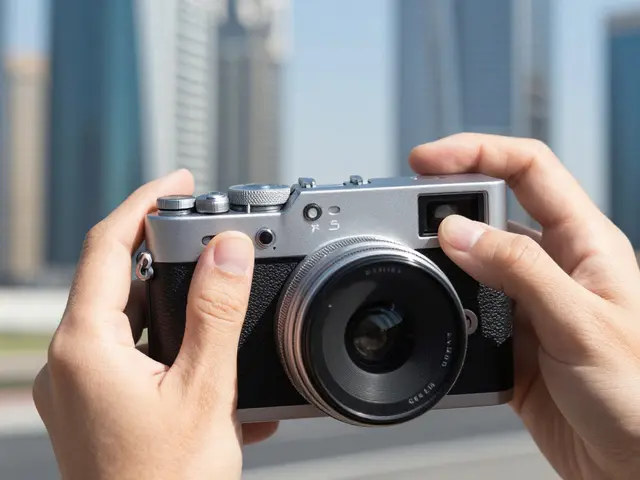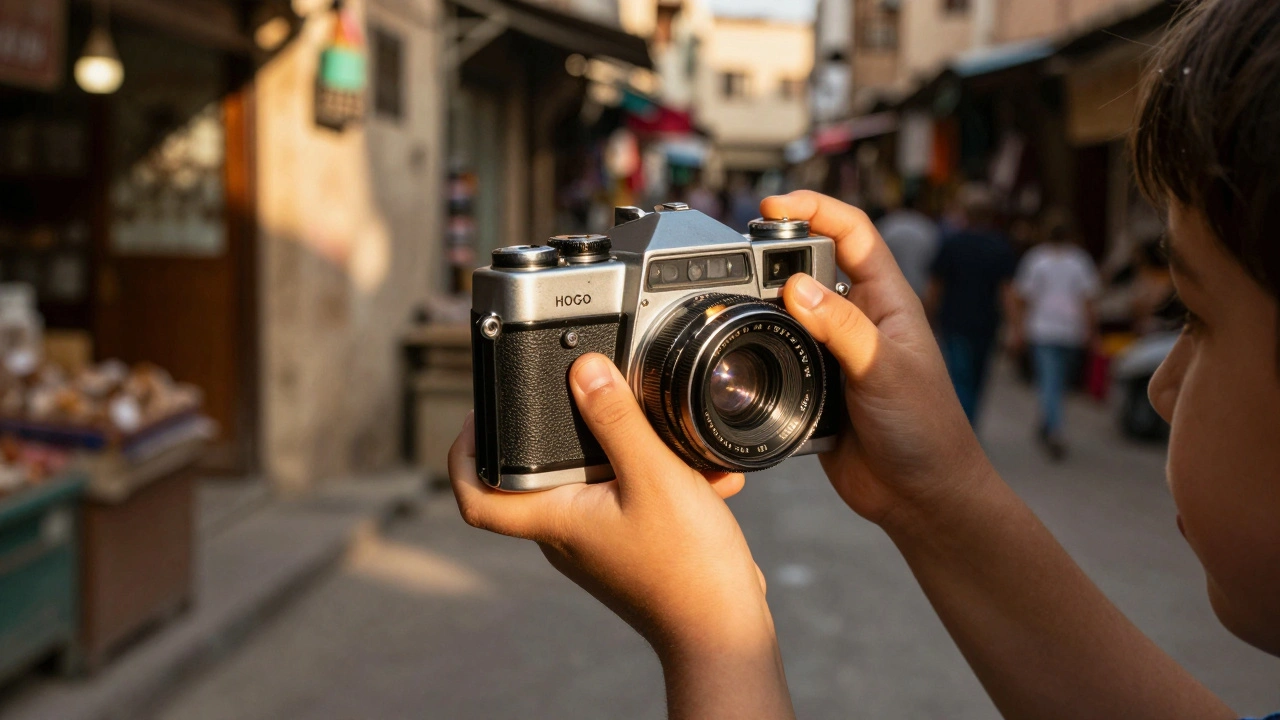
Most photographers chase sharpness, perfect exposure, and clean lines. But what if the best photos come from mistakes? That’s the secret behind toy cameras like the Holga and Diana - cameras built to break the rules, not follow them. These aren’t just cheap plastic gadgets. They’re tools that turn flaws into art. Light leaks, soft focus, heavy vignetting, unpredictable exposure - these aren’t bugs. They’re features. And for thousands of photographers around the world, they’re exactly what makes a picture feel alive.
What Makes a Camera a "Toy"?
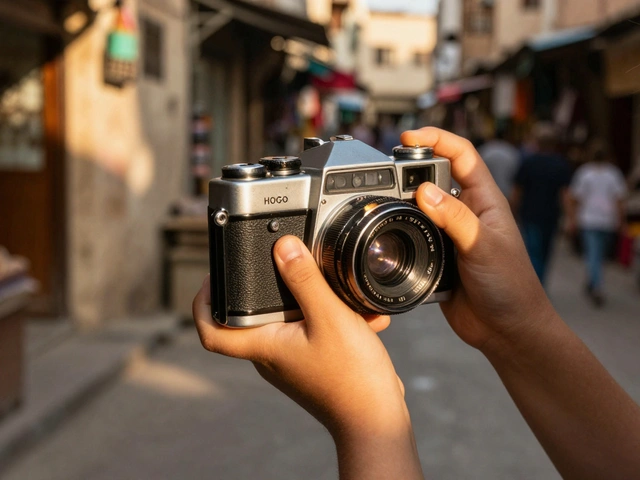
The term "toy camera" doesn’t mean it’s for kids. It means it was built like one. The Holga, for example, has a plastic lens, a plastic body, and a shutter that’s basically a spring-loaded flap. No metal parts. No precision engineering. No autofocus. No metering. It doesn’t even have a proper viewfinder. You point it, click, and hope. That’s it. And that’s why people love it.
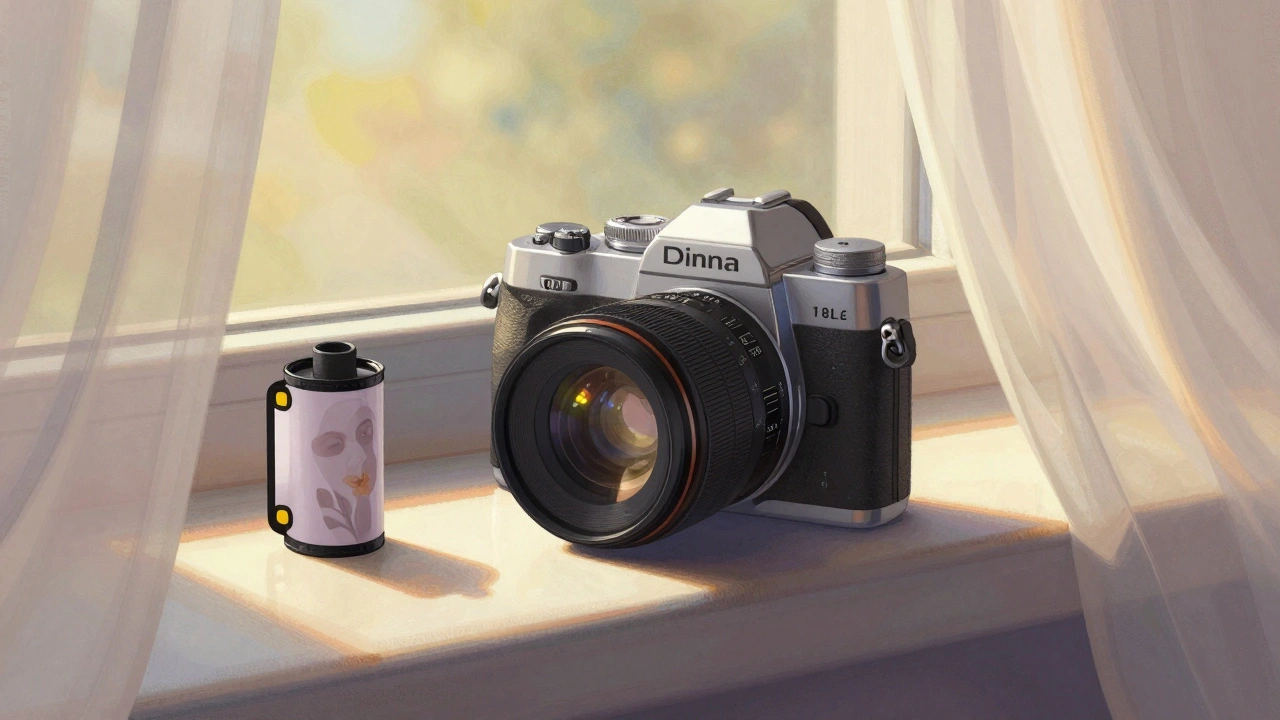
The Diana camera, first made in the 1960s, was designed for the same reason: to be cheap and simple. It used 120 film, shot square images, and had a single fixed-focus lens made of molded plastic. The lens didn’t cover the whole frame. That’s why the corners of every photo look like they’re fading into darkness - that’s vignetting, and it’s intentional. The shutter? It’s loose. You can press it multiple times without advancing the film. That’s how you get double exposures. No settings. No buttons. Just a dial with three aperture settings: sunny, cloudy, and overcast. And even those don’t always work the same way.
These cameras were never meant to be taken seriously. They were sold in markets in Hong Kong and mainland China as budget options for families. But somewhere along the way, artists and rebels discovered them. They realized that the very things that made these cameras unreliable - the light leaks, the blur, the color shifts - were the same things that made their photos feel emotional, raw, and real.
The Holga: A Camera Built by Accident
The Holga was created in 1981 by Lee Ting-mo in Hong Kong. He wanted to make an affordable camera for ordinary families in China. The name "Holga" comes from the Cantonese phrase for "very bright," because it came with a built-in flash - a luxury at the time. It used 120 film, which was common in Asia, and could shoot 16 exposures in 6x4.5 cm format or 12 in 6x6. The lens was a simple meniscus design. The shutter? One speed: about 1/100th of a second. No adjustment. No preview. No settings.
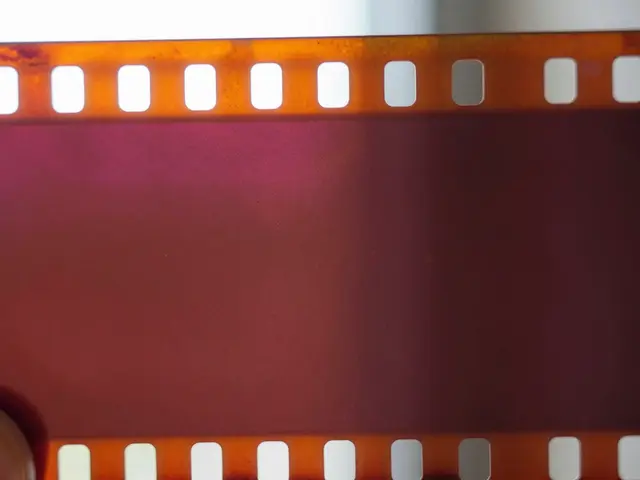
But here’s the twist: the Holga’s plastic lens didn’t focus sharply. It let in light from weird angles. The film gate didn’t seal tightly. That’s why you get light leaks - streaks of color, glowing edges, unexpected halos. Some photographers tape the camera shut with black electrical tape to stop the leaks. Others? They leave them wide open. The best Holga photos aren’t taken. They’re discovered. You don’t know what you got until you develop the film.
There are dozens of Holga models now. The Holga K200N shoots 35mm film. The Pinholga replaces the lens with a pinhole. The Woca swaps the plastic lens for glass. Some people even remove the lens entirely and shoot with just a hole in the back. Each version changes the look. But they all share the same soul: unpredictability.
The Diana: Soft Focus with Soul
The original Diana came out in the early 1960s. It was made in Shanghai, sold for a few dollars, and mostly forgotten by the 1980s. Then, in 2004, Lomography revived it as the Diana F+. This wasn’t just a reissue - it was a system. You could swap lenses. Add flashes. Use different film backs. The Diana F+ even has a pinhole setting now.
The Diana’s lens is even more flawed than the Holga’s. It produces a smaller image circle, so the edges of every photo are darkened - sometimes dramatically. Colors pop. Skin tones glow. The focus is soft, but not blurry. It’s dreamy. People say Diana photos feel like memories you never lived. They’re bright, slightly overexposed, and full of warmth. Unlike the Holga, which often feels moody and grainy, the Diana feels like sunlight through a curtain.
And the Diana F+ lets you do things the original Holga can’t. You can shoot multiple exposures by not advancing the film. You can use the splitzer - a plastic mask that cuts the frame into thirds - to create triptychs in one shot. You can attach it to a DSLR with an adapter and shoot medium format through your Canon or Nikon. It’s a hybrid between a toy and a professional tool.
There’s even a digital version. The Rhianna, made in 2014, was a crowdfunding project that produced 1,000 digital Diana cameras. They had a small LCD screen, built-in effects, and a plastic body that mimicked the original. It didn’t last long. But it proved something: people don’t just want the look. They want the experience.
The Aesthetic of Flaws
What do Holga and Diana photos have in common? They’re all imperfect. But that’s the point. In a world of 4K resolution and AI sharpening, these cameras remind us that photography doesn’t have to be perfect to be powerful.
Light leaks aren’t accidents - they’re signatures. Vignetting isn’t a defect - it’s a frame. Blur isn’t poor focus - it’s motion made visible. These cameras don’t capture reality. They capture feeling.
Professional photographers use them. Art galleries show their work. The Holga has won awards in photojournalism competitions. Why? Because the imperfections tell a story. A photo taken with a Holga doesn’t just show a person. It shows the moment they were caught off guard. The light. The weather. The rush. The chaos.
Compare a Diana photo to a Canon DSLR shot of the same scene. The DSLR image is clear. Controlled. Safe. The Diana image? It’s alive. The colors are richer. The shadows are deeper. The edges are blurred, but the emotion is sharper. You don’t just see the subject. You feel the air around them.
Why People Keep Coming Back
Why do people still buy these cameras in 2026? There are better tools. More precise. More reliable. But those tools don’t surprise you. The Holga and Diana do.
When you load film into a Holga, you don’t know how the light will hit. You don’t know if the shutter will stick. You don’t know if the film will fog. And that’s the thrill. You’re not in control. You’re a participant. The camera becomes a collaborator.
It’s also cheap. A basic Holga costs less than $50. A Diana F+ is around $80. Film and developing? Maybe $10 a roll. You can shoot 10 rolls and not break the bank. You don’t need to be a pro. You don’t need a studio. You just need curiosity.
And in a world where every photo is edited, filtered, and perfected before it’s even posted, these cameras offer something rare: authenticity. Not the kind you can fake with presets. The kind that comes from a plastic lens, a loose shutter, and a roll of film that didn’t know what it was supposed to do.
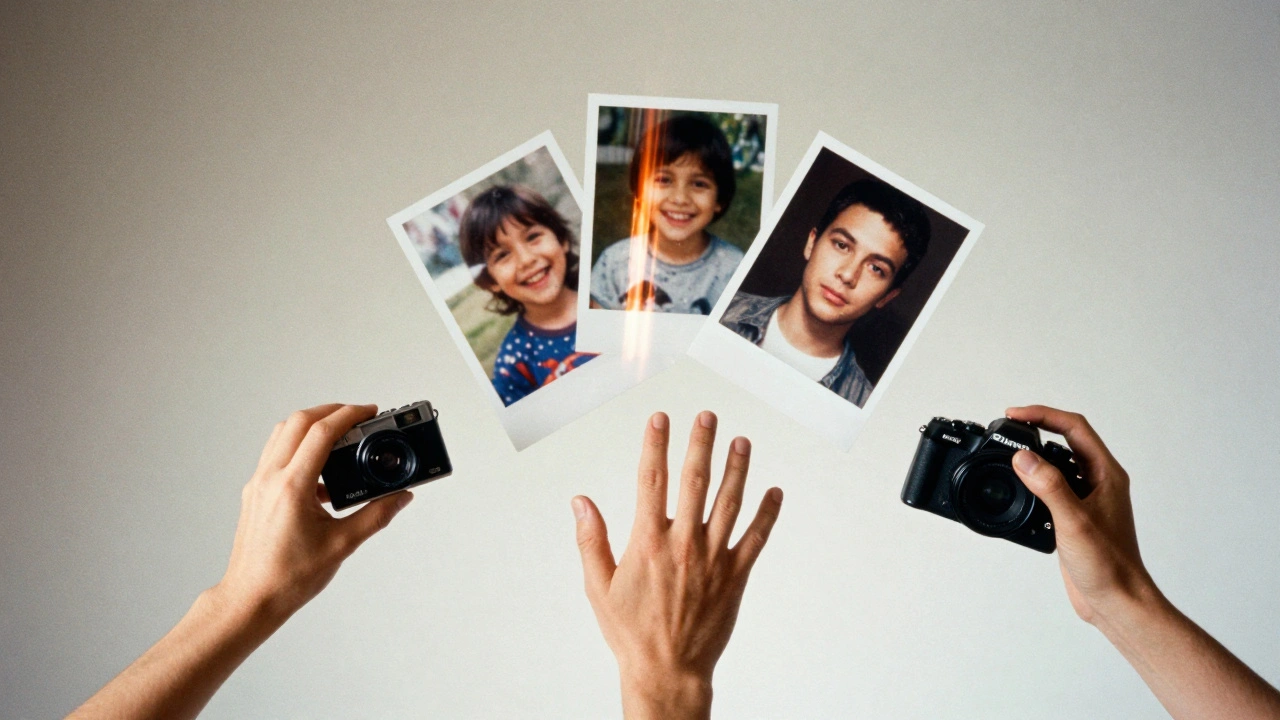
How to Start With Toy Cameras
If you want to try one, here’s how:
- Start with a Holga 120 or Diana F+. Both are easy to find and still in production.
- Buy 120 film. It’s widely available from Lomography, Fujifilm, or Ilford.
- Don’t overthink exposure. Use the sunny setting outdoors. Use cloudy indoors. If you’re unsure, overexpose by one stop - these cameras love light.
- Shoot in natural light. Avoid flash unless you want dramatic halos.
- Take multiple shots of the same subject. Each one will be different.
- Don’t tape the camera. Let the light leaks happen. They’re part of the story.
- Develop the film yourself or send it to a lab that handles 120 film. Don’t scan it too early. Wait until you’ve seen the prints.
There’s no right way. No perfect setting. No correct technique. The only rule is: shoot. Then wait. Then be surprised.
The Legacy of Imperfect Tools
These cameras weren’t designed to be art tools. They were meant to be disposable. But that’s what made them powerful. They didn’t come with instructions. They didn’t come with expectations. They came with possibility.
Today, millions of photos are taken every second. Most of them look the same. But a Holga photo? A Diana photo? You know it the moment you see it. It doesn’t try to be perfect. It doesn’t need to. It just is.
That’s why they still matter. Not because they’re nostalgic. But because they’re honest.
Can you use toy cameras for professional photography?
Yes. Holga and Diana photos have been published in major magazines, exhibited in galleries, and won awards in photojournalism. Their unique aesthetic - light leaks, soft focus, and unpredictable exposure - adds emotional depth that digital cameras often lack. Many professional photographers use them for personal projects or to break out of technical routines.
Are Holga and Diana cameras still being made?
Yes. The Holga is still produced by the Holga Company in Hong Kong, with new models released periodically. The Diana F+ is actively sold by Lomography and comes in multiple versions, including 35mm and instant film variants. Both brands have updated designs but kept the core plastic, low-tech construction that defines them.
Do toy cameras work with digital cameras?
Not directly, but adapters exist. Lomography makes lens adapters that let you attach Diana lenses to Canon, Nikon, and Micro Four Thirds DSLRs. This lets you use the toy camera’s signature soft focus and vignetting on digital sensors. There’s also a digital version called the Rhianna, which was produced in a limited run of 1,000 units in 2014.
Why do toy camera photos look so different from each other?
Because no two cameras are identical. The plastic lenses are molded, not precision-ground. The shutters vary in tension. The film gates don’t seal the same way. Even two Holgas from the same batch will produce different light leaks, blur patterns, and exposure levels. This unpredictability is intentional - it’s what makes each photo unique.
Is film necessary for toy cameras?
Most traditional toy cameras like the Holga and Diana require 120 or 35mm film. But digital versions exist - the Rhianna is the most well-known. Some users also convert film cameras into pinhole devices or attach digital backs. Still, the full experience - the surprise of developing film, the unpredictability of the results - requires analog film.
Next time you’re tempted to upgrade your gear, consider the opposite: downgrade. Grab a Holga. Load a roll of film. Walk out the door. Don’t check the settings. Don’t frame it perfectly. Just shoot. Then wait. The best photos aren’t taken with the best equipment. They’re taken with the right mindset.