Most people think cameras see light. But a thermal camera doesn’t care about light at all. It sees heat.
Imagine walking through a dark forest at night. Your phone flashlight cuts a tiny circle in front of you. But a thermal camera? It shows you a person hiding behind a tree, a deer moving in the brush, even the warm exhaust from a car you can’t see. That’s because thermal cameras don’t rely on sunlight or lamps. They detect the infrared energy - the heat - that every object gives off. Even your coffee mug, sitting on a cold desk, glows like a beacon.
How Thermal Cameras Actually Work
Unlike regular cameras that capture reflected light, thermal cameras pick up heat radiation. All objects above absolute zero - that’s everything - emit infrared energy. The warmer something is, the more heat it releases. A thermal camera has a special lens that focuses this infrared radiation onto a sensor. That sensor is made of tiny pixels, usually built from vanadium oxide or microbolometers. These materials change their electrical resistance when they absorb heat. The camera measures those tiny resistance changes, converts them into electrical signals, and turns them into a visible image.
Most modern thermal cameras use color palettes to make heat easier to read. Hot spots show up as white, yellow, or red. Cold areas appear as dark blue, purple, or black. Some still use grayscale: brighter = hotter, darker = colder. The camera can detect differences as small as 0.01°C. That’s 1/20th of a degree - far beyond what your skin can feel.
Resolution matters, but not like in regular cameras. A typical thermal sensor might have 320 × 240 pixels. High-end models go up to 1,280 × 1,024. But even the best thermal camera won’t show fine details like a smartphone camera. Why? Infrared wavelengths are much longer than visible light. Each sensor pixel has to be bigger to catch enough heat energy. So thermal images are grainier. You won’t read a license plate - but you’ll see a person standing near it.
Where Thermal Cameras Shine: Real Use Cases
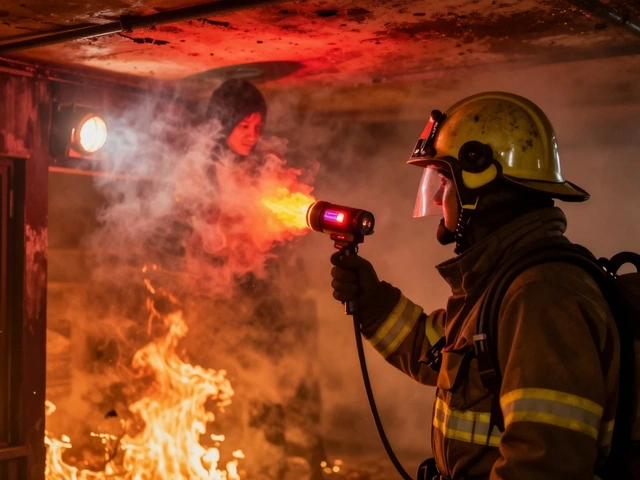
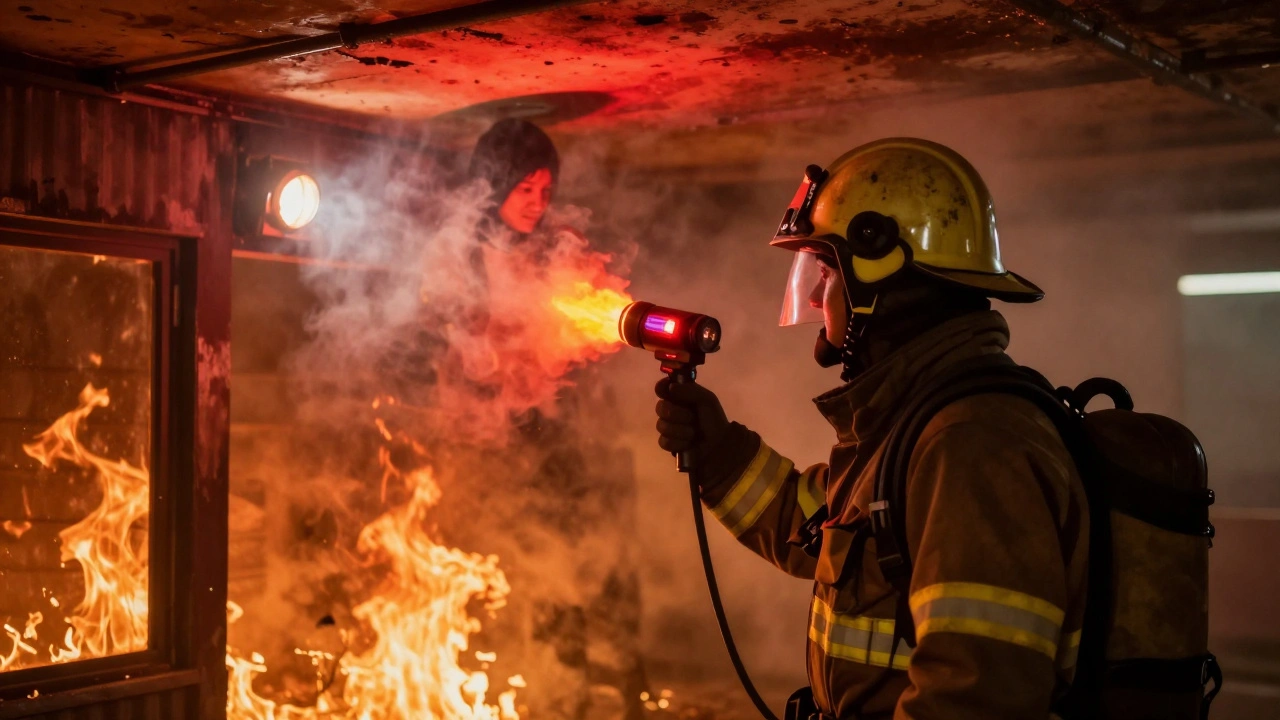
Firefighters use thermal cameras to see through smoke. In a burning building, heat rises and collects near the ceiling. A thermal camera helps crews find trapped people, spot hidden fires behind walls, and avoid collapsing floors. It’s not just a tool - it’s a lifesaver.
In electrical maintenance, technicians scan panels for hot spots. A loose connection, a failing breaker, or an overloaded circuit will heat up before it fails. A thermal camera catches that before the whole system shuts down - or catches fire. One electrician in Oregon told me he saved a data center from a meltdown just by spotting a single overheated bus bar during a routine scan.
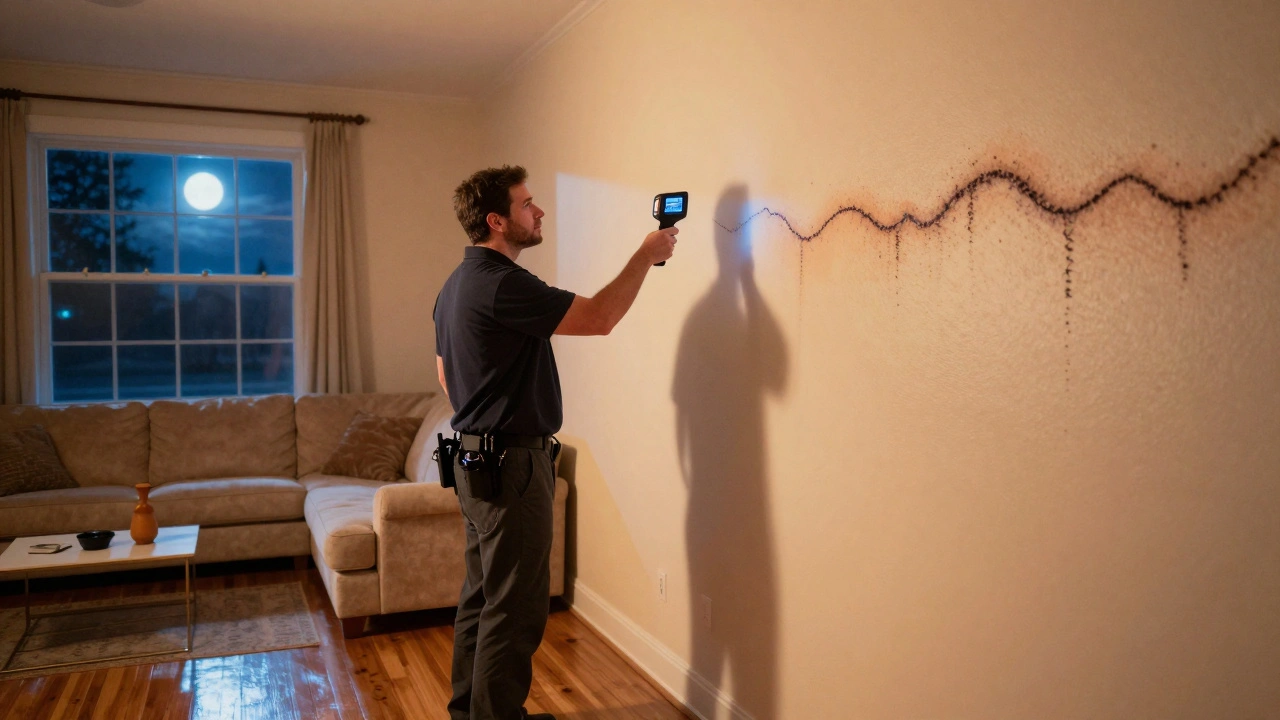
Home inspectors use thermal imaging to find insulation gaps. Cold air leaking through windows, ducts, or attic cracks shows up clearly as dark lines on a warm wall. This helps homeowners cut heating bills by 15-30%. In Portland, where winters are wet and long, that’s real money.
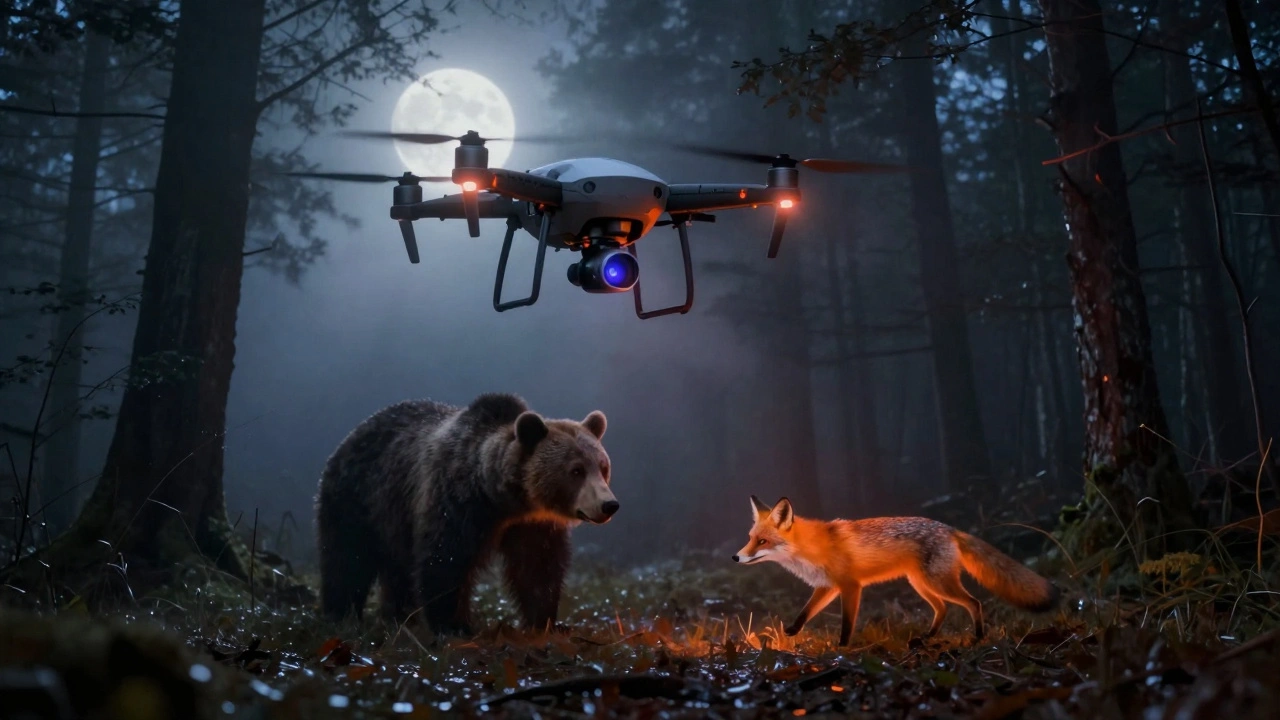
Wildlife researchers track animals at night. A bear, a fox, or even a nesting owl stands out against cool ground. No need for flashlights that scare them away. Thermal drones are now common in conservation work, scanning forests and wetlands without disturbing wildlife.
Medical use is growing. While not a replacement for clinical tools, thermal cameras help detect inflammation, poor circulation, or even early signs of breast tissue changes. It’s non-invasive, fast, and doesn’t use radiation.
Security teams use thermal cameras on fences and perimeter walls. Intruders can’t hide from body heat, even if they’re wearing camouflage or crawling through tall grass. Military and law enforcement have used this for decades - now it’s trickling down to private security firms and even homeowners with smart surveillance systems.
What Thermal Cameras Can’t Do
Here’s the truth: thermal cameras aren’t magic. They have hard limits.
They can’t see through glass. A window looks cold on a thermal image - not because it’s cold inside, but because glass reflects infrared radiation. The camera sees the reflection of the room behind you, not what’s on the other side. Same with metal. Shiny surfaces act like mirrors. A polished pipe might show the heat of a nearby person instead of its own temperature.
They don’t tell you what something is made of. A hot spot could be a faulty wire - or a sun-warmed rock. You need context. A thermal camera gives you temperature, not identity.
Atmospheric conditions mess with accuracy. Heavy rain, thick fog, or dust scatter infrared energy. The image gets fuzzy. High humidity? You’ll lose detail. That’s why industrial users often pair thermal cameras with visible-light cameras - one sees heat, the other sees shape.
Distance matters. A thermal camera might detect a person 500 meters away - but only as a blob. To read facial features? You need a high-res sensor, a long-focus lens, and perfect conditions. Most consumer models max out at 100-200 meters for reliable detection.
And cost? Yeah, it’s steep. A decent handheld thermal camera starts around $1,000. Professional models for industrial or military use run $5,000-$20,000. That’s because the sensors are expensive to make. You’re not buying a lens and a sensor - you’re buying a tiny, calibrated heat-measuring lab.
What to Look for When Buying One
If you’re thinking of getting a thermal camera, here’s what actually matters:
- Resolution: Go for at least 320 × 240. Anything lower and you’ll struggle to make sense of the image.
- Thermal sensitivity: Look for ≤ 0.05°C. Lower numbers mean it picks up subtler differences.
- Field of view: Wider is better for indoor use. Narrower lenses (like 12°) are good for long-range spotting.
- Focus: Manual focus is fine for static use. Autofocus helps if you’re moving around.
- Temperature range: Most cover -20°C to 550°C. If you’re checking engines or electrical gear, make sure it handles higher temps.
- Software features: Can it measure temperature at a point? Does it let you save images? Can you add overlays? These make a big difference in real use.
Don’t get fooled by marketing claims. A camera that says "sees through walls" is lying. It sees surface heat - not what’s behind drywall. Stick to facts.
Thermal vs. Night Vision: Know the Difference
People mix up thermal and night vision all the time. They’re not the same.
Night vision goggles amplify available light - moonlight, starlight, even infrared illuminators. They need *some* light. In pitch black with no IR source? They go dark.
Thermal cameras? They work in total darkness. No light needed. They don’t amplify - they detect heat. That’s why they’re better for search and rescue, wildlife, or finding someone hiding in a ditch.
But night vision gives you more detail. You can read a sign. Recognize a face. Thermal? You’ll see a human-shaped heat blob. It’s not better - it’s different. Choose based on what you need to see.
Final Thoughts
Thermal cameras open a hidden layer of the world. They turn invisible heat into something you can see, measure, and act on. Whether you’re fixing a leaky house, scanning for wildlife, or checking electrical panels, they deliver insight no other tool can.
But they’re not a replacement for your eyes - or your smartphone. They’re a tool for specific problems. Understand their limits. Respect their strengths. And don’t expect them to read your mail.
Can thermal cameras see through walls?
No. Thermal cameras detect surface heat. They can show heat patterns that *suggest* something behind a wall - like a hot pipe or a cold air leak - but they can’t show the object itself. Drywall, wood, and insulation block infrared radiation. What you see is the surface temperature of the wall, not what’s inside.
Do thermal cameras work in daylight?
Yes, absolutely. Thermal cameras don’t rely on visible light, so sunlight doesn’t affect them. In fact, many professionals use them during the day to find overheating equipment or insulation gaps. Bright sunlight can warm surfaces, which changes the thermal signature - but the camera still works fine.
Can thermal cameras detect cold objects?
Yes. Thermal cameras detect temperature differences. A cold object - like an ice pack or a refrigerated pipe - shows up clearly against a warmer background. In fact, cold spots are often easier to spot because they contrast sharply with surrounding heat. That’s why insulation leaks appear as dark lines on a warm wall.
Why are thermal cameras so expensive?
The sensors are made from rare materials like vanadium oxide or microbolometers, and they’re incredibly hard to manufacture at scale. Each pixel must be large enough to capture long-wave infrared radiation, which limits how many can fit on a chip. The processing electronics and calibration also add cost. You’re paying for precision heat measurement - not just a camera.
Can a thermal camera see a person through a window?
No. Glass reflects infrared radiation. A thermal camera pointed at a window will mostly show the reflection of the camera operator and the room behind them - not the person on the other side. The glass itself may appear cold or warm depending on outdoor temperatures, but it blocks the heat signature of anything beyond it.
Are thermal cameras legal to use?
In most places, yes - for personal, industrial, or safety use. But using them to spy on people inside homes or private property may violate privacy laws. Always check local regulations. Using thermal cameras for home inspections, wildlife monitoring, or electrical work is generally fine. Using them for surveillance without consent is not.