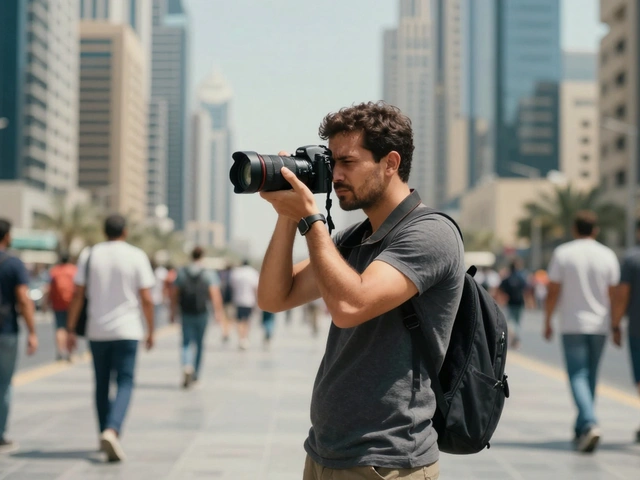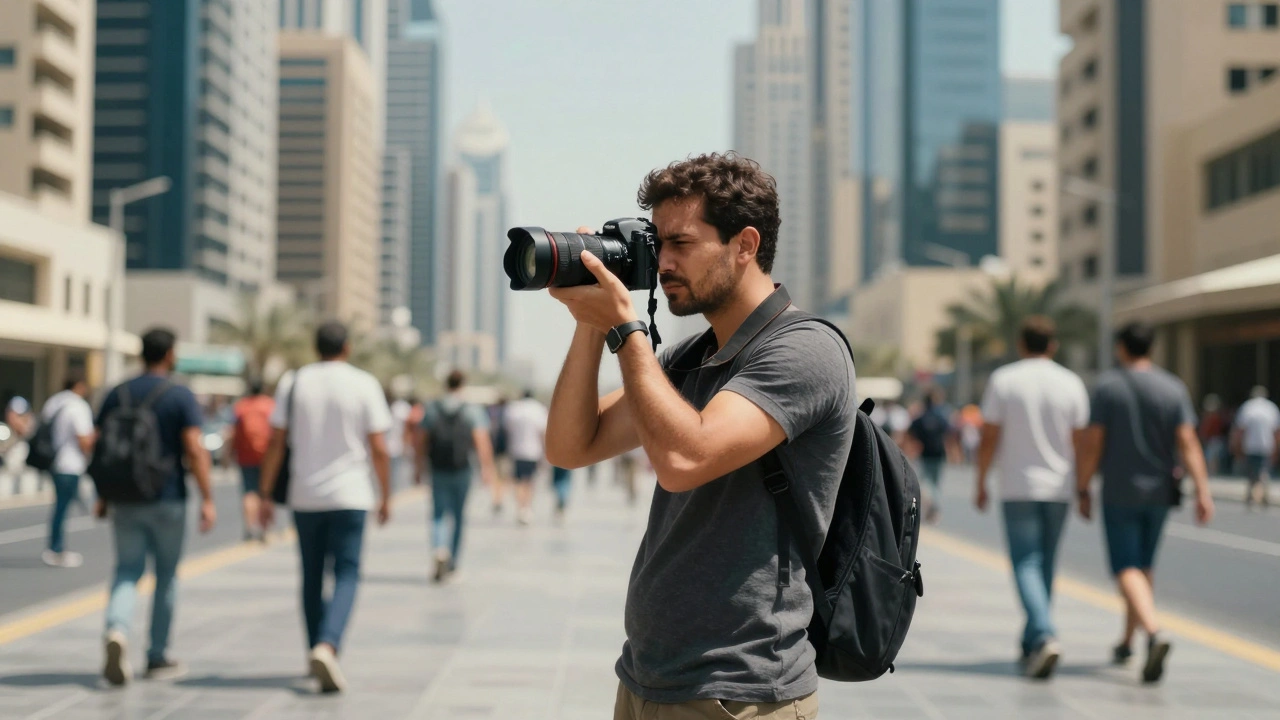
You stand in the middle of a busy street, raise your camera, and twist the zoom ring. You pull back to get the building, push forward to isolate the face, and pull back again to check the background. It feels efficient. It feels safe. But it is also the fastest way to kill your creativity.
This habit-relying on glass to fix framing mistakes-is what educators call "lazy photography." The antidote is a simple, brutal exercise known as the one lens challenge. By locking yourself into a single focal length for a set period, you force your brain to stop thinking about gear and start thinking about perspective, distance, and light. You don't just take photos; you learn to see them before you even lift the camera.
What Is the One Lens Challenge?
The one lens challenge (sometimes called the "one focal length challenge") is an intentional constraint exercise. You pick one lens-or lock a zoom lens at one specific number-and shoot exclusively with it for a defined time. There is no official governing body for this challenge. It evolved organically from the practices of legendary photographers like Henri Cartier-Bresson, who famously shot almost exclusively with a 50 mm Leica lens, and has been popularized by modern educators since the early 2010s.
The goal isn't to produce a portfolio-ready series immediately. The goal is educational. When you remove the ability to zoom, you lose the crutch that allows you to stay stationary. You are forced to move your feet. You must decide where to stand, how close to get, and what to exclude from the frame based on physical position rather than optical adjustment.
How to Set Up Your Challenge: Rules and Timeframes
Since there is no standardized curriculum, you need to define your own parameters. However, successful iterations usually follow three core rules:
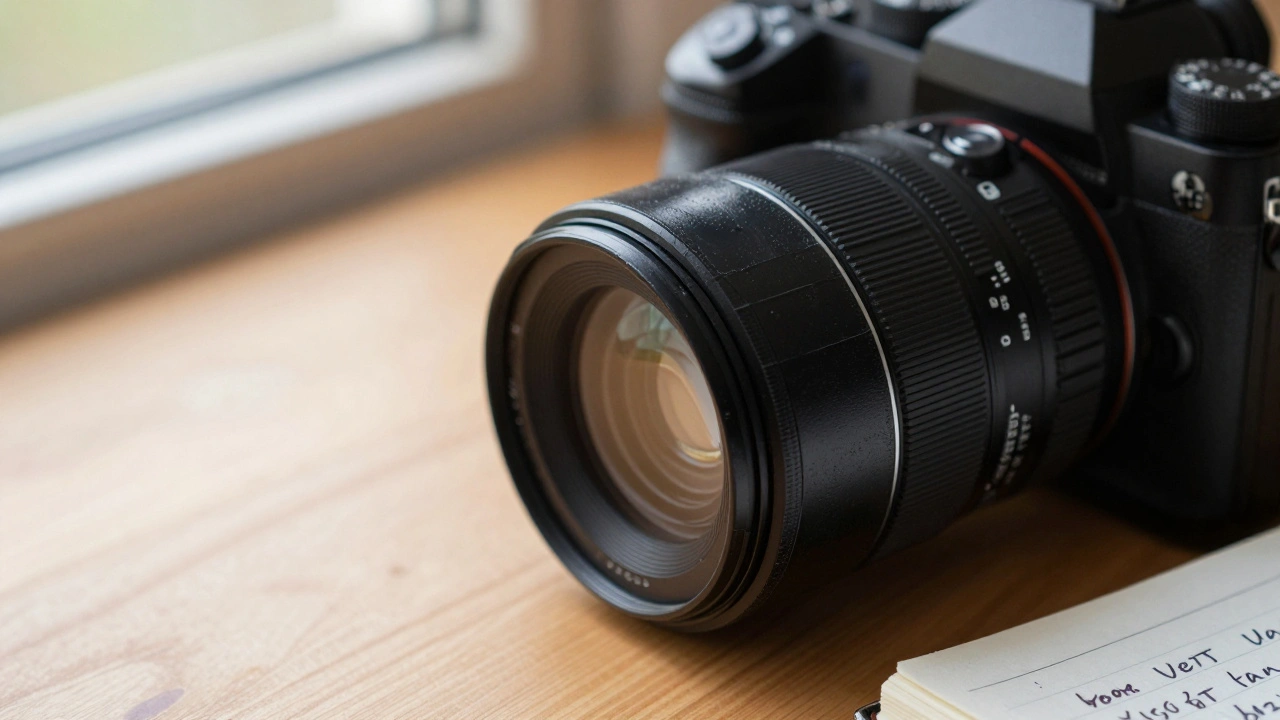
- Pick the Lens: Choose a prime lens or lock a zoom. If you have a zoom, tape the ring so you can't cheat. Most educators recommend a "normal" focal length (35-55 mm on full-frame) because it mimics the human eye's field of view, but choosing something outside your comfort zone yields faster growth.
- Set the Duration: Seven days is enough to feel the friction. Thirty days is enough to build a new habit. Some photographers extend this to 90 days or a full year, but for skill acquisition, a month is the sweet spot.
- Shoot Daily: Consistency matters. Aim for at least one strong image per day, or a minimum batch of 20 frames. This forces engagement even when inspiration is low.
If you want to deepen the technical aspect, add a rule to shoot in full manual mode. This removes auto-exposure variables, forcing you to understand how aperture, shutter speed, and ISO interact at a fixed focal length.
Choosing the Right Focal Length
The lens you choose dictates the type of lessons you will learn. Different sensors require different lenses to achieve the same field of view, so always think in "full-frame equivalents."
| Sensor Type | Recommended Physical Focal Length | Why It Works |
|---|---|---|
| Full-Frame | 35 mm or 50 mm | 35 mm offers environmental context; 50 mm isolates subjects. Both are versatile "normal" perspectives. |
| APS-C (Crop Factor ~1.5x) | 23 mm or 35 mm | A 23 mm lens behaves like a 35 mm on full-frame. A 35 mm lens behaves like a 50 mm. |
| Micro Four Thirds (Crop Factor 2x) | 17 mm or 25 mm | A 17 mm lens provides a 35 mm equivalent view. Compact and great for street work. |
| Zoom Only Users | Lock at 24 mm, 35 mm, or 70 mm | Choose one end of your kit lens range. Taping the ring prevents accidental changes. |
If you typically shoot wide-angle landscapes, try a 85 mm telephoto prime. If you always zoom in for portraits, try a 24 mm wide angle. The discomfort you feel initially is the signal that your brain is rewiring itself to handle a new spatial relationship.
The Learning Curve: What to Expect Week by Week
Do not expect immediate mastery. The first few days are often frustrating. You will miss shots. You will feel claustrophobic indoors with a 50 mm lens, or too distant from wildlife with a 35 mm lens. This is normal. Here is how the progression typically unfolds:
- Days 1-3 (The Friction Phase): You will constantly reach for the zoom ring out of muscle memory. You will feel restricted. You might question why you are doing this. Focus on completing the daily quota, regardless of quality.
- Days 4-10 (The Adaptation Phase): You start anticipating where to stand. You begin to "zoom with your feet." You notice how moving two steps to the left changes the background compression. The frustration fades into curiosity.
- Days 10-30 (The Flow Phase): The lens becomes an extension of your vision. You pre-visualize the frame before raising the camera. You develop a stronger sense of depth of field and how aperture affects storytelling. Your images become more cohesive because they share a consistent perspective.
Technical Skills You Will Gain
Beyond composition, this challenge accelerates technical fluency. When you cannot change the focal length to solve a problem, you must use other tools.
Depth of Field Mastery: Prime lenses often have wider maximum apertures (f/1.4 to f/1.8). Shooting wide open creates shallow depth of field, isolating subjects with creamy bokeh. Conversely, stopping down to f/8 or f/11 keeps everything sharp. You will learn exactly how much background blur each aperture setting produces at your chosen distance.
Exposure Control: Without the distraction of zooming, you pay closer attention to light. You learn to adjust ISO to maintain shutter speed in low light, or widen the aperture to let in more light when shadows deepen. On mirrorless cameras, features like focus peaking become invaluable allies during this process.
Perspective Awareness: Wide lenses exaggerate distance; telephotos compress it. By sticking to one, you internalize its geometric properties. A 35 mm lens makes spaces feel intimate and immersive. A 85 mm lens flattens faces and backgrounds. Understanding these traits helps you choose the right tool for future jobs.
Common Pitfalls and How to Avoid Them
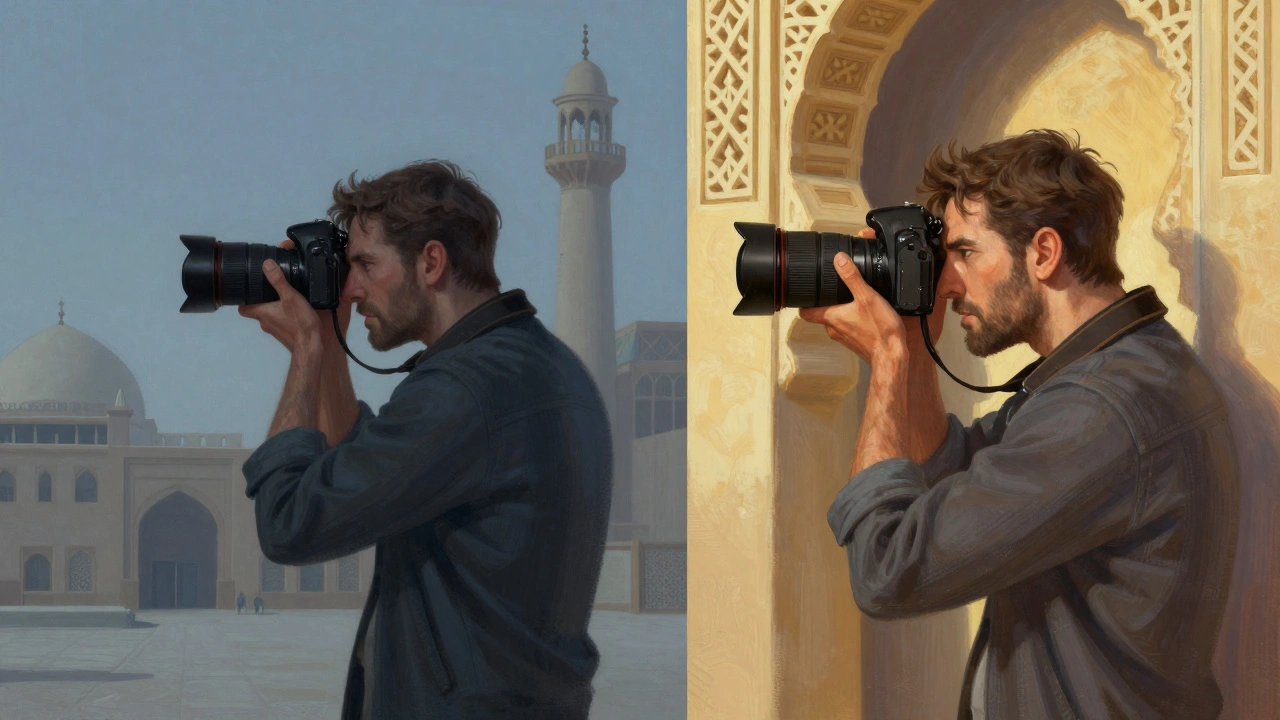
The biggest risk is giving up too soon due to frustration. When you encounter a scene that doesn't fit your lens-like a tight indoor room with a 50 mm lens-the instinct is to swap gear. Resist this. Instead, adapt your approach. Look for details, textures, or vertical compositions that work within the constraints. Turn the limitation into a creative prompt.
Another pitfall is applying this challenge to critical work. Do not attempt a one-lens challenge during a wedding, a paid commercial shoot, or a once-in-a-lifetime travel event. The cost of missing a key moment is too high. Use this exercise for personal projects, street photography, or practice sessions where failure has no financial consequence.
Boredom can also set in after two weeks. To combat this, introduce sub-challenges. For example, spend three days shooting only silhouettes, or only backlit subjects, while maintaining the one-lens rule. This adds variety without breaking the core constraint.
Why Constraints Boost Creativity
Research in creativity studies supports the idea that limitations fuel innovation. Psychologist Patricia D. Stokes documented how deliberate constraints enhance problem-solving across various fields. In photography, removing the option to zoom forces you to engage with the scene physically and mentally. You stop being a passive observer and become an active participant in constructing the image.
Many photographers report that after completing a 30-day one-lens challenge, their overall photography improves, even when they return to using multiple lenses. They carry the discipline of careful framing and intentional movement into all their work. The lens is no longer a tool to hide behind; it is a partner in seeing.
Can I do the one lens challenge with a zoom lens?
Yes. Simply choose one focal length marking on your zoom lens (e.g., 35 mm on a 24-70 mm lens) and tape the zoom ring in place. This mimics the experience of using a prime lens without requiring new equipment.
How long should the one lens challenge last?
A minimum of 7 days is recommended to feel the initial impact. For significant habit change and skill development, 30 days is ideal. Many photographers find that after a month, the chosen focal length feels natural and intuitive.
Which focal length is best for beginners?
A 35 mm or 50 mm equivalent lens is best for beginners. These "normal" focal lengths closely match the human eye's perspective, making them versatile for street, portrait, and documentary photography. They offer a balance between context and subject isolation.
Should I shoot in manual mode during the challenge?
While not mandatory, shooting in manual mode enhances the learning experience. It forces you to understand exposure settings deeply and reduces reliance on camera automation, complementing the compositional focus of the challenge.
Is the one lens challenge suitable for professional work?
It is generally not recommended for critical client work like weddings or events, where missing a shot is costly. However, it is excellent for personal projects, portfolios, and skill-building exercises where flexibility is less important than artistic growth.