When you’re shooting portraits in a studio, the background isn’t just a plain wall - it’s part of the story. A bad backdrop can ruin a great shot. A good one? It disappears. It lets the subject shine without distraction. But here’s the real question: should you use seamless paper or fabric? Both are used by pros, but they work in totally different ways. One is disposable. The other lasts for years. One gives you a flawless white. The other adds texture, depth, and character. Let’s break it down - no fluff, just what actually matters on set.
What Seamless Paper Really Does
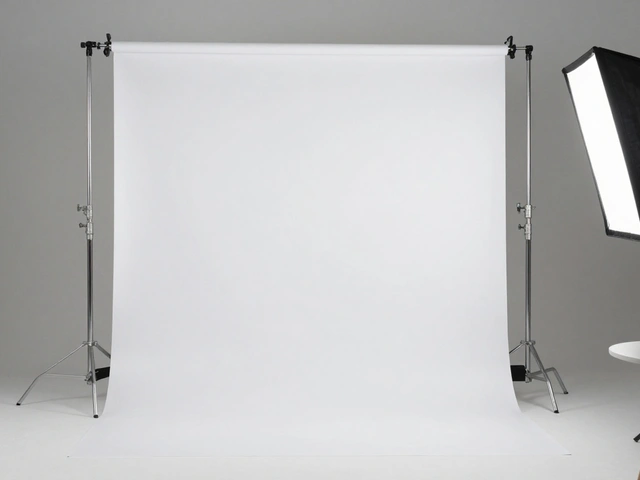
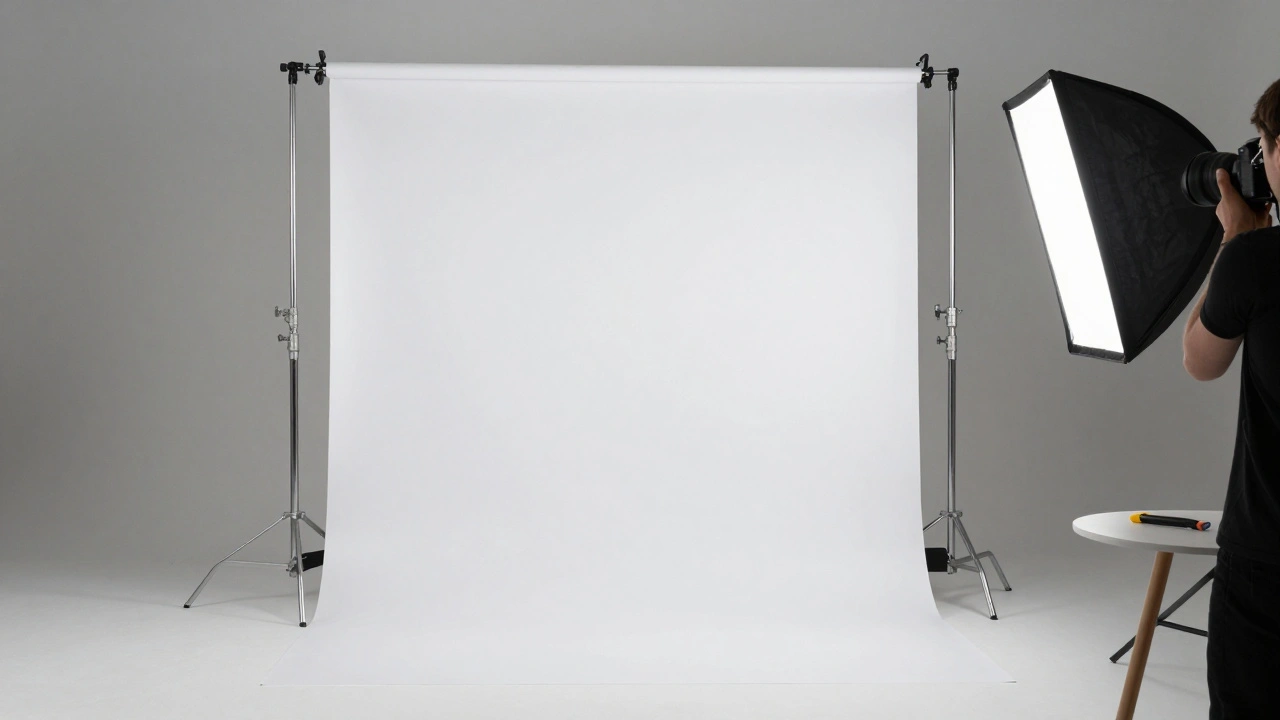
Seamless paper is the classic. You’ve seen it - a giant roll of thick, matte paper, usually white, black, or gray, mounted on a metal stand. It’s been around since the 1930s. Why? Because it works. When you unroll it, you get a perfectly smooth, even surface. No texture. No wrinkles. No patterns. Just pure, clean background. That’s why it’s the go-to for product shots, e-commerce, headshots, and video interviews. If you need the background to look like it was painted with a brush and then erased - seamless paper is your answer.
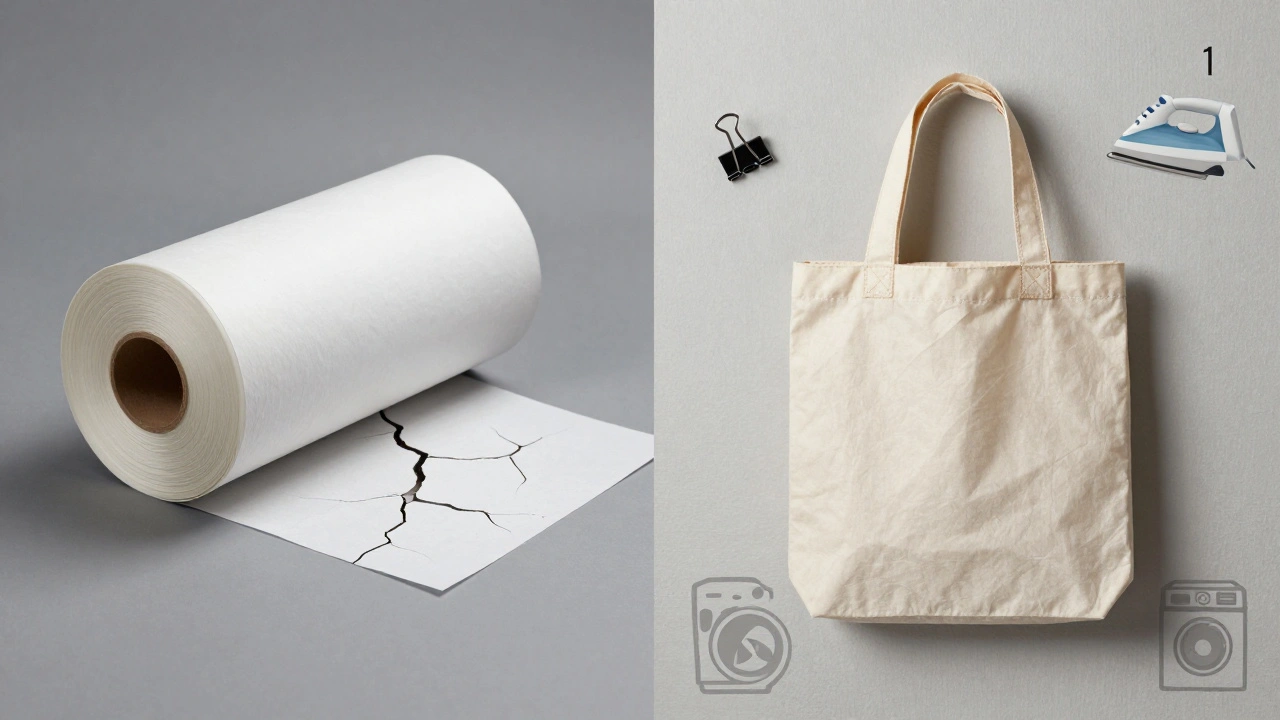
The biggest win? Simplicity. If you spot a smudge, a tear, or a coffee stain? You don’t clean it. You cut it off. Just grab a utility knife, slice the damaged section, and pull down a fresh layer. No drying. No ironing. No washing. Done in 10 seconds. That’s why studios with high-volume shoots - think monthly baby portraits or 50+ product images a week - stick with it. It’s predictable. It’s fast. It’s cheap to replace.
But here’s the catch: it’s a one-time use. You can’t reuse it. You can’t fold it. You can’t carry it in a backpack. A full 107-inch roll weighs over 20 pounds. It needs a heavy-duty stand. It takes up space. If you’re shooting at a client’s home or a rented venue, hauling that roll in and out is a nightmare. And if you’re shooting with kids, pets, or props that move around? One bump and it tears. No second chances.
What Fabric Backdrops Actually Offer
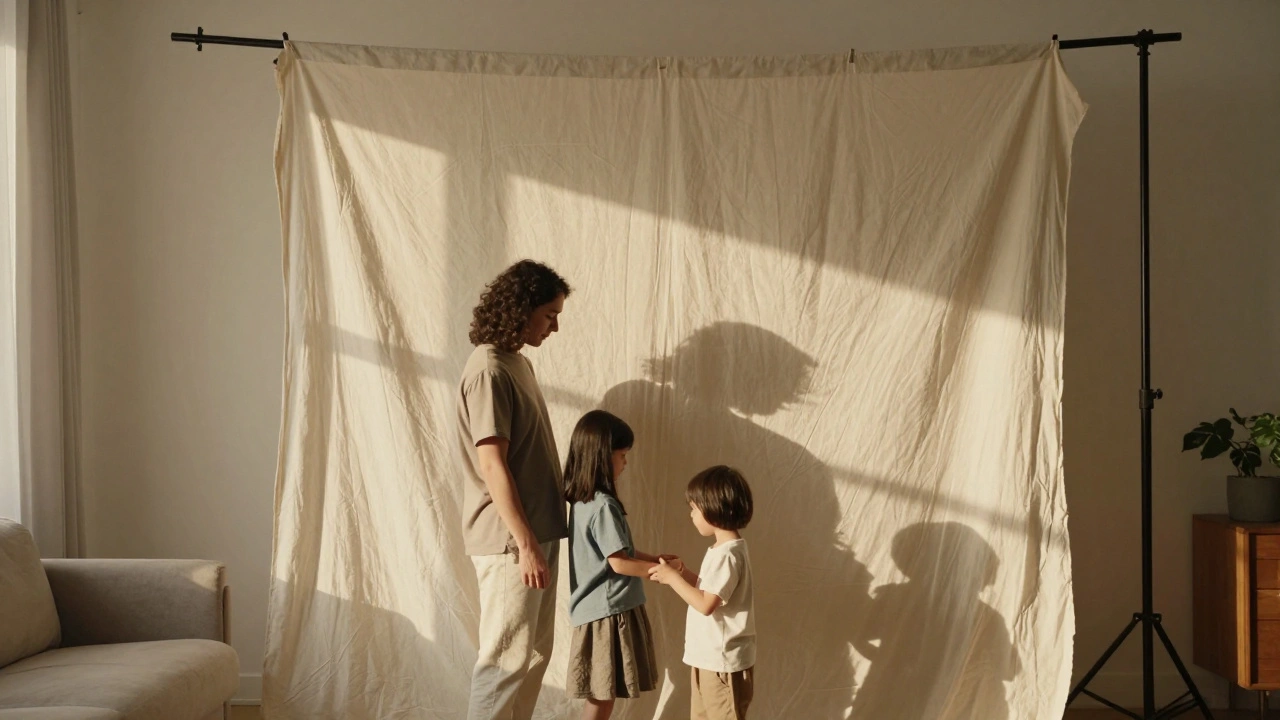
Fabric backdrops aren’t new, but they’ve gotten way better. Today’s options include cotton muslin, microfiber, canvas, and polyester blends. Each has its own feel. Muslin has that classic, slightly textured look - think soft wrinkles that add warmth. Microfiber is smooth, almost like velvet, and holds rich, vibrant prints. Canvas is thick and heavy, great for dramatic shadows. Polyester? Lightweight and wrinkle-resistant.
The big advantage? Reusability. You can fold a fabric backdrop into a tote bag. Throw it in the car. Set it up in a park, a living room, or a warehouse. It doesn’t need a special stand - just clips, clamps, or a simple pole. And when it gets dirty? Wash it. Seriously. Most high-quality fabrics can go through a gentle cycle and come out looking fine. No replacement needed. That’s why wedding photographers, travel portraitists, and lifestyle shooters live by fabric.
Texture is another game-changer. Seamless paper is flat. Fabric has depth. A muslin backdrop with subtle folds can make a portrait feel cinematic. A printed microfiber backdrop with a wooden floor pattern or a brick wall? That’s not just a background - it’s a scene. You can even order custom prints: a sunset, a city skyline, a painted mural. You’re not limited to white or black anymore.
Wrinkles: The Hidden Battle
Here’s where people get tripped up. Seamless paper doesn’t wrinkle - but it tears. Fabric wrinkles - but you can fix it. If you’ve ever seen a fabric backdrop that looks like a crumpled shirt, you know the problem. But here’s the truth: most pros don’t shoot with wrinkled backdrops. They steam them. Or iron them. Or hang them up overnight so gravity smooths them out. It takes 15 minutes. Not 15 seconds. But it’s worth it.
With paper, you don’t fix wrinkles - you replace the whole section. With fabric, you fix the wrinkles and use it again. That’s the trade-off. Paper: instant clean. Fabric: a little prep, but reusable. If you’re rushing between clients, paper wins. If you’re doing a full-day session and have time to prep? Fabric gives you more control.
Cost: Upfront vs. Long-Term
A 107-inch roll of white seamless paper costs about $30. That’s it. You use it for a week, then toss it. Next week, you buy another. Over a year? You might spend $150-$300 on paper alone. Add in the stand, the clamps, the storage space - it adds up.
A good cotton muslin backdrop? $80-$150. A high-end microfiber with custom print? $200. That’s a lot more than paper. But here’s the math: you buy it once. Wash it. Hang it. Use it 200 times. Over five years? You spent $150. That’s less than half what you’d spend on paper.
And don’t forget portability. If you’re traveling to shoots, you’re not just paying for the backdrop - you’re paying for gas, time, and stress. Fabric fits in a suitcase. Paper? You need a van. Or a second car. That’s hidden cost.
When to Use Which
Let’s get practical. Here’s what works best:
- Use seamless paper if: You shoot in a fixed studio, do high-volume product shots, need a pure white background, or work with clients who expect clean, minimalistic portraits. Think e-commerce, corporate headshots, or baby photography where every shot looks identical.
- Use fabric if: You shoot on location, want texture and depth, need to save money over time, or create artistic, moody portraits. Think lifestyle portraits, wedding sessions, family photos in homes, or editorial work.
Some pros use both. They keep seamless paper for product shots and a few fabric backdrops for portraits. It’s not an either/or choice - it’s a toolkit.
Storage, Setup, and Workflow
Seamless paper needs space. A full roll is 10 feet long. You need a ceiling-high stand, a wide floor area, and room to unroll it. Most home studios can’t handle it. Professional studios? They have dedicated backdrops rooms.
Fabric? Fold it. Put it in a bag. Store it under the bed. Hang it on a hook. You can set it up in 5 minutes with two clamps and a tension rod. No stand needed. That’s why mobile photographers swear by it.
Setup time matters. If you’re doing 8 portraits in one day, every minute counts. Paper is faster to swap. Fabric is faster to move. Which one saves you more time? Depends on your workflow.
Final Decision: It’s Not About What’s Better - It’s About What Fits
There’s no “best” backdrop. Only the right one for your job. If you’re a studio photographer with a fixed space, shooting 20 headshots a week? Seamless paper is your friend. Cheap, clean, no fuss.
If you’re on the road, shooting families in their homes, or creating artistic portraits with mood and depth? Fabric wins. Durable, portable, reusable. It’s an investment - but one that pays off.
Try this: buy one fabric backdrop. Use it for a month. Then buy one roll of paper. Use it for a week. Compare. You’ll feel the difference. Not in theory - in your hands, in your car, in your studio. That’s how you choose.
Can I use seamless paper for outdoor portrait shoots?
Not really. Seamless paper is heavy, fragile, and requires a sturdy stand - neither of which works outdoors. Wind can tear it. Rain ruins it. Dirt stains it permanently. For outdoor shoots, fabric is the only practical option. It’s lightweight, can be weighted down, and survives weather better than paper.
Do I need a backdrop stand for fabric?
Not always. Fabric backdrops can be clipped to a wall, hung from a ceiling beam, or stretched between two light stands. A dedicated backdrop stand helps for consistency, but it’s not required. Many photographers use tension rods, ropes, or even clotheslines. Paper, on the other hand, almost always needs a heavy-duty stand to prevent it from falling or tearing.
Can I paint or print on seamless paper?
Technically yes, but it’s not recommended. Paper is designed to be smooth and matte - adding paint or ink can create uneven textures, streaks, or flaking. It’s also hard to seal. If you want custom designs, go with microfiber or canvas backdrops. They’re made for printing, hold color better, and won’t smudge.
Which lasts longer: muslin or microfiber?
Microfiber generally lasts longer. It’s tightly woven, resists fading, and doesn’t fray easily. Muslin is durable too, but it’s more prone to pilling and color loss over time, especially with frequent washing. If you want a backdrop that lasts 5+ years with heavy use, microfiber is the better choice. Muslin is great for texture, but microfiber wins on longevity.
Is there a middle ground - something that combines both?
Not really. The two materials serve opposite purposes: paper gives you perfection through disposability. Fabric gives you flexibility through reusability. Some companies sell vinyl backdrops - they’re wipeable and reusable - but they’re reflective and not ideal for portraits. Stick to paper or fabric. Each has its strengths. Mixing them doesn’t create a hybrid - it just creates confusion.