Most photographers treat their finances like an afterthought. You spend your days chasing the perfect light and editing until your eyes blur, but when tax season hits, you’re staring at a mountain of receipts with no idea what actually counts as a deductible expense. The result? You pay more than necessary because you didn’t know the IRS lets you write off that expensive lens or even part of your home internet bill.
The good news is that running a photography business is one of the most tax-friendly professions if you play by the rules. The Internal Revenue Service (IRS) allows you to deduct ordinary and necessary expenses related to your trade. This isn't about cheating the system; it's about understanding how the government defines "business expenses" for creative professionals. By properly tracking these costs, you can significantly lower your taxable income and keep more money in your pocket.
Equipment and Gear: Your Biggest Ticket Items
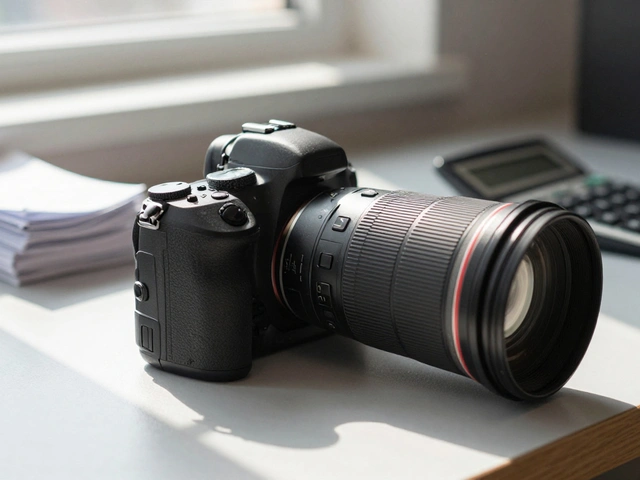
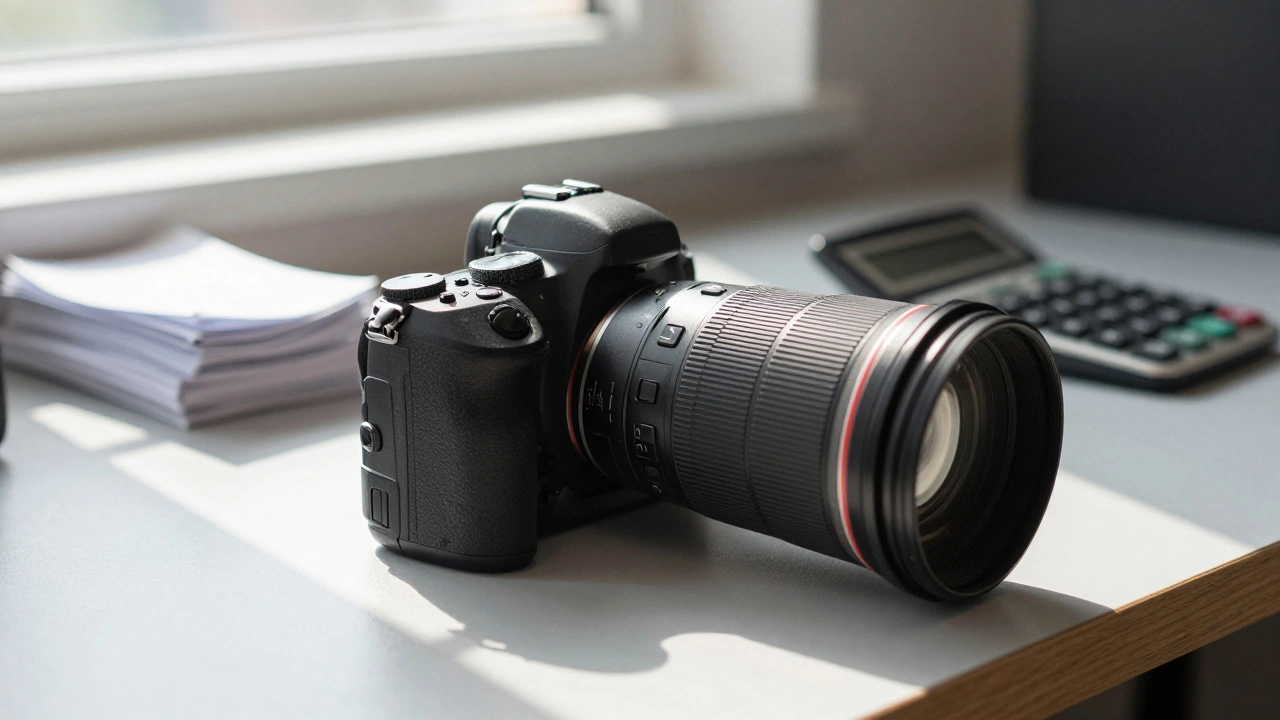
Your camera gear is the engine of your business. Without it, you have nothing to sell. The IRS views this equipment differently depending on how much it costs and how long you plan to use it. For years, photographers had to depreciate expensive cameras over several years, which was a headache. Today, thanks to changes in tax law, you can often deduct the full cost immediately.
You can claim deductions for:
- Camera bodies and lenses: These are your primary tools.
- Lighting equipment: Strobes, speedlights, softboxes, and stands.
- Support gear: Tripods, gimbals, and stabilizers.
- Storage and data: Memory cards, external hard drives, and NAS servers for client backups.
- Accessories: Camera bags, protective cases, color checkers, and backdrops.
If you buy a $3,000 lens, you don't necessarily have to spread that deduction out over five years. Under Section 179 of the Internal Revenue Code, you can deduct the full purchase price in the year you bought it, provided it’s used for business purposes. Even maintenance costs, like professional sensor cleanings or lens repairs, qualify as deductible business expenses. Keep every receipt. If the IRS asks, you need proof that you bought that flash unit for work, not just for weekend hobby shoots.
Software and Digital Subscriptions
In the digital age, your computer is just as important as your camera. Photo editing software is non-negotiable for delivering final products to clients. You can deduct subscriptions for applications like Adobe Photoshop, Lightroom, Capture One, or any other post-processing tool you use regularly.
This category also extends to:
- Cloud storage: Services like Dropbox, Google Drive, or specialized platforms like PhotoShelter where you store client galleries.
- Website hosting: Monthly fees for keeping your portfolio online.
- Business management tools: Accounting software, contract generators, and scheduling apps.
When you file your Schedule C form, these go under "Other Expenses." Don't forget to track annual renewals. A $20 monthly subscription adds up to $240 a year-that’s $240 less taxable income.
Studio Space and Home Office Deductions
Where you shoot matters for your taxes. If you lease a dedicated commercial studio, the rent is fully deductible. You can also write off utilities, property insurance, and security systems associated with that space. But many photographers operate from home, which opens up the home office deduction.
To qualify for the home office deduction, the space must be used regularly and exclusively for your business. If you edit photos in a spare bedroom and never use it for personal activities, you can deduct a percentage of your housing costs. This includes mortgage interest, rent, electricity, water, and homeowner’s insurance.
Here’s how to calculate it simply: Measure the square footage of your office. Divide that by the total square footage of your home. If your office is 200 square feet and your house is 2,000 square feet, you can deduct 10% of those eligible household expenses. It sounds small, but over time, this adds up to thousands of dollars saved.
| Expense Type | Dedicated Studio | Home Office |
|---|---|---|
| Rent/Mortgage | Fully Deductible | Percentage Based (Sq Ft) |
| Utilities | Fully Deductible | Percentage Based (Sq Ft) |
| Internet | Fully Deductible | Percentage Based (Usage) |
| Insurance | Fully Deductible | Percentage Based (Sq Ft) |
Travel and Automobile Expenses
Photographers are always on the move. Whether you’re driving to a wedding venue or flying to a destination shoot, travel costs are deductible. The IRS offers two ways to handle car expenses: the standard mileage rate or actual expenses.
For 2024, the IRS standard mileage rate was 65.5 cents per mile. While rates adjust annually for inflation, using the standard rate is often easier than tracking gas receipts and oil changes. You simply log the miles driven for business purposes-such as traveling between client locations-and multiply by the rate. Note that commuting from your home to your regular place of business is not deductible, but travel between different job sites during the day is.
If you take trips for business, keep receipts for:
- Airfare and train tickets
- Car rentals and taxi rides
- Lodging (hotels/Airbnbs)
- Meals (usually 50% deductible while away from home)
Be specific in your records. "Lunch" doesn’t cut it. Write down who you were with and the business purpose. "Lunch with potential corporate client to discuss holiday campaign" is audit-proof documentation.
Professional Services and Contractors
You don’t have to do everything alone. Hiring help is a deductible expense. This includes second shooters, assistants, photo editors, and administrative support. If you hire independent contractors, you must report payments over $600 using Form 1099-NEC. Failing to do this can lead to penalties, so stay organized.
You can also deduct fees paid to professionals who help run your business:
- Accountants and bookkeepers: Essential for managing quarterly taxes.
- Attorneys: Legal advice on contracts or copyright registration.
- Web developers: Costs to build or update your portfolio site.
Even licensing fees required to legally operate in your city or state are deductible. If you pay a membership fee to a professional photography association, that’s also a valid business expense.

Marketing and Advertising
Getting clients requires visibility. Every dollar spent on marketing is a dollar deducted from your income. This includes social media ad campaigns, Google Ads, printed business cards, and brochures. Don’t overlook smaller costs like domain name registrations or email marketing service fees.
If you attend workshops or conferences to improve your skills, those education costs are deductible too. Think of it this way: if the expense helps you get better at photography or find more clients, it’s likely deductible.
The Qualified Business Income (QBI) Deduction
One of the biggest tax breaks available to photographers is the Qualified Business Income (QBI) deduction. Most photographers operating as sole proprietors, partnerships, S-Corps, or LLCs can deduct up to 20% of their qualified business income from their taxes.
Here’s a simple example: If your photography business nets $50,000 in profit after all expenses, you can deduct an additional $10,000 from your taxable income. This lowers your overall tax bracket and saves you money without extra effort. However, be aware that this deduction phases out at higher income levels. As inflation adjustments change yearly thresholds, consult a tax professional to ensure you’re maximizing this benefit correctly.
Record Keeping: The Key to Success
All these deductions mean nothing if you can’t prove them. The IRS requires you to maintain accurate records. Use accounting software designed for creatives, like Bonsai or FreshBooks, to track every expense in real-time. Snap a photo of every receipt immediately after paying. Categorize expenses as you go.
At the end of the year, review your books. Look for patterns. Did you forget to deduct your phone bill? Remember that if you use your personal phone for business calls, you can deduct the percentage of usage related to work. Consistency is key. The goal isn’t just to save money; it’s to sleep soundly knowing you’re compliant and prepared.
Can I deduct my entire cell phone bill?
No, unless you have a separate line solely for business. If you use one phone for both personal and business calls, you can only deduct the percentage of minutes or data used for business purposes. Keep a log of business calls to substantiate this estimate.
What is the difference between Section 179 and depreciation?
Depreciation spreads the cost of an asset over its useful life (e.g., 5 years). Section 179 allows you to deduct the full cost of qualifying equipment in the year you purchase it. Section 179 is usually better for cash flow in the short term.
Do I need to file Form 1099-NEC for every contractor?
You must file Form 1099-NEC if you pay a single independent contractor $600 or more in a calendar year for services. This includes editors, assistants, and web designers. Failure to file can result in IRS penalties.
How do I calculate the home office deduction?
Calculate the square footage of your exclusive business space and divide it by the total square footage of your home. Apply this percentage to eligible expenses like rent, utilities, and insurance. Alternatively, you can use the simplified method: $5 per square foot of office space, up to 300 square feet.
Is meal entertainment deductible for photographers?
Generally, no. Entertainment expenses are rarely deductible. However, meals with clients during business discussions are often 50% deductible. You must document the business purpose, attendees, and amount spent for each meal.