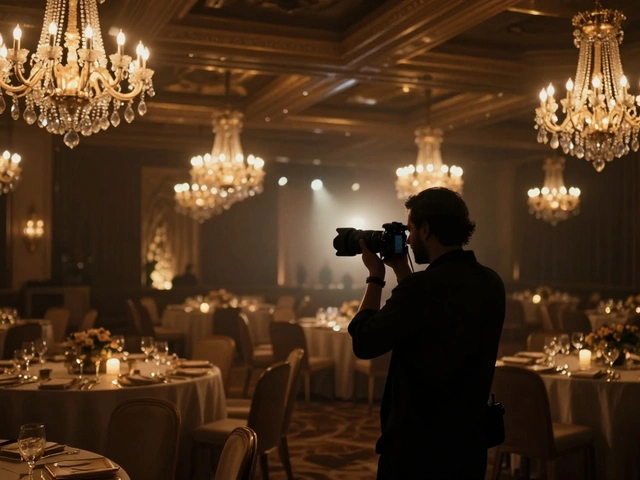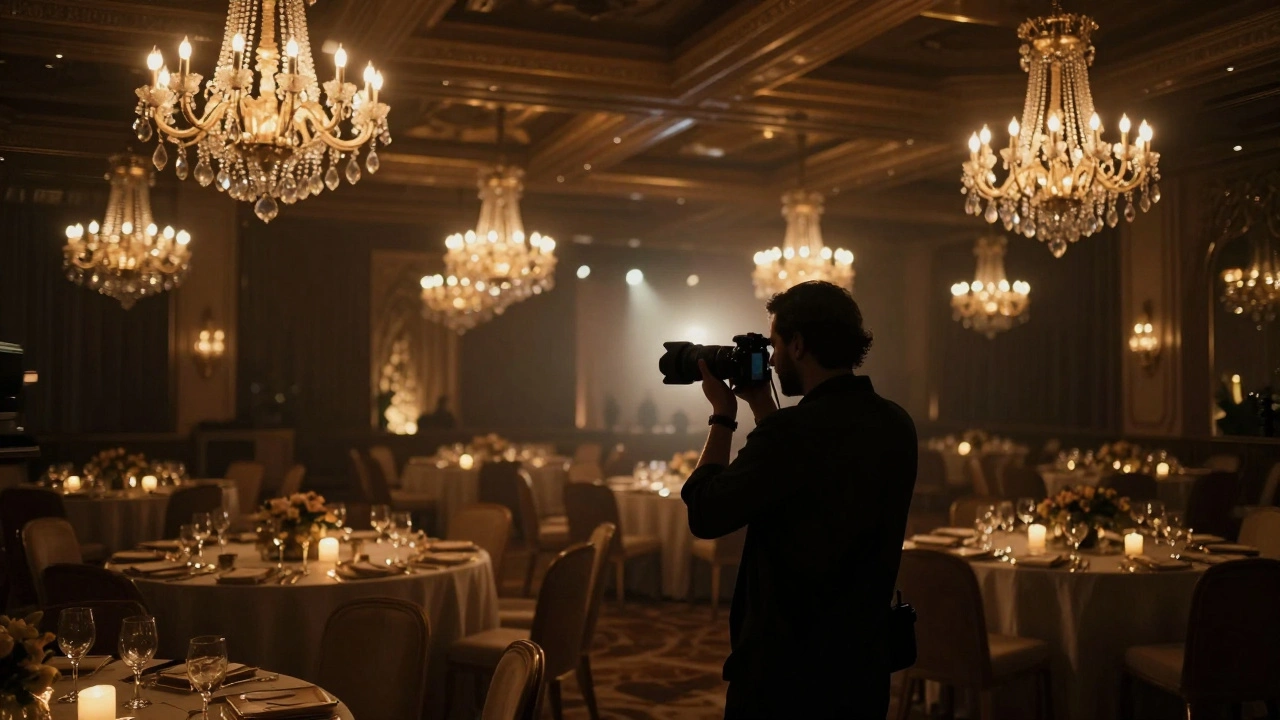
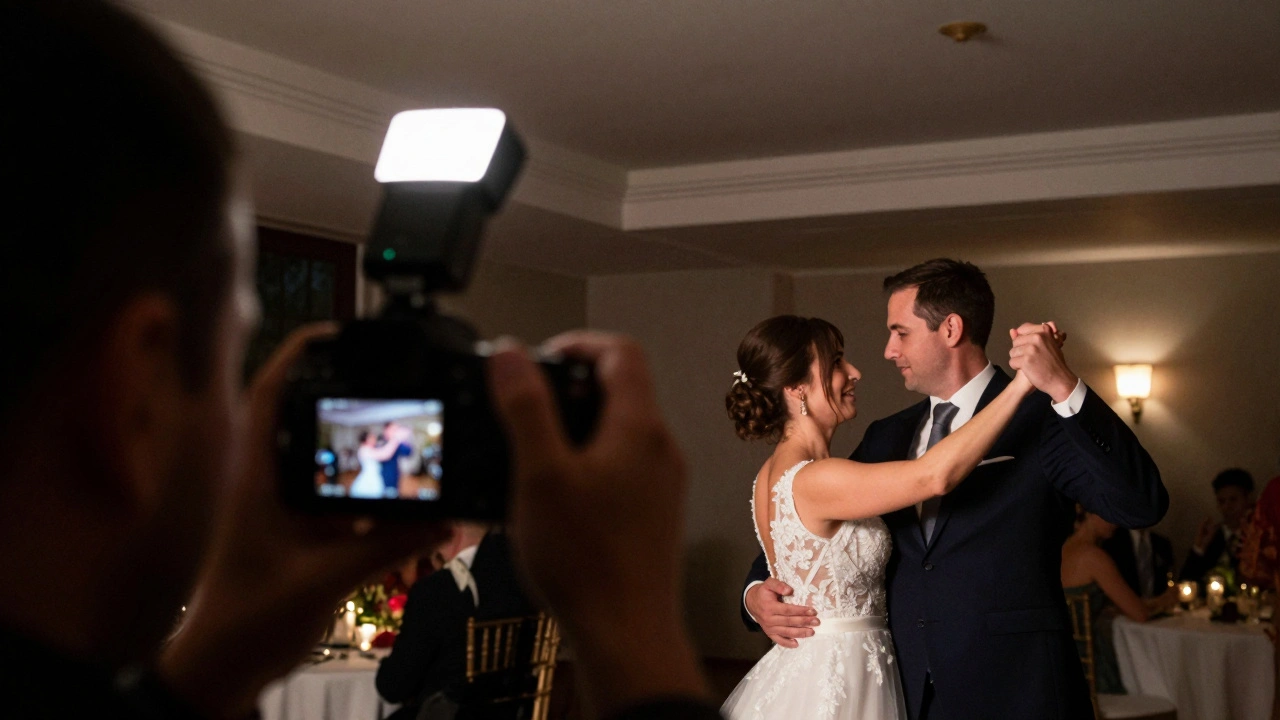
Walk into a reception hall where the lights are dimmed to create a "mood," and you instantly know the challenge ahead. The chandeliers cast a warm glow, but the corners are swallowed by shadow. Your camera’s meter screams that it is too dark, yet blasting the room with harsh flash would ruin the atmosphere your clients paid for. This is the daily reality of indoor event photography in dim ballrooms and banquet halls.
The goal isn't just to capture an image; it is to preserve the emotion of the moment while ensuring faces aren't lost in darkness or blown out by ugly, flat light. You need a strategy that balances technical precision with artistic sensitivity. Here is how you can navigate these tricky environments without losing your mind-or your shots.
Understanding the Lighting Environment
Before touching a single dial, you have to read the room. Dim ballrooms are not pitch black. As noted by industry resources like ShootProof, there is always at least one usable light source-a window, a spotlight, or a cluster of candles. The problem is rarely a total lack of light; it is the mix of color temperatures and the low overall illumination levels.
You will typically encounter tungsten chandeliers (around 2800-3200 Kelvin) mixed with cooler LED uplighting or DJ fixtures. This mixed lighting confuses automatic white balance systems, causing skin tones to shift unpredictably between frames. Instead of relying on Auto White Balance (AWB), which hunts for stability, set your camera to a fixed preset. Start with the Tungsten setting if the room feels warm. This gives you a consistent baseline that you can fine-tune later in post-processing, especially since you should always be shooting in RAW format to retain maximum shadow detail.
Essential Gear for Low-Light Success
Your equipment choices dictate what is possible in a dark venue. While modern mirrorless cameras perform admirably at high ISOs, they cannot replace the physics of light gathering. Investing in fast prime lenses is the single most impactful upgrade you can make.
- Fast Prime Lenses: A 50mm f/1.8 or f/1.4 (often called a "nifty fifty") lets in significantly more light than standard zooms capped at f/2.8. An 85mm f/1.8 is also ideal for intimate portraits and speeches.
- High-ISO Capable Bodies: Modern sensors handle ISO 6400 to 16000 reasonably well. Do not fear noise; a noisy photo is always better than a blurred or missed moment.
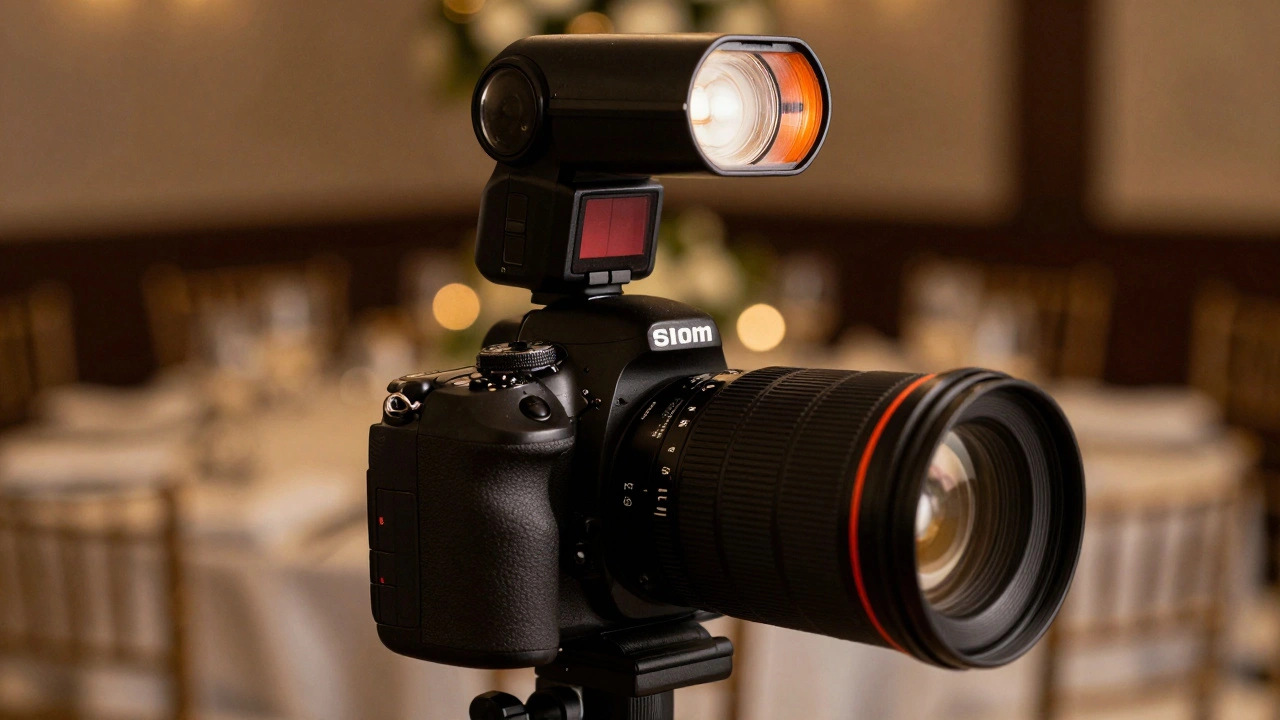
- Flexible Flash Systems: From simple on-camera speedlights to portable off-camera strobes like the Profoto B10, having controllable light is non-negotiable for professional results.
Using a wide aperture like f/1.4 allows you to keep your shutter speed around 1/125s or faster, which is critical for freezing motion during dances. Without this gear, you might find yourself pushing ISO beyond comfortable limits or risking motion blur.
Exposure Settings: The Starting Recipe
When you step onto the dance floor, you need a reliable starting point. Don't guess. Use this baseline exposure triangle for dim receptions:
- Shutter Speed: Set to 1/125s or 1/160s. Never go slower than 1/100s unless you are using a tripod or intentionally creating motion blur. Faster speeds freeze movement; slower speeds guarantee soft images.
- Aperture: Open as wide as your lens allows (e.g., f/1.4 - f/2.8). This maximizes light intake.
- ISO: Start around 1600-3200. If the image is still too dark, raise it to 6400 or higher. Modern cameras handle this range surprisingly well.
Jose Soriano, a respected photographer, suggests keeping ISO between 800 and 3200 as a comfortable zone, but emphasizes raising ISO before sacrificing shutter speed. If you drop your shutter speed to 1/60s to lower the ISO, your photos of dancing guests will likely be unusable due to motion blur. Prioritize sharpness over cleanliness.
Lighting Strategies: From Ambient to Off-Camera Flash
Relying solely on ambient light often forces you into extreme ISO ranges that degrade image quality. Most professionals supplement ambient light with flash, but the key is subtlety. You want to fill shadows, not obliterate the mood.
Bounce Flash
In rooms with neutral-colored ceilings under 3-5 meters high, bounce flash is your best friend. Point your on-camera flash straight up. Pull out the built-in bounce card to direct some light forward, preventing raccoon-eye shadows. Add a diffuser to soften the output. This creates a broad, natural-looking light source that mimics overhead windows while preserving background details.
Off-Camera Flash Techniques
For larger ballrooms with high ceilings or dark walls, bounce flash may fail. Here, off-camera flash becomes essential. Pye Jirsa recommends placing a strobe in a far corner, aimed broadly to act as a directional lamp. For a more dramatic look, use a grid to restrict light spill, pin-lighting specific subjects like the couple or centerpieces while leaving the rest of the room in moody shadow.
A common advanced setup involves three off-camera flashes arranged in a Y-pattern around the dance floor, providing backlight and side light from multiple angles. An on-camera flash then acts as a low-powered fill for facial details. This multi-point lighting creates depth and dimension, separating subjects from the dark background.
Color Management with Gels
One of the biggest pitfalls in dim ballrooms is mismatched color temperatures. If the room is bathed in warm tungsten light (orange/yellow) and your flash emits cool daylight-balanced light (blue/white), your subjects will look unnatural against their surroundings.
To fix this, place a CTO (Color Temperature Orange) gel on your flash. This warms the flash output to match the ambient light. Adjust your camera’s white balance until the scene looks cohesive. When the flash and ambient light share the same color temperature, the integration is seamless, and the final image retains the warm, inviting feel of the venue.
Composition and Storytelling in Low Light
Technical perfection means nothing if the image lacks soul. In dim environments, composition becomes even more critical because you cannot rely on bright, clutter-free backgrounds. Use the rule of thirds to place subjects near existing light sources-chandeliers, sconces, or candlelit tables. This naturally illuminates faces and adds context.
Focus on candid interactions. Jose Soriano advises framing subjects with surrounding elements to show the environment. Remove distractions like unsightly cables or wilted flowers if possible. Capture unique touches: custom centerpieces, architectural details, and the interplay of light and shadow. These elements tell the story of the event better than posed portraits alone.
Practical Workflow Tips
Pressure mounts when the music starts and the dancing begins. Adopt habits that stabilize your shooting:
- Use the Viewfinder: Press the camera against your face. This provides two extra points of contact compared to holding it at arm's length, reducing camera shake at marginal shutter speeds.
- Monitor Histograms: Don't trust the rear LCD screen in varying light. Check your histogram to ensure highlights aren't clipped and shadows retain detail.
- Start Simple: If you are new to off-camera flash, begin with TTL (Through-The-Lens) metering and manual adjustments as you gain confidence. Reduce cognitive load during fast-paced events.
- Shoot in Black and White Preview: Some photographers set their playback to display in monochrome to better judge contrast and exposure on small screens, while still capturing full-color RAW files.
What is the best ISO setting for dim ballroom photography?
There is no single "best" ISO, but a good starting range is 1600-3200. If the room is very dark, do not hesitate to push ISO to 6400 or even 16000 on modern mirrorless cameras. It is better to have a slightly noisy image than a blurred one caused by a slow shutter speed.
Should I use flash in a dimly lit wedding reception?
Yes, but use it subtly. Relying only on ambient light often leads to high ISO noise and motion blur. Use bounce flash or off-camera flash with gels to fill shadows and maintain subject detail without overpowering the room's mood. The goal is to blend the flash with the existing ambient light.
How do I deal with mixed lighting colors in banquet halls?
Mixed lighting (tungsten and LEDs) causes inconsistent white balance. Set your camera to a fixed white balance preset like Tungsten instead of Auto. Additionally, use orange (CTO) gels on your flash to match the warm color temperature of the room, ensuring your subjects blend naturally with the background.
What lens is best for indoor event photography?
Fast prime lenses are ideal. A 50mm f/1.8 or f/1.4 is versatile and affordable, letting in much more light than kit zooms. An 85mm f/1.8 is excellent for portraits and speeches. These wide apertures allow for faster shutter speeds, which are crucial for freezing action in low light.
Why should I shoot in RAW format for dim venues?
RAW files contain significantly more data than JPEGs, allowing you to recover details in deep shadows and bright highlights during post-processing. In dim ballrooms, where backgrounds are often intentionally dark, RAW gives you the flexibility to adjust exposure and white balance without degrading image quality.