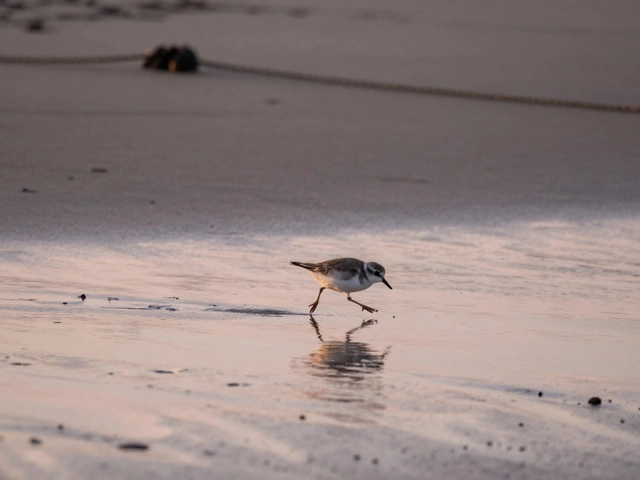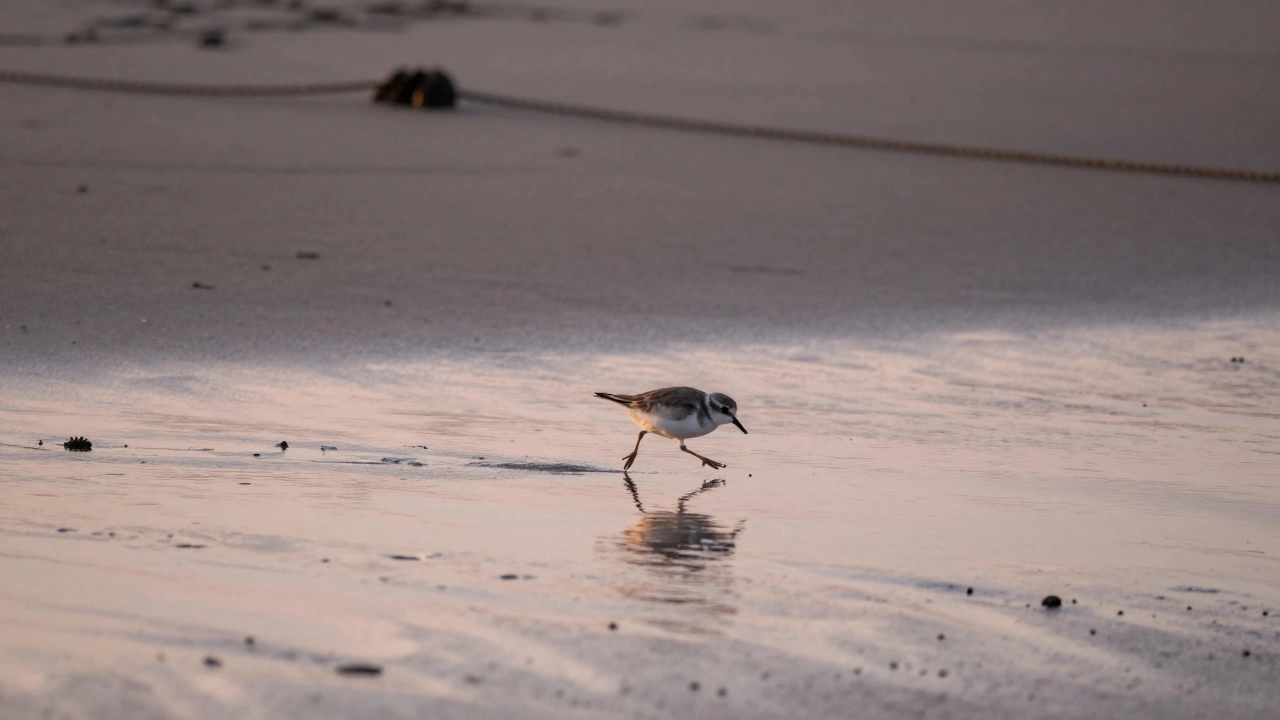
Walking along a quiet beach at dawn, the tide just pulled back, leaving behind wet sand like a mirror. You see a small bird darting across the shore, legs moving like clockwork, stopping, pecking, then running again. That’s a Wilson’s Plover-a threatened shorebird that nests right where your footprints are. A few hundred yards out, a dark shape rolls in the surf. A seal. Not far from there, a blowhole breaks the surface-a bottlenose dolphin. These moments are fleeting, fragile, and unforgettable. And if you’re trying to photograph them, you’re not just taking pictures. You’re documenting a vanishing world.
Shorebirds: The Tiny Timers of the Tidal Zone
Shorebirds don’t stay long. They’re in a race against the tide, the season, and human activity. Species like the Least Tern, a small, white-and-gray bird with a black cap, that dives for fish along sandy beaches, or the Snowy Plover, a pale, stocky bird that blends into beach sand and nests in shallow scrapes, are here only for breeding or rest. In Florida’s St. Johns County, their nesting season runs from May 1 to October 31. In Texas, the piping plover, a federally threatened shorebird that forages on polychaete worms along mudflats, shows up in fall and winter.
Here’s how to photograph them without scaring them off: Stay far away. If you’re within 50 feet, you’re too close. Use a 400mm or 600mm lens. Don’t walk toward them. Crouch. Sit. Wait. Let them come to you. Many shorebirds are nervous, but they’ll ignore you if you’re still and quiet. Look for signs: ropes, signs, or fences. Those mark nesting zones. Stay outside them.
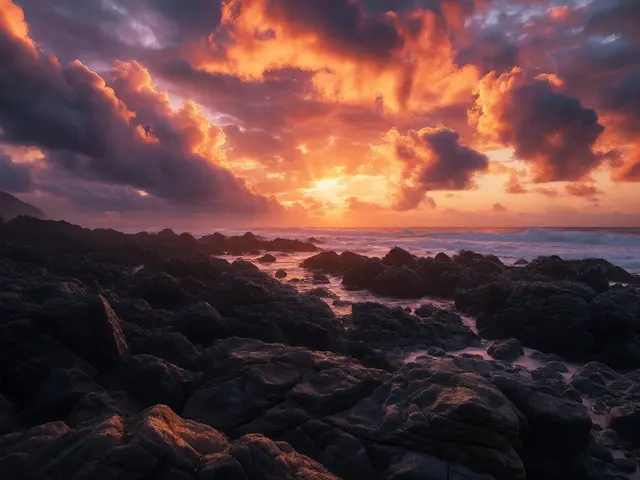
The best light? Early morning or late afternoon. The low sun catches the texture of wet sand and the glint in their eyes. Shoot at eye level. Don’t shoot down from above-that makes you look like a predator. And never use flash. Even if it’s cloudy, flash will spook them. You’re not lighting a studio. You’re observing wildlife.
Seals: The Quiet Kings of the Shore
Seals don’t live in the water. They live on land. Or at least, they need it. They haul out on beaches to rest, give birth, and molt. The Atlantic Bottlenose Dolphin, a highly social marine mammal that often swims near shorelines and can be seen breaching or bow-riding, gets attention, but seals are the real stars of the beach. They’re not as shy as birds, but they’re still sensitive.
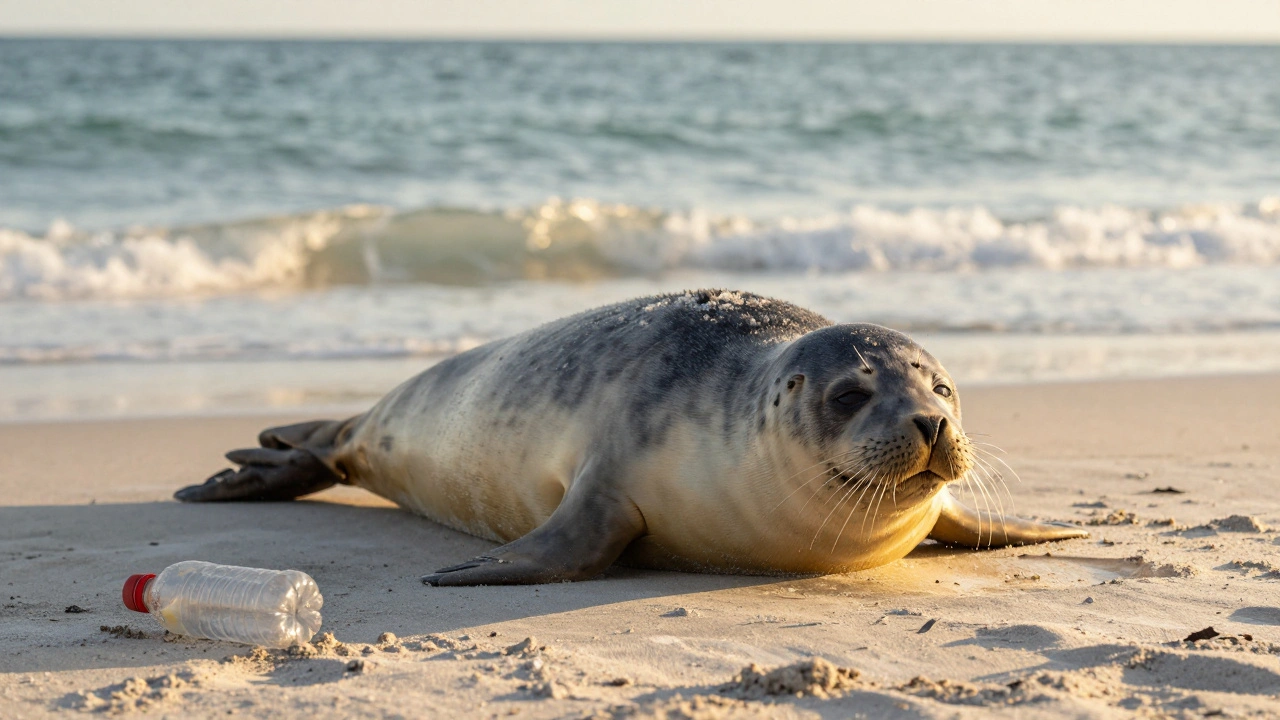
Look for them in the morning or late evening. That’s when they’re most active on land. In places like Caladesi Island, Florida, or Galveston, Texas, you’ll find them in small groups. Pups are born in spring. If you see a small, fluffy pup with its mother, you’re looking at a critical moment. Stay at least 100 yards away. Use a telephoto lens. Zoom in. Don’t approach. Even if they seem calm, a sudden movement or loud noise can cause a stampede-pups get trampled. Mothers abandon pups if they feel threatened.
Seals have thick blubber and can sleep for hours. That’s your window. Wait. Watch. Let them settle. The best shots aren’t of them in the water. They’re of them lying on sand, eyes half-closed, whiskers twitching. Capture the texture of their fur, the wet sheen, the way the light hits their eyes. A slow shutter speed (1/125s) can blur the waves behind them, making them look like they’re floating on the shore.
Marine Mammals: Dolphins, Manatees, and the Hidden Life
Marine mammals are harder to find, but when you do, it’s magic. Florida Manatees, large, slow-moving herbivores that graze on seagrass in shallow coastal waters and are often seen near river mouths, are gentle giants. They’re protected, and they’re slow. You’ll see them near estuaries, especially in winter. They surface every 15 to 20 minutes to breathe. That’s your cue.
Photographing manatees means being on a boat, quietly. No engines. No sudden turns. No chasing. Use a 300mm lens. Wait for them to come to you. Their skin is rough, wrinkled, and covered in algae. That’s what makes the photos interesting-not the face, but the texture, the way sunlight glances off their backs. Look for mothers with calves. Those moments are rare and powerful.
And then there are dolphins. Atlantic Bottlenose Dolphins, highly intelligent, social mammals that frequently interact with humans and are often seen in shallow coastal waters, can be seen near shorelines, especially in Texas and Florida. They ride waves. They leap. They play. But don’t follow them. Don’t try to get close. The best shots come from a distance, with the ocean behind them. Use continuous autofocus. Shoot in burst mode. Capture the arc of their body as they breach. Don’t wait for the perfect moment. Wait for the moment to happen.
The Hidden Life: Crabs, Beetles, and the Sand That Holds It All
Most people walk right over it. But the beach isn’t just birds and seals. It’s alive with tiny, overlooked creatures. Beach hoppers, small, shrimp-like amphipods that burrow in sand during the day and feed on kelp at night, leap like popcorn when you step on the shore. They’re everywhere. In the Pacific Northwest, they’re so common they’re part of the beach’s rhythm. To photograph them, get low. Use a macro lens. Focus on their compound eyes. Shoot against the wet sand-they’re translucent when backlit.
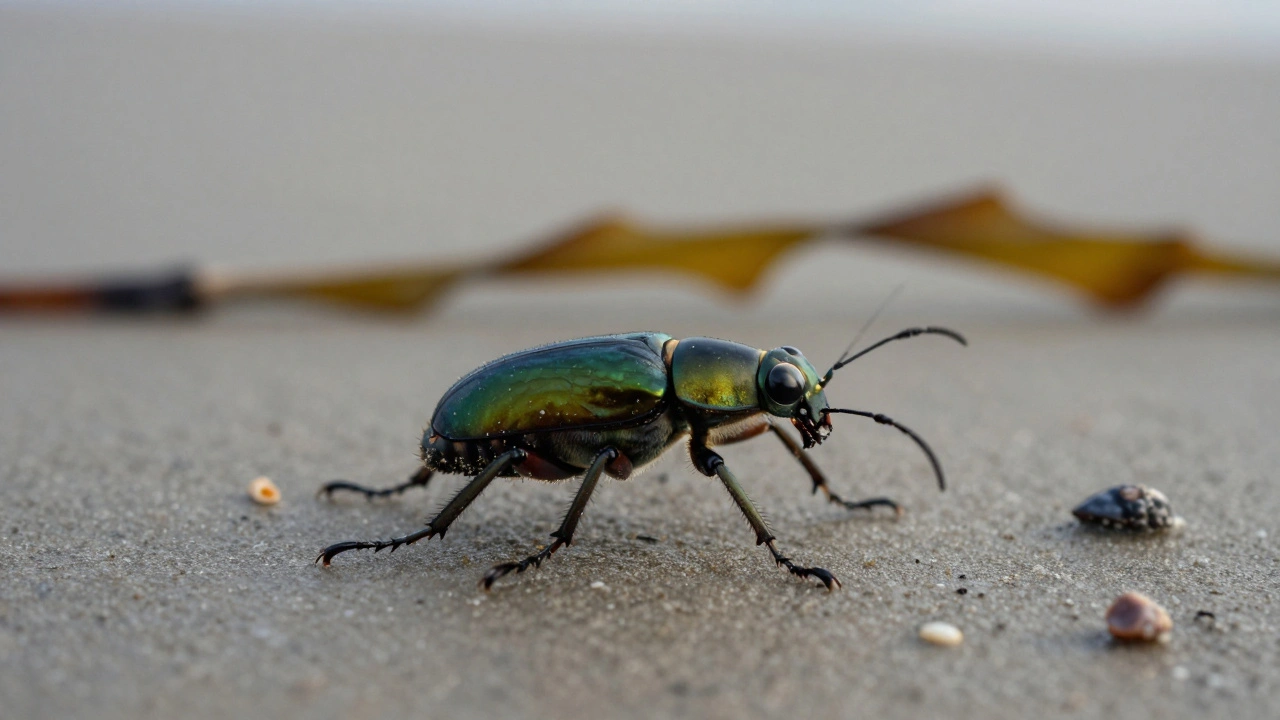
Then there’s the northeastern beach tiger beetle, a rare, fast-moving predator with metallic green wings that burrows deep in sand and signals healthy beach ecosystems. You’ll find it on wide, undisturbed beaches. It’s not easy to spot. But if you do, you’re looking at an indicator of a healthy coast. These beetles fly up to a mile to find food. They’re predators. They eat flies, fleas, and other insects. Photograph them in motion. Use a fast shutter speed. Freeze their legs mid-stride.
And crabs. Over 6,500 species. Some are the size of your thumbnail. Others have claws bigger than your hand. Look for them scuttling sideways after a wave. They’re scavengers. They eat dead kelp, dead fish, anything organic. The best shot? A crab carrying a piece of seaweed, like a tiny backpack. Use a shallow depth of field. Blur the background. Make the crab the only thing sharp.
When to Go, Where to Go, and How to Stay Legal
You can’t photograph wildlife if you’re trespassing. Many beaches have protected zones. In Florida, St. Johns County closes parts of the beach from May to October. In Texas, Padre Island National Seashore has designated turtle nesting areas. In Louisiana, Elmer’s Wildlife Management Area is off-limits to foot traffic during bird nesting season.
Plan ahead. Check local wildlife agency websites. Look for “nesting season,” “protected species,” or “no access zones.” Use apps like eBird or iNaturalist to see recent sightings. Don’t rely on signs alone. Sometimes, they’re outdated.
And here’s the rule: If you’re making the animal change its behavior, you’re too close. If it stops feeding, starts running, or looks at you too long-you’ve crossed the line. Your camera doesn’t give you a right to get closer. It gives you a responsibility to stay back.
What You’re Really Photographing
It’s easy to think you’re capturing a seal, a bird, a dolphin. But you’re not. You’re capturing a moment in a system that’s falling apart. Coastal erosion is speeding up. Beaches are being paved over. People are walking where seals sleep. Tour boats are chasing dolphins. Climate change is pushing the tide further inland, swallowing nesting grounds.
When you photograph a Kemp’s Ridley sea turtle, the world’s most endangered sea turtle that nests almost exclusively on Texas Gulf Coast beaches laying eggs at night, you’re not just taking a picture. You’re recording a species that nearly vanished-and is still fighting to come back. The same goes for the Anastasia Island Beach Mouse, a federally endangered rodent that lives only in sand dunes on Florida’s barrier islands. There are fewer than 1,000 left. Your photo might be one of the last.
So photograph with purpose. Don’t just post it. Share it. Tag the local conservation groups. Use your images to show what’s at stake. A picture of a seal on a beach with a plastic bottle nearby? That’s a story. A shot of a plover with a fence around its nest? That’s a call to action.
You’re not just a photographer. You’re a witness. And in a world that’s rushing past, sometimes the quietest moments-the ones you wait for, the ones you don’t rush-are the ones that matter most.
What’s the best time of day to photograph shorebirds?
The best time is early morning, just after sunrise, or late afternoon, before sunset. That’s when the light is soft, the tide is low, and shorebirds are most active. Many species, like the Snowy Plover and Wilson’s Plover, forage during these hours. Avoid midday-birds rest, and the harsh light flattens textures. Also, wind is calmer in the morning, which helps with sharp focus.
How close can I get to a seal or sea turtle without disturbing it?
Stay at least 100 yards (91 meters) from seals and sea turtles. Even if they appear calm, they’re easily stressed. A sudden movement, loud noise, or even a drone can cause them to flee into the water-especially mothers with pups or turtles with eggs. Many protected areas have legal distance rules. In the U.S., federal law requires you to stay 50 yards from marine mammals and 150 yards from sea turtles. Use a telephoto lens. You don’t need to be close to get a great shot.
What gear do I need to photograph beach wildlife?
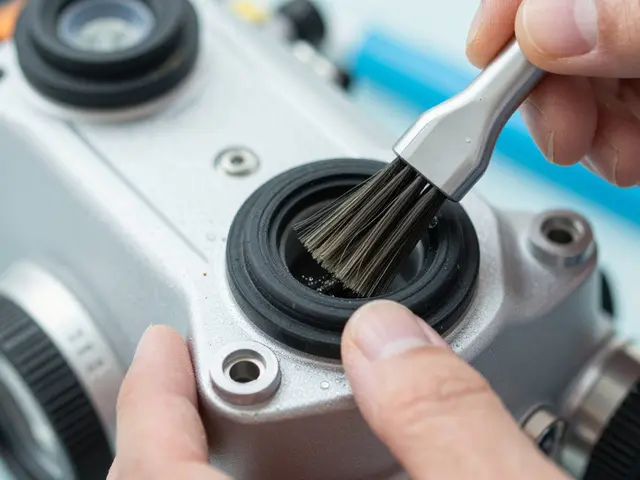
You need a long lens-400mm or 600mm for birds and mammals. A 300mm can work for dolphins if you’re on a boat. Use a tripod or monopod for stability, especially in windy conditions. A rain cover for your camera is essential-salt spray damages gear. Bring extra batteries; cold air drains them fast. A circular polarizer helps cut glare off wet sand and water. And always carry a microfiber cloth to wipe salt off your lens.
Are there places I shouldn’t go to photograph wildlife?
Yes. Never enter roped-off nesting areas, even if they look empty. Don’t walk on dunes-those are home to endangered mice and plants. Avoid beaches during official closure periods (like May-October in Florida). Never use drones near wildlife. They cause panic. And don’t follow animals into the water. Dolphins and seals can be unpredictable. Stick to public trails and designated viewing areas. If you’re unsure, ask a park ranger or check the local wildlife agency website.
How can I tell if a beach is healthy for wildlife?
Look for signs of natural processes. A healthy beach has driftwood, kelp, and sand dunes with native plants like sea oats. You’ll see beach hoppers and tiger beetles. There’s no litter, no foot traffic on dunes, and no signs of development. If the sand is compacted, flat, and clean, it’s likely disturbed. Healthy beaches are messy. They’re full of debris that feeds insects and birds. If you see a sign saying "protected habitat" or "nesting zone," that’s a good sign-it means someone is trying to preserve it.