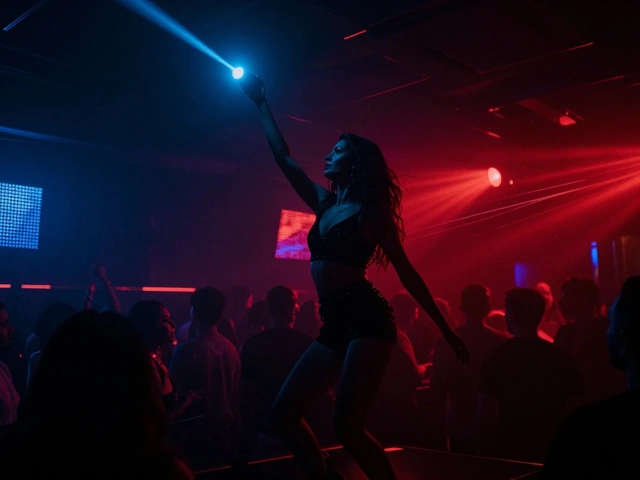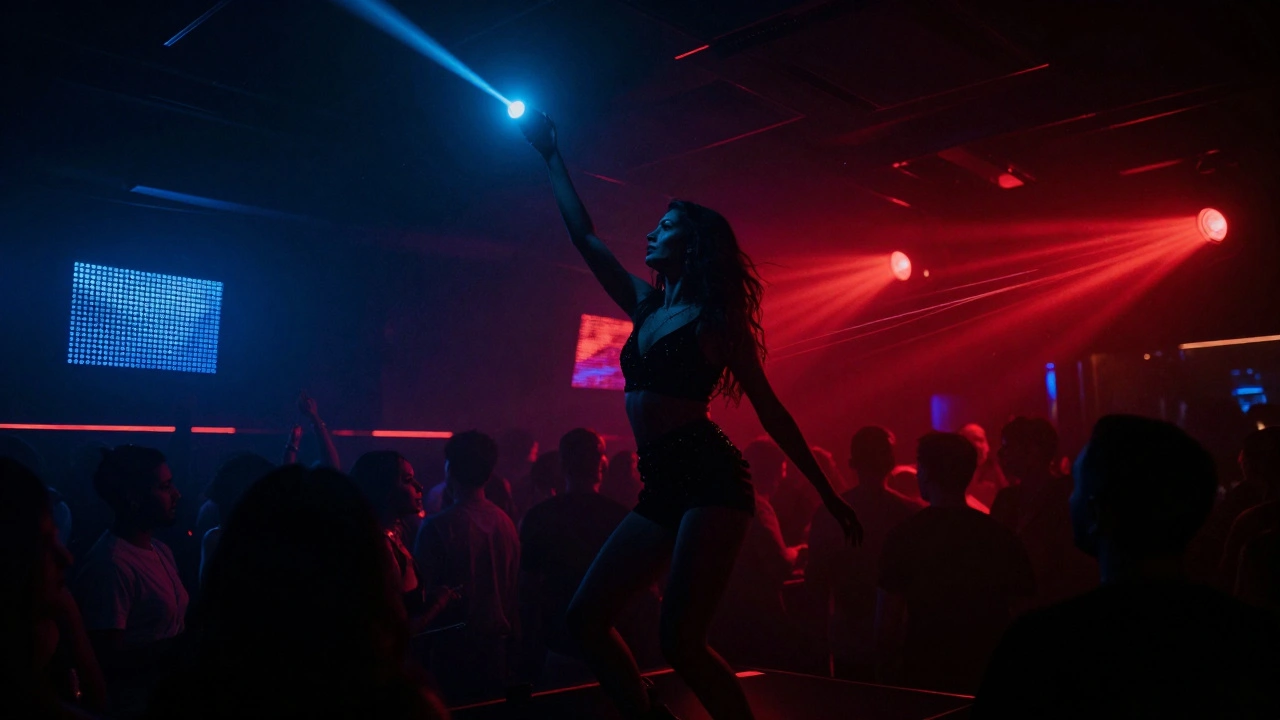
Bar and nightclub photography isn’t just about snapping pictures in the dark. It’s about working with light that doesn’t want to be captured-flashing reds, pulsing blues, sudden strobes, and shadows that swallow your subject whole. You walk in with a camera, and the room fights back. The lights change every few seconds. The music thumps so hard you feel it in your ribs. And somewhere in the middle of it all, you’re trying to freeze a moment that’s already gone before you even press the shutter.
Why Nightclub Lighting Breaks Normal Rules
Most photographers rely on ambient light. But in a nightclub, ambient light is an illusion. What you see as a glowing dance floor is actually a series of colored spotlights, rotating gobos, and strobes that blink on and off like a strobe light in a horror movie. Your camera’s auto mode? It’s useless here. It tries to expose for the dark spaces, and ends up turning the DJ into a silhouette. Or it locks onto a bright strobe and overexposes everything else into a white blur. The real challenge? Mixed lighting. Red, blue, green, purple-all at once. Each color behaves differently. Blue and purple light? They’re weak. Your camera struggles to pick up enough of it. Red light? That’s the nightmare. It’s not just dim-it’s dominant. It floods your sensor, overwhelms your white balance, and turns skin tones into something that looks like a bruise. And then there’s the strobe. One millisecond of blinding brightness, then darkness. You can’t predict it. You can only react.Equipment: What Actually Works
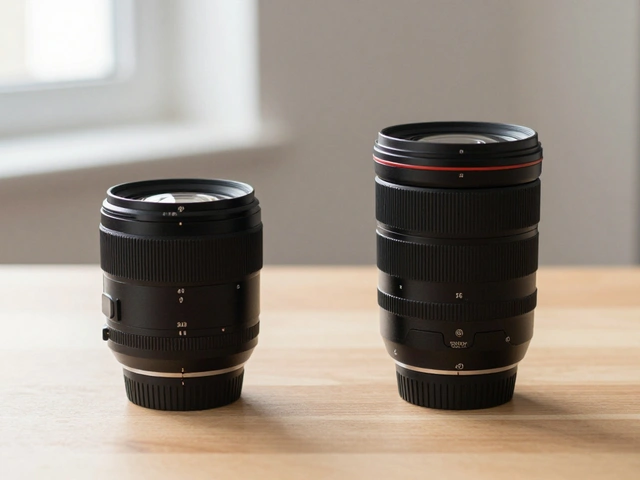
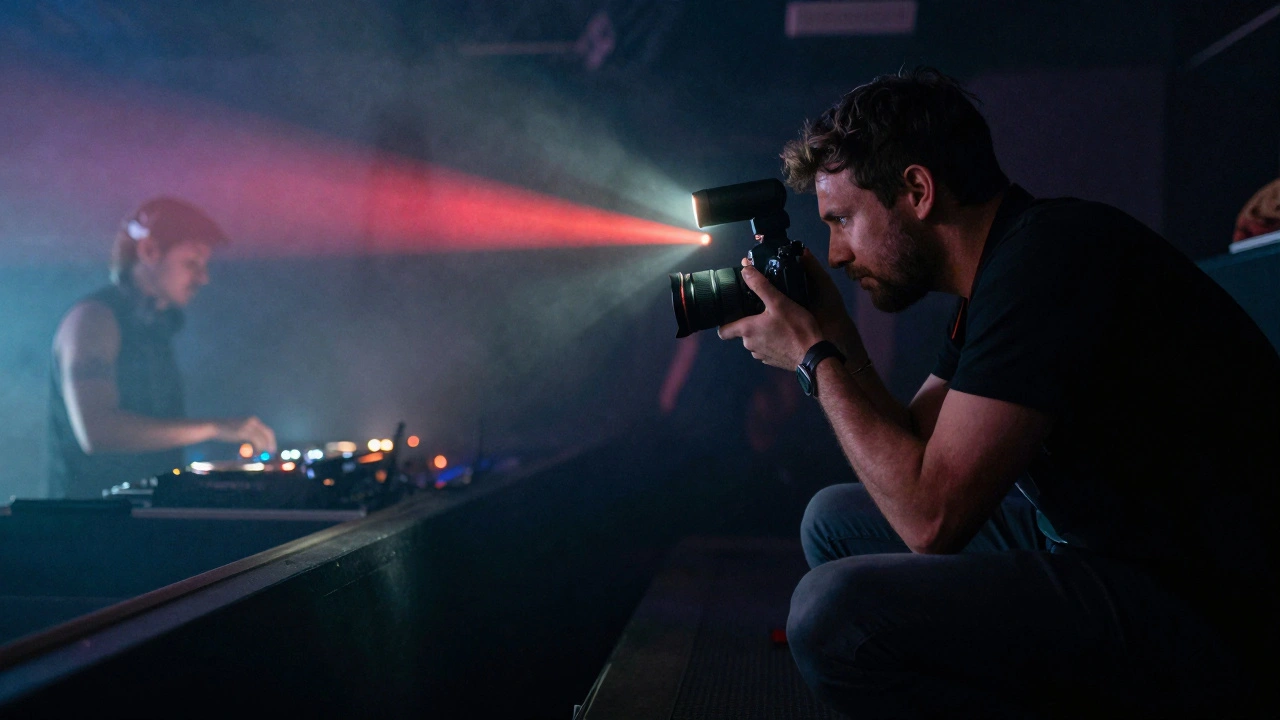
You don’t need the most expensive gear. But you do need the right tools. A full-frame DSLR is still the gold standard here. Why? Because it handles high ISO better than crop sensors. At ISO 1600, the noise is manageable. At ISO 6400? You’re asking for grainy mush. That’s why most pros stick to 1600 as their baseline. Push higher only if you have to. Lenses? Go wide open. f/1.4, f/1.8, f/2.0. Prime lenses win here. Why? Because zoom lenses with f/2.8 or slower can’t gather enough light. An 85mm f/1.4 is perfect for isolating a dancer or DJ. A 50mm f/1.8 works great for tighter spaces. You’re not shooting landscapes-you’re chasing motion in a cave of light. And yes, you need an external flash. Not just any flash. One with infrared autofocus assist a low-power red beam that helps the camera focus in near-total darkness without flashing visible light. This feature is critical. It’s the only thing that lets you lock focus when the room is darker than a cave. But here’s the catch: this only works on DSLRs with external flash compatibility. Mirrorless cameras? They don’t have it. You’ll have to rely on manual focus or focus peaking, which is harder when people are moving.Camera Settings: No Auto Mode Allowed
Set your camera to manual mode. Right now. Forget aperture priority. Forget shutter priority. You’re in control. Here’s the starting point:- ISO: 1600 - This is your sweet spot. Lower than 800? You’ll get dark frames. Higher than 3200? Noise starts eating your details.
- Aperture: f/1.4 to f/2.0 - Wider is better. You need every photon you can get.
- Shutter Speed: 1/80s to 1/125s - If you’re using an 85mm lens, don’t go slower than 1/80s. Faster subjects? Go to 1/125s or higher.
Flash: Don’t Blind Them
If you slap a flash directly on your camera, you’ll look like a tourist. Harsh shadows. Glaring eyes. People will glare back. Instead, you need to soften, angle, and redirect. First, turn off the flash firing. Yes, you read that right. Keep the infrared focus assist on, but don’t let the flash fire unless you’re ready to use it creatively. Now, attach a flash diffuser a soft plastic or fabric cover that spreads light evenly to reduce harsh shadows. Then, tilt the flash head up 30 degrees and swivel it 45 degrees to the left or right. This bounces the light off the ceiling or wall, turning a harsh spotlight into a soft, natural glow. It’s subtle. It’s professional. And it doesn’t ruin the vibe. For even better results, try off-camera flash. Hold the flash in your left hand, cable or wireless trigger in your right. Fire it from behind or beside the subject. Now you’re shaping light like a painter. You’re not just illuminating-you’re sculpting. And here’s the magic trick: 2nd curtain sync a flash setting that fires at the end of the exposure, creating motion trails behind moving subjects. Set your shutter to 0.5s or 0.8s. The room lights move. The subject moves. Then-right before the shutter closes-the flash fires. The result? A dancer frozen in place, with streaks of colored light trailing behind them like comet tails. It’s cinematic. It’s dynamic. And it only works if you understand timing.Dealing with Color Chaos
Red lighting is the enemy. It’s low in intensity, but high in dominance. Your camera’s auto white balance will try to fix it-and fail. You’ll end up with a red-tinted mess. Solution? Use a blue color correction filter a lens filter that counteracts red casts by adding blue balance. Screw it onto your lens. Suddenly, skin tones look normal again. Colors pop. The red doesn’t vanish-it’s balanced. You’re not fighting the light. You’re working with it. For strobe-heavy tracks? Use burst mode. Shoot 5 frames per second. The strobe flashes randomly. You’ll get some dark frames. But one or two will catch the light at the perfect moment. Keep shooting. Let the machine do the work. You’ll pick the best one later. And don’t ignore the background. A giant LED screen behind the DJ? Let it be part of the shot. It’s not just decoration-it’s a secondary light source. It can illuminate a face, add depth, or create dramatic silhouettes. Use it.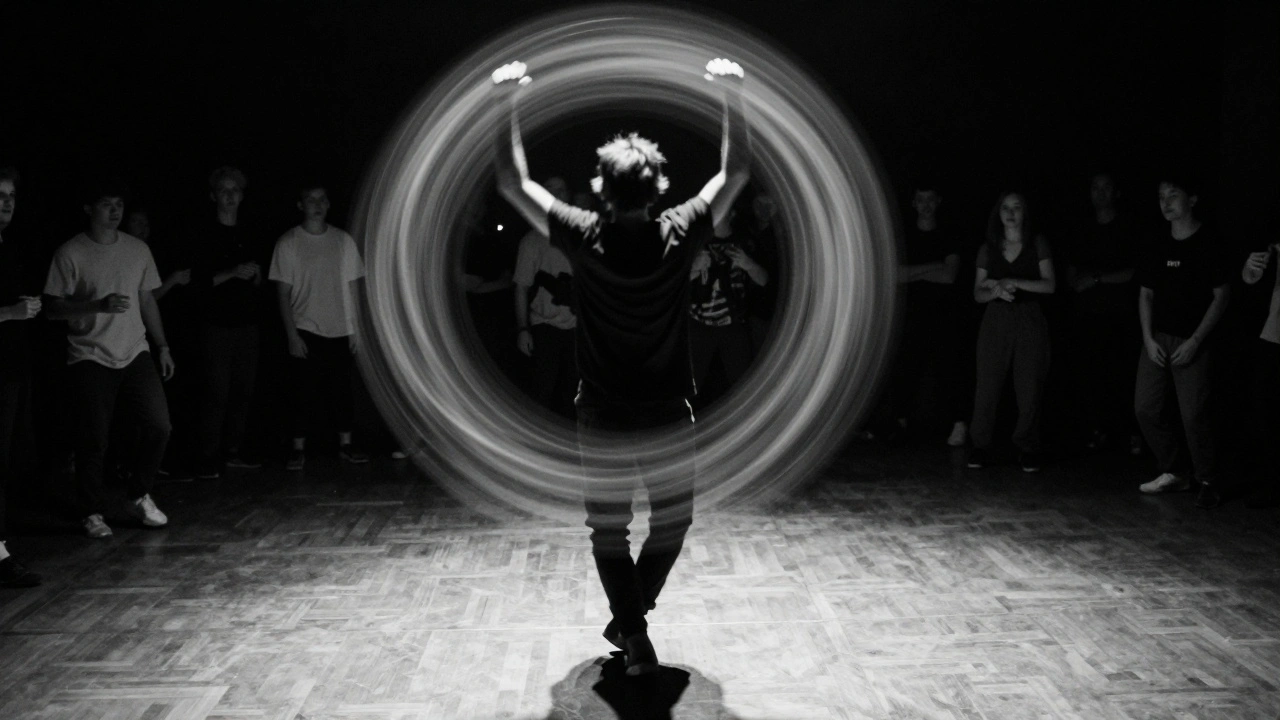
When All Else Fails: Go Black and White
Sometimes, the colors are too wild. Too chaotic. Too distracting. Shoot in color, then convert to black and white in post. It’s not cheating. It’s strategy. Removing color strips away the noise. You’re left with contrast, texture, motion. A dancer in a red dress? Her shape still matters. A strobe-lit crowd? The movement still sings. Black and white turns chaos into art. Some pros shoot raw black and white in-camera. It forces you to see in tones, not hues. You start noticing how light falls on shoulders, how shadows pool around feet, how motion blurs into rhythm.What Doesn’t Work
- Using auto mode. It’s a trap. - Shooting at ISO 6400+ without a reason. Noise kills detail. - Flashing directly into faces. It’s rude. And it ruins the vibe. - Ignoring venue rules. Some clubs ban flash. Always ask. - Waiting for perfect light. There is no perfect light. You make it.Final Thought: It’s About Timing, Not Gear
You can have the best camera in the world. But if you’re not watching the lights, you’re missing the shot. The best nightclub photographers don’t just shoot. They listen. They feel the beat. They watch how the lights dance with the music. They wait for the moment when a red strobe hits a dancer’s face just as she raises her arms-and then they click. It’s not about having the right settings. It’s about knowing when to change them.Can I use a mirrorless camera for nightclub photography?
Yes, but it’s harder. Mirrorless cameras don’t have the infrared autofocus assist that DSLRs use to focus in total darkness. You’ll need to rely on manual focus, focus peaking, or back-button autofocus. It’s doable, but you’ll need more practice to lock focus quickly in moving, dim conditions.
Is ISO 1600 too high for nightclubs?
No-it’s the sweet spot. ISO 800 is often too low, leaving images dark. ISO 3200+ introduces visible noise that reduces sharpness. ISO 1600 gives you enough light without killing detail. Always start here and adjust only if lighting changes drastically.
Why is red lighting so hard to photograph?
Red light has low intensity, so your camera struggles to capture enough of it. At the same time, it overwhelms the sensor’s color channels, causing a strong red cast that auto white balance can’t fix. This leads to muddy skin tones and unnatural colors. Using a blue filter helps balance the color temperature.
Should I use a flash at all in nightclubs?
It depends on the venue. Some clubs allow it. Others ban flash to protect performers’ eyes or preserve the atmosphere. Always ask first. If allowed, use diffused, angled, or off-camera flash-not direct on-camera. This keeps the light natural and unobtrusive.
What’s the best lens for nightclub photography?
A fast prime lens: f/1.4 or f/1.8 in 50mm or 85mm. These let in the most light and are compact enough to carry all night. Zoom lenses with f/2.8 or slower won’t gather enough light for consistent results in low-light environments.
How do I avoid blurry photos when dancing?
Use a shutter speed of at least 1/80s for 85mm lenses, or 1/125s for faster movement. If subjects are moving too quickly, increase ISO slightly instead of slowing the shutter. You can also use 2nd curtain sync with a slower shutter (0.5s-0.8s) to create motion trails that imply movement without blurring the subject.