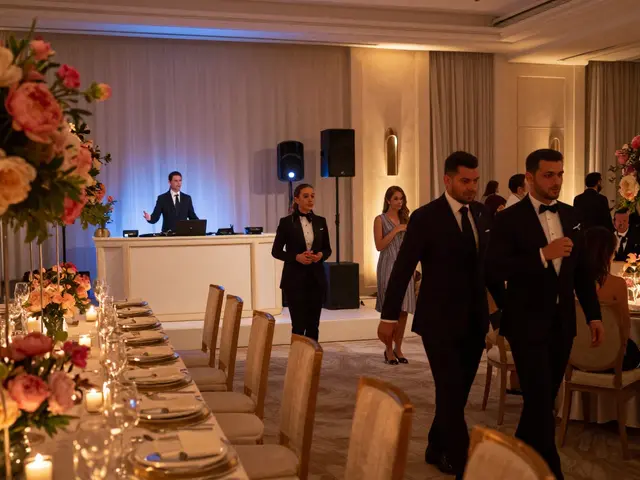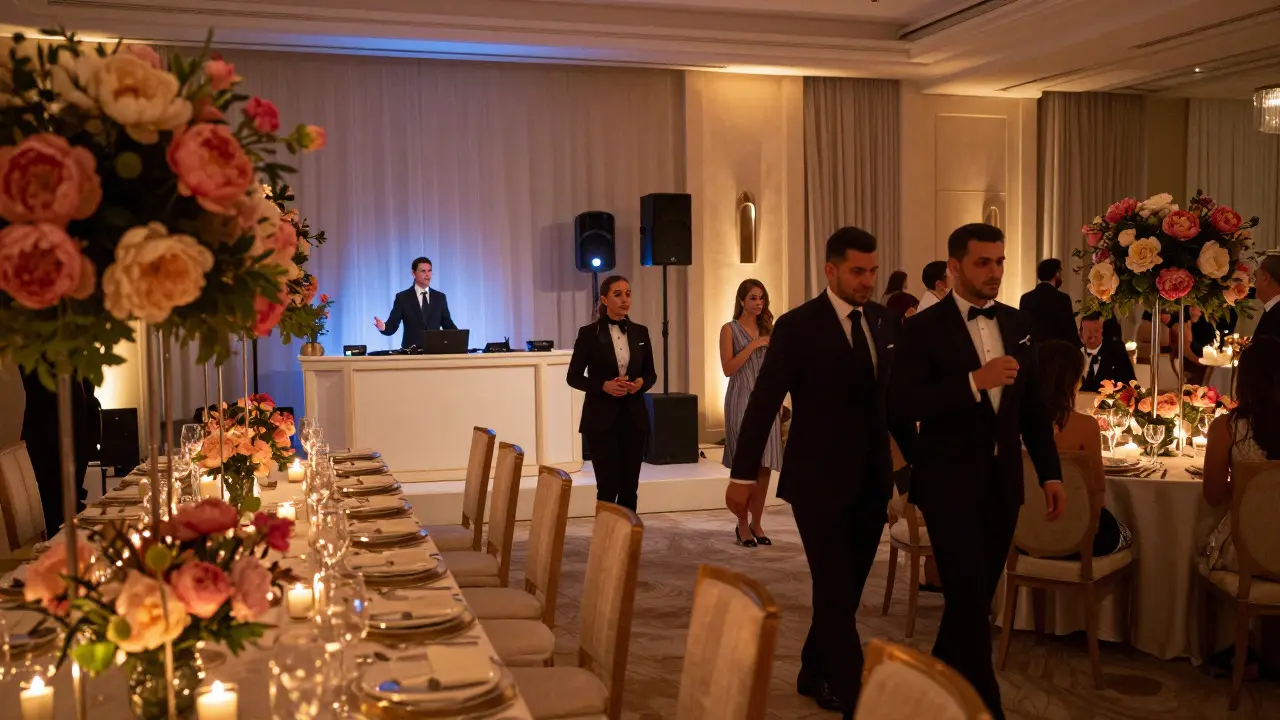
Imagine the moment your guests walk into the reception. The lights are dimmed, the first song hits, and the scent of fresh peonies fills the air. It’s seamless. But behind that magic lies a complex web of timing, logistics, and creative alignment. If your wedding coordinator is fighting with your DJ over sound levels while your florist is still unpacking boxes, the illusion shatters instantly. Effective wedding vendor collaboration isn’t just about hiring good people; it’s about building a system where these three key players operate as a single unit.
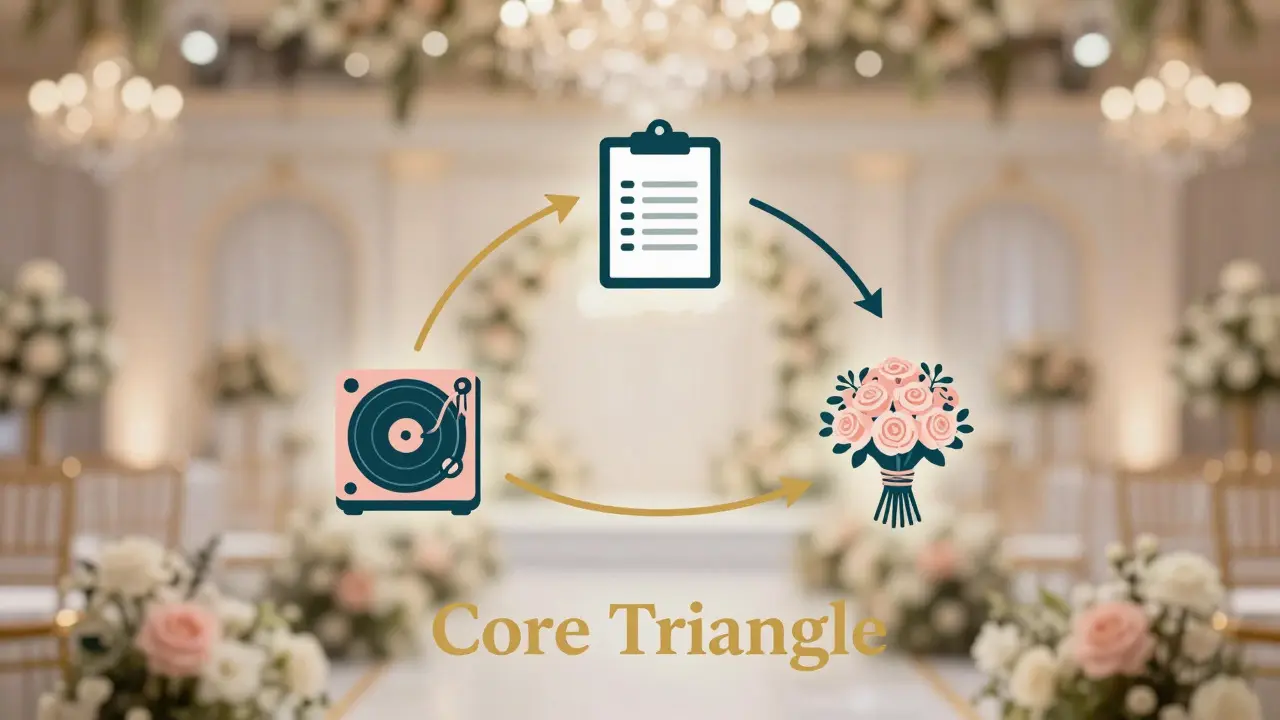
The Core Triangle: Why These Three Roles Matter Most
In any wedding production, three vendors hold the keys to the guest experience: the coordinator, the DJ, and the florist. Each operates in a different sensory domain-logistics, audio, and visual aesthetics-but their timelines intersect constantly. The wedding coordinator manages the overall schedule, vendor contracts, and on-site execution flow. The DJ provides live music curation, microphone management for speeches, and dance floor energy control. The florist designs centerpieces, bouquets, and installations that define the venue's atmosphere.
When these three don't communicate, you get gaps. For example, if the florist installs a tall archway but the DJ hasn't accounted for the extra setup time, the ceremony starts late. If the coordinator doesn't tell the DJ that the couple wants a specific song for the first dance at exactly 8:15 PM, the mood can stall. This triangle forms the backbone of the event's rhythm. Understanding how they interact allows you to anticipate friction points before they become problems.
Mapping the Timeline: Where Conflicts Happen
Most vendor conflicts stem from misunderstood timelines. Here is how the typical day flows and where the handoffs occur:
- Setup Phase (4-6 hours before ceremony): The florist arrives first to install large pieces like arches or hanging installations. The DJ sets up equipment next, ensuring power sources are accessible. The coordinator verifies both are on track against the master schedule.
- Ceremony Prep (1 hour before): The florist finishes final touches on aisle markers. The DJ tests microphones and plays pre-ceremony music. The coordinator briefs the officiant and ushers.
- Ceremony Execution: The DJ cues processional and recessional tracks. The coordinator manages the flow of guests and family photos. The florist is usually off-site unless doing last-minute fixes.
- Reception Transition: This is the highest-risk period. Guests move from the ceremony space to the reception. The DJ must switch from acoustic/prelude music to high-energy party tracks. The florist may be called back to adjust table settings if needed. The coordinator directs the transition to ensure no one is lost.
- Party Phase: The DJ takes full control of the room's energy. The coordinator monitors food service times to align with peak dancing periods. The florist is typically done, except for removing decorations after the event.
The critical insight here is that the "Reception Transition" is where most things go wrong. If the coordinator doesn't signal the DJ to change the vibe, the party feels sluggish. If the florist hasn't cleared the aisle for the cake cutting, the photo ops suffer. Clear handoff signals are essential.
Communication Protocols That Prevent Chaos
You don't need a corporate project management tool for a wedding, but you do need clear channels. A dedicated group chat including the coordinator, DJ, and lead florist is non-negotiable. However, text messages alone aren't enough. You need structured touchpoints.
- The Pre-Wedding Meeting: All three vendors meet (virtually or in person) at least two weeks before the date. They review the run-of-show document together. The florist confirms installation times. The DJ confirms power requirements and speaker placement. The coordinator notes any special requests.
- The Day-Of Briefing: On the wedding morning, the coordinator sends a final timeline update to the group chat. Any changes, like a delayed hair appointment, are flagged immediately so the DJ can adjust the pre-ceremony playlist length.
- On-Site Check-ins: The coordinator should physically check in with the DJ and florist at key milestones. A quick "Are we on track?" prevents small delays from snowballing.
Why does this work? Because it removes ambiguity. Instead of guessing when the next task starts, everyone knows the exact trigger. For instance, the DJ knows to start the first dance song when the coordinator gives a thumbs-up, not when they think the tables are ready.
Specific Handoff Scenarios and Solutions
Let's look at real-world scenarios where collaboration breaks down and how to fix them.
| Scenario | Risk | Solution |
|---|---|---|
| Floral installation takes longer than expected | Ceremony starts late; DJ prelude music loops awkwardly | Coordinator alerts DJ to extend prelude playlist; Florist prioritizes aisle over centerpieces |
| DJ needs more time to set up speakers | No music during cocktail hour; awkward silence | Coordinator schedules DJ setup earlier; Florist waits until speakers are placed to avoid blocking access |
| Couple changes first dance song last minute | DJ doesn't have the track queued; delay in reception start | Coordinator communicates new song 48 hours prior; DJ confirms file availability in group chat |
| Weather affects outdoor floral display | Wet flowers damage table linens; aesthetic mismatch | Florist brings backup indoor arrangement; Coordinator adjusts timeline to allow for quick swap |
Notice a pattern? In every case, the solution involves information sharing before the problem becomes visible. The coordinator acts as the hub, while the DJ and florist act as specialized nodes. If you hire separate vendors who don't know each other, you become that hub yourself, which is exhausting. Professional coordinators save you from this burden by managing these relationships proactively.
Budgeting for Collaboration: What You're Really Paying For
Many couples view vendor fees as fixed costs. But part of what you pay for a top-tier coordinator or experienced DJ is their ability to collaborate. A cheap DJ might show up, plug in, and play random songs. A collaborative DJ will ask about the lighting cues, the speech schedule, and the energy curve of the night. Similarly, a florist who coordinates with the decorator ensures their colors match the drapery and the tableware.
When budgeting, consider the value of reduced stress. If your coordinator saves you two hours of mental load by handling vendor disputes, that's worth the premium. Look for vendors who explicitly mention "teamwork" or "collaboration" in their packages. Ask during interviews: "How do you communicate with other vendors on the day?" Their answer will tell you everything you need to know about their professionalism.
Building Your Dream Team: Selection Criteria
How do you choose vendors who actually work well together? Don't just look at portfolios. Look for signs of operational maturity.
- References from Other Vendors: Ask your potential coordinator who their preferred DJs and florists are. If they have a trusted network, they likely have established protocols.
- Contract Clarity: Ensure contracts specify setup times, breakdown times, and contact procedures. Ambiguity leads to conflict.
- Technology Use: Do they use shared digital calendars or scheduling apps? Vendors who embrace modern tools tend to be more organized.
- Flexibility: Ask how they handle changes. A rigid vendor will struggle when inevitable hiccups occur. A flexible collaborator will adapt seamlessly.
It’s also helpful to invite your chosen vendors to a joint call early in the planning process. Hearing them talk to each other reveals their dynamic. Are they respectful? Do they listen? Do they offer solutions rather than complaints? This chemistry is hard to fake and crucial for a smooth day.
Frequently Asked Questions
Who should lead the vendor communication on the wedding day?
The wedding coordinator should lead all vendor communication. They are the single point of contact who receives updates from the venue, DJ, florist, and caterer. This prevents information silos and ensures everyone is working from the same updated timeline. Couples should avoid becoming the middleman on the day itself.
How early should the florist and DJ arrive relative to the ceremony?
Generally, the florist should arrive 3-4 hours before the ceremony to install large pieces, while the DJ should arrive 2-3 hours prior to set up equipment and test sound. The exact times depend on the complexity of the floral design and the size of the DJ booth. Always confirm these windows in writing during the pre-wedding meeting.
What happens if the DJ and florist disagree on space usage?
This is a spatial conflict that the coordinator must resolve. Usually, the DJ requires clear sightlines and power access, while the florist needs stability for displays. The coordinator should review the floor plan beforehand and designate specific zones for each vendor. On the day, if a conflict arises, the coordinator makes the final call based on safety and guest flow priorities.
Do I need a separate contract for each vendor?
Yes, you need individual contracts with each vendor. However, the coordinator often manages these relationships under a master service agreement. Ensure each contract clearly outlines deliverables, payment schedules, cancellation policies, and liability clauses. This protects you if one vendor fails to perform without impacting the others.
How can I ensure the DJ's music matches the floral theme?
While music and flowers seem unrelated, they both set the tone. Share your wedding theme keywords (e.g., "rustic," "modern," "romantic") with both the DJ and florist. The florist uses these for color palettes and styles, while the DJ uses them for genre selection and tempo. Consistency in aesthetic language ensures a cohesive guest experience.